

Els: MBN360 Education
he Executive Director of Africa Education Watch, Kofi Asare, has called for a major overhaul of the Basic Education Certificate Examination, proposing a significant reduction in the number of subjects examined.
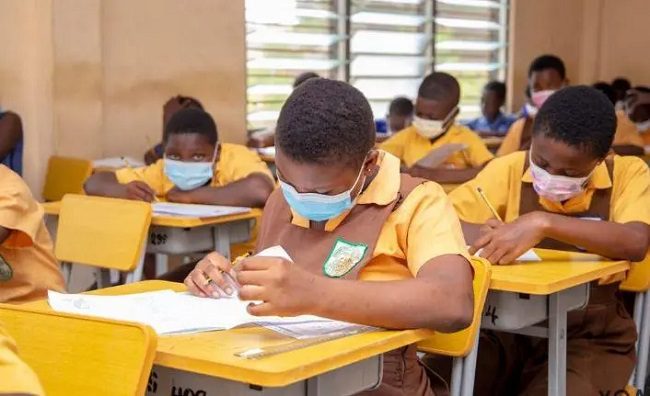
Ahead of the 2026 BECE, Mr Asare described the current structure of the examination as unnecessarily burdensome, arguing that the existing nine subject format does not align with its primary purpose.
He noted that the BECE has largely become a Ghana specific exercise whose main function is to determine placement into senior high schools, rather than to comprehensively assess students across numerous disciplines.
Mr Asare is advocating for a streamlined examination structure consisting of four core papers. These include Mathematics, English, General Science, and a General Paper that would incorporate elements of other subjects, including languages.

He explained that such a model would be sufficient to evaluate students for placement purposes while reducing the complexity and intensity of the current system.
Drawing an analogy to illustrate his point, he suggested that achieving a single outcome does not require an excessive number of inputs, implying that the present approach may be inefficient.
Shorter Examination Period
Under the proposed reform, the BECE could be completed within two days, based on the traditional schedule of writing two subjects per day. Mr Asare argued that shortening the duration of the examination would have several advantages, particularly in reducing stress levels among candidates.
The current week-long examination period, he indicated, places unnecessary pressure on students, many of whom are at a formative stage of their academic journey. A more concise examination format, he believes, would improve student well-being while maintaining the integrity of the assessment process.
In addition to reducing stress, the Eduwatch Director highlighted the potential financial benefits of the proposed changes. He estimated that restructuring the BECE could lead to savings of approximately forty percent of the annual expenditure on the examination.
The Ministry of Education is reported to spend about GH¢120 million each year on the BECE. A reduction in the number of papers and the duration of the exams could significantly lower logistical and administrative costs.
These savings, he suggested, could be redirected to other areas within the education sector that require investment. Concerns Over Examination Integrity
Read also:
- Laboratory professional workers declare nationwide strike over removal of Korle-Bu Laboratory Head
- Black Stars have succeeded through poor administration but it’s difficult this time – Herbert Mensah
- Everton fan arrested after alleged racist abuse directed at Man City’s Antoine Semenyo
- AG Office Withdraws Charges in Buffer Stock Case, EOCO Re-arrests Accused
- Cash Circulating in Ghana’s Economy Hits GH¢83.8bn Despite Cuts
Beyond structural reform, Mr Asare raised concerns about the integrity of the BECE, pointing to persistent issues of malpractice. He referenced incidents from the previous year in which invigilators were allegedly caught facilitating cheating at examination centres in Accra.
According to him, individuals implicated in these incidents remain in their positions, raising concerns about the effectiveness of enforcement measures. He expressed frustration over the lack of action despite efforts to engage authorities, including petitions to the Ghana Education Service and the Ministry of Education.
Allegations of Ongoing Malpractice
Mr Asare suggested that examination malpractice remains a recurring challenge, with reports indicating that some individuals continue to exploit the system for financial gain.
He indicated that despite receiving information about ongoing schemes, his confidence in corrective action has been limited. His remarks reflect broader concerns about accountability within the examination system and the need for stronger deterrent measures.
The persistence of such issues, he implied, undermines the credibility of the Basic Certificate Examination (BECE) and erodes public trust in the education system.
The Eduwatch Director emphasised the importance of addressing both the structural and ethical challenges facing the BECE. He called for decisive action against individuals involved in malpractice, including invigilators and school authorities who fail to uphold standards.
According to him, maintaining the credibility of national examinations requires consistent enforcement of rules and a commitment to transparency. He also highlighted the need for broader reforms that align the examination system with its intended purpose, rather than maintaining practices that may no longer be relevant.
Balancing Assessment and Efficiency
Mr Asare’s proposals have sparked renewed debate about the future of Ghana’s basic education assessment system. Supporters of reform argue that a simplified examination structure could improve efficiency and reduce unnecessary pressure on students.
However, others may raise concerns about whether fewer subjects would adequately capture the breadth of students’ knowledge and skills. The discussion reflects a wider challenge in education policy, balancing the need for comprehensive assessment with considerations of cost, efficiency, and student welfare.

As candidates prepare to sit for the 2026 BECE, the call for reform adds to ongoing conversations about the evolution of Ghana’s education system. Mr Asare’s proposals, initially submitted to political parties in 2024, are likely to continue shaping policy discussions in the coming years.
Whether or not the suggested changes are adopted, the debate highlights the importance of continually reviewing national examination systems to ensure they remain fit for purpose.
The upcoming examination will proceed under the existing structure, but calls for reform indicate that changes could be considered in future cycles.