Read also:
- Banks Write Off GH¢1.39bn Bad Loans
- Djokovic dethrone Sinner to reach Australian Open Final against Alcaraz
- President Mahama explains reason for attire at Military Academy Graduation Parade
- Senegal Coach rejects fundraiser after CAF fine
- President Mahama pledges merit-based recruitment of 12,000 into Ghana Armed Forces
Els MBN360 News
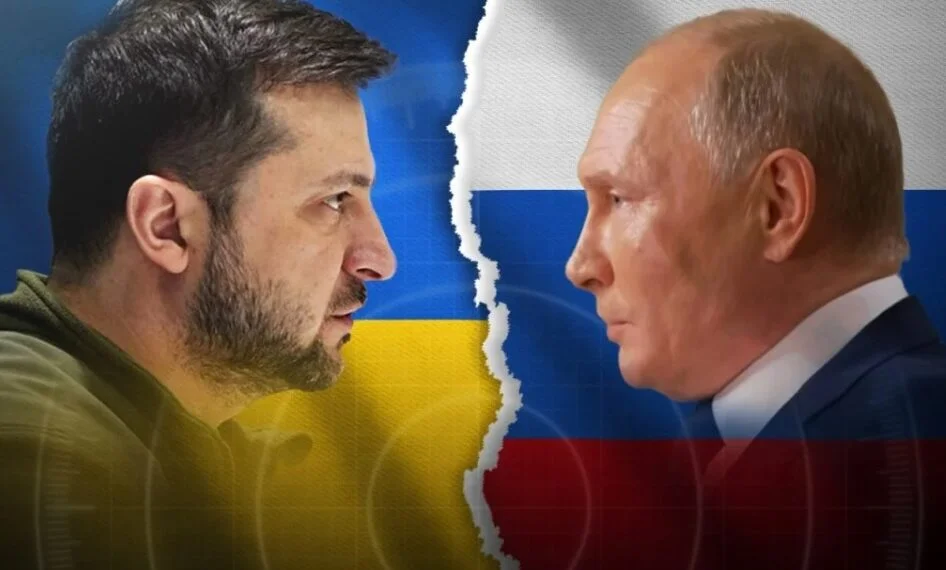
Ukrainian President Volodymyr Zelenskyy has issued a dramatic challenge to Russian President Vladimir Putin, publicly inviting him to Kyiv for direct peace talks as the war between the two countries continues with no comprehensive settlement in sight.
The invitation, made on January 30, 2026, represents a firm rejection of repeated proposals from the Kremlin for Zelenskyy to travel to Moscow, and underscores Kyiv’s insistence that any serious negotiations must reflect the realities of an ongoing conflict.
Zelenskyy’s message was blunt and deliberate. He said he was prepared to meet Putin face to face in Kyiv, adding pointedly that the Russian leader should come “if he dares.”
Ukrainian officials later explained that the statement was intended to signal both readiness for dialogue and refusal to negotiate under conditions that Ukraine considers unsafe or politically unacceptable. For Kyiv, the location of talks has become a matter of principle as well as security.
The Ukrainian president made clear that holding negotiations in Moscow or Belarus was not an option while Russian forces continue military operations against Ukraine.
He described Moscow as the “capital of a terrorist,” reflecting Kyiv’s position that Russia is waging an unlawful war marked by attacks on civilian infrastructure and population centres.

Ukrainian authorities argue that traveling to Russian-controlled territory under such circumstances would undermine their sovereignty and expose their leadership to unacceptable risks.
Ukraine’s Foreign Minister Andrii Sybiha provided further context to the invitation, noting that Zelenskyy is willing to engage in direct talks focused on concrete and sensitive issues that have prolonged the conflict.
Among these are territorial disputes arising from Russia’s occupation of Ukrainian regions, as well as the future of the Zaporizhzhia Nuclear Power Plant, Europe’s largest nuclear facility, which has been under Russian control for much of the war.
Kyiv has repeatedly warned that the situation at the plant poses serious safety and environmental risks, both for Ukraine and the wider region. Sybiha emphasized that any meeting between the two presidents must be substantive rather than symbolic.
According to him, Ukraine seeks discussions that can lead to enforceable outcomes, particularly on security guarantees, territorial integrity, and the protection of critical infrastructure. He added that Kyiv remains committed to diplomacy, but only on terms that respect international law and Ukraine’s independence.
The challenge to Putin comes at a time of renewed diplomatic activity surrounding the conflict. The United States has been facilitating indirect talks between Ukrainian and Russian representatives in Abu Dhabi, with a second round of discussions scheduled for February 1, 2026.

These talks are aimed at narrowing differences on humanitarian issues, energy security, and potential confidence-building measures, although no breakthrough has yet been announced. Washington’s involvement has intensified in recent weeks, with U.S. President Donald Trump personally engaging both sides.
Trump recently disclosed that Putin had agreed to a temporary pause in strikes on energy infrastructure during a period of extreme winter cold, a move framed as a humanitarian measure to prevent further hardship for civilians.
While Kyiv acknowledged the reported pause, Ukrainian officials cautioned that limited or temporary steps should not be mistaken for a broader de-escalation. Against this backdrop, Moscow has maintained its position that any direct meeting between Putin and Zelenskyy must take place in the Russian capital.
The Kremlin has said it is prepared to provide security guarantees for such a visit, arguing that Moscow offers a controlled and neutral environment for talks. Ukrainian officials have dismissed these assurances as unrealistic, insisting that they do not address the underlying issue of trust amid ongoing hostilities.
Russian authorities have so far avoided responding directly to Zelenskyy’s invitation to Kyiv, instead reiterating their preference for Moscow as the venue for high level negotiations. Analysts say the standoff over location reflects deeper disagreements about the nature of the talks themselves.
While Russia has often framed negotiations as a means to formalize existing territorial gains, Ukraine insists that any dialogue must begin with respect for its internationally recognized borders.
Zelenskyy’s challenge is as much a political statement as a diplomatic one. By inviting Putin to Kyiv, Ukraine is asserting its confidence in its capital’s security and its refusal to concede symbolic ground.

The move also places pressure on Russia to demonstrate sincerity about dialogue, particularly as global partners continue to call for a negotiated end to the conflict.
For now, the prospect of a face to face meeting between the two leaders remains uncertain. Yet the invitation has injected new energy into diplomatic discussions, highlighting Ukraine’s readiness to talk while reinforcing its red lines.