Els: MBN360 Agribusiness
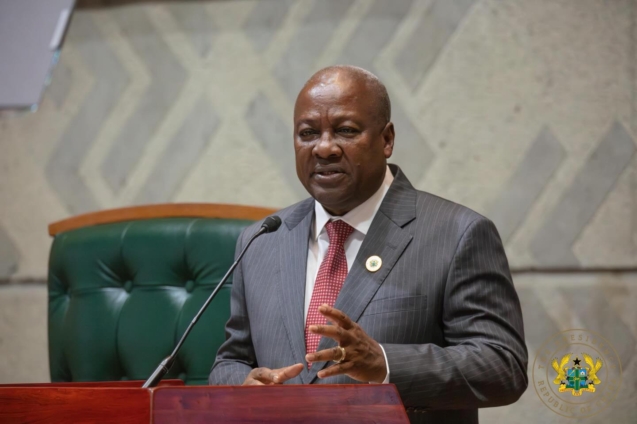
President John Mahama has declared that Ghana must seize the opportunity presented by the current crisis in the global cocoa market to fundamentally shift away from the instability of raw material exports.
He said this at the opening of the Ghana Tree Crops Investment Summit & Exhibition at the Accra International Conference Centre (AICC) on Tuesday, February 17, 2026.
Addressing the gathering, the President emphasised the urgent need for value addition across the country’s agricultural export sector.
“Recently, we’ve had a crisis with cocoa. It hasn’t affected only Ghana; it has affected all cocoa-producing countries,” President Mahama stated.
“It shows how unstable raw material exports are if you don’t process and add value. We must take advantage of this crisis to make a pivotal change in how we handle our raw exports.”
Read also:
- Aggressive Lending Cycles Must End Now- Asiama to Banks
- Government Targets Digital Innovation in Ghana’s Mining Sector
- NDC Expels Umar Sanda over Ayawaso East Independent Bid
- NPP Extends Executive Tenures Ahead of Internal Elections
- Abossey Okai spare parts dealers urge calm, demand tax education
His comments come at a time when Ghana’s once-reliable cocoa sector is facing one of its most severe liquidity crises in decades.
The summit, a four-day event themed “Sustainable Growth Through Tree Crop Investments: Resetting and Building Ghana’s Green Economy,” aims to attract investment and shift focus toward processing six priority crops: cashew, shea, oil palm, coconut, rubber, and mango.
Amid the turbulence, President Mahama took a moment to personally connect with the struggles of the nation’s farmers, revealing his own stake in the sector.
“I want to share an example from my own farm. I was given 50 acres of land, and I planted cocoa on it, so I am a cocoa farmer,” he told the gathering.
“When the government reduces the price of cocoa, it affects me too. I want to empathize with farmers so that when we make policy decisions, we understand their impact on families.”