Read also:
- Ghana’s Frank Acheampong Shines in China, Finishes as Henan FC’s Top Scorer.
- A-G Surcharges Former NSA Officials Osei Assibey Antwi and Gifty Oware-Mensah, Orders Refund of GH¢2.4 Billion
- Six Years of Unemployment Among Doctor of Medical Laboratory Science Graduates Threatens Patient Safety and Healthcare Quality in Ghana
- WAMCO Seeks More Raw Cocoa to Boost Production and Create Jobs
- Daddy Lumba’s Funeral to Proceed as Planned After Court Ruling
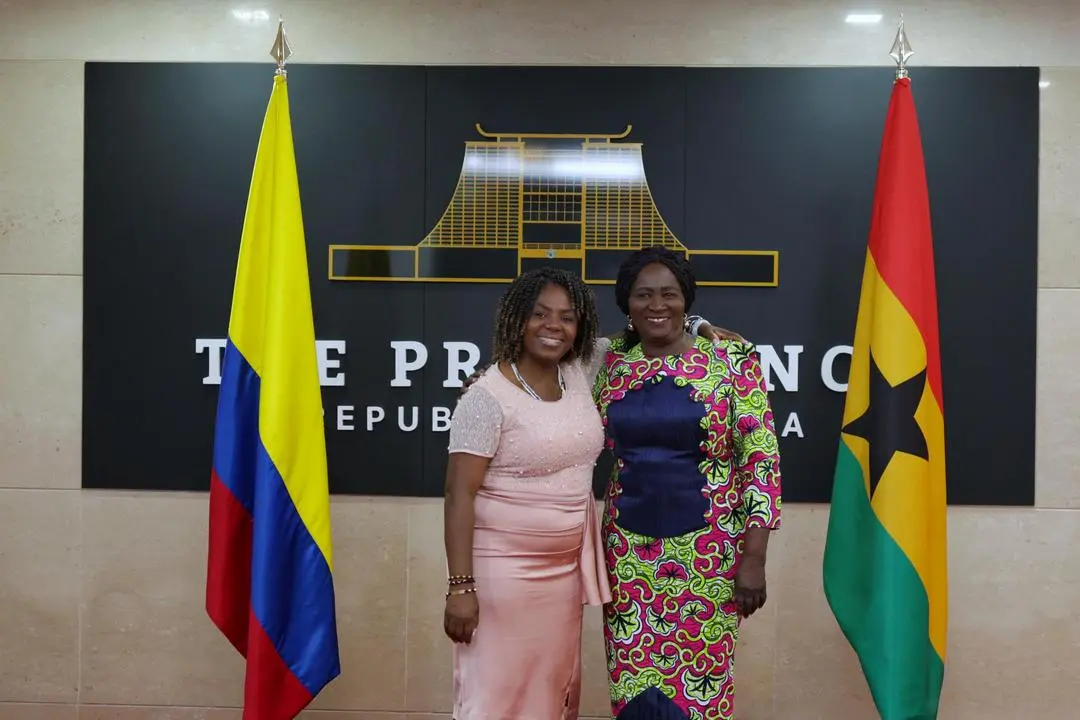
Ghana’s Vice President, Professor Naana Jane Opoku-Agyemang, has reaffirmed the country’s commitment to strengthening cooperation with Colombia. This comes after a high-level meeting with Colombia’s Vice President, Francia Elena Márquez Mina, in Accra, where they signed a Memorandum of Understanding (MoU) to facilitate joint projects in areas such as immigration, agriculture, and education.
Professor Opoku-Agyemang highlighted the shared values and common aspirations between the two nations, citing their historical linkages and cultural affinities. She also emphasized Ghana’s interest in working with Colombia to advance equitable environmental governance and address global climate challenges.
The Vice President identified potential areas for collaboration, including agriculture, digital innovation, climate resilience, and trade investment. She noted that improved air and maritime connectivity between the two countries would be crucial to unlocking these opportunities.
The meeting is seen as a significant step in strengthening South-South cooperation and promoting mutual development goals between Ghana and Colombia.

The Vice President welcomed the proposal to expand the ongoing language cooperation programme to include Ghanaian English teachers in Colombia, stating that such an initiative would deepen cross-cultural understanding and strengthen institutional capacity. She emphasised that educational exchange remains a key pillar of Ghana’s development strategy.
On cultural cooperation, Professor Opoku-Agyemang highlighted the shared Afro-descendant heritage that connects the two nations. She said this presents fertile ground for collaboration in heritage tourism, cultural preservation, creative industries and diaspora engagement.
She outlined potential initiatives such as joint documentation of Afro-diasporic history, support for festivals and artistic exchanges, and partnerships in crafts, music and gastronomy. These, she noted, would promote social inclusion, create jobs, and preserve cultural memory for future generations.
Addressing climate change, the Vice President expressed Ghana’s interest in working closely with Colombia on climate resilience, conservation and environmental governance. She stressed that developing countries must partner more intentionally to confront global environmental challenges, and said Ghana welcomes Colombian collaboration in areas such as forest conservation, biodiversity protection, and climate-smart agriculture.
Professor Opoku-Agyemang also reaffirmed Ghana’s commitment to an inclusive and equitable global governance system—one that amplifies the voices of developing nations and promotes South-South cooperation as an engine for sustainable development.
She concluded by expressing confidence that the engagements held in Accra would elevate the partnership between Ghana and Colombia, driving mutual prosperity and addressing shared global challenges.
Colombia’s Vice President, Francia Elena Márquez Mina, reaffirmed her country’s commitment to strengthening relations with Ghana and the wider African continent, emphasizing shared history, cultural ties, and growing opportunities for cooperation.

She described the renewed engagement between Colombia and Africa as both historic and essential, noting that reconnecting with the continent is a priority for Colombia’s foreign policy. She said the deep cultural and ancestral links between African and Afro-descendant communities form a natural foundation for expanded collaboration.
Vice President Márquez highlighted the progress made in recent years, pointing to agreements signed between Ghana and Colombia in education, agriculture and tourism, which she said are opening fresh pathways for mutual development. She welcomed the opportunity to further deepen bilateral cooperation, describing Ghana as a key partner in Colombia’s efforts to strengthen South–South relations.
Touching on cultural diplomacy, the Colombian Vice President emphasized that collaboration in culture is fundamental to building lasting ties between the two nations. She noted that cultural exchanges help both countries share their heritage while promoting mutual learning.
She referenced recent initiatives aimed at strengthening cultural and spiritual connections, including music, dance, crafts and gastronomy. A newly signed Memorandum of Understanding between the two countries seeks to expand cultural and artistic cooperation, protect cultural heritage and enhance collaboration in education and technology.
As part of these efforts, Colombia will participate in Ghana’s Traditional Music Festival, celebrating expressions of African diaspora culture. Ghana has also been invited to take part in Colombia’s International Book Fair in 2026, an opportunity to showcase Ghanaian literature and creativity on an international platform.
Vice President Márquez further noted the growing collaboration on Spanish language education, highlighting ongoing efforts to support the teaching of Spanish to Ghanaian diplomats and promote broader educational partnerships.
She said these initiatives demonstrate the shared commitment of Ghana and Colombia to deepen their cultural, economic and diplomatic ties, fostering mutual respect and strengthening cooperation across both regions.