Els: MBN360 News
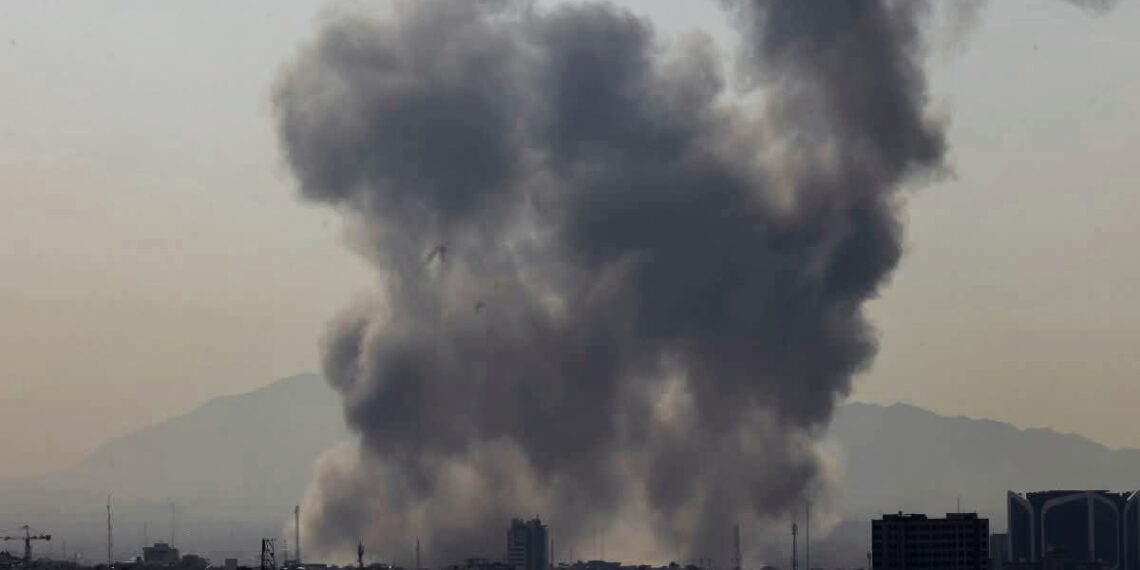
The United States and Israel have launched coordinated military strikes on Iran, dramatically escalating tensions in the Middle East and raising fears of a wider regional conflict.
President Donald Trump confirmed the action on Saturday, describing the campaign as necessary to eliminate what he called an imminent security threat to the United States. The Pentagon later disclosed that the U.S. operation had been named “OPERATION EPIC FURY.”
Iran responded swiftly, launching missiles toward Israel, according to the Israeli military, signalling the start of what could become a prolonged confrontation between Tehran and its long-time adversaries.
The renewed hostilities have further dimmed hopes of a diplomatic breakthrough over Iran’s disputed nuclear programme, which has been at the centre of tensions between Tehran and Western powers for decades.
Operation Epic Fury and U.S. Objectives

In a video message shared on social media, President Trump said the U.S. had launched a “massive and ongoing” operation against the Islamic Republic. He vowed to ensure that Tehran would not obtain a nuclear weapon.
“Our objective is to defend the American people by eliminating imminent threats from the Iranian regime.”President Trump
Two U.S. officials revealed that the military had initiated a series of air and sea strikes against targets inside Iran. While the full scope of the campaign was not immediately clear, a U.S. official indicated that the operation could continue for several days.
Trump has in recent weeks overseen a significant buildup of U.S. military assets in the region, a move widely interpreted as pressure on Iran amid stalled nuclear negotiations.
He also accused Tehran of developing long-range ballistic missiles capable of threatening the United States and warned that Washington would dismantle Iran’s missile industry if necessary.
Trump Cites 1979 Hostage Crisis
In his address, Trump invoked decades of hostility between Washington and Tehran, referencing the 1979 seizure of the U.S. embassy in Tehran. During that crisis, 52 Americans were held hostage for 444 days following Iran’s Islamic revolution.
He cited the hostage episode and subsequent attacks that the United States has blamed on Iran as justification for the strikes.
Trump urged Iranian civilians to seek shelter, warning that “bombs will be dropping everywhere.” However, he also directed a message toward the Iranian population, suggesting that the military campaign could open a political opportunity.
Read also:
- African Health Journalism Struggles with Dwindling Resources and Rising Health Issues
- Ghana Embassy in Doha advises nationals to remain indoors after missile attack
- Iranian Missiles Strike Gulf States: One Dead in Abu Dhabi as Tensions Escalate
- Police undertake ‘show of force’ ahead of Ayawaso East by-election
- Ghana marks 78th anniversary of 1948 crossroad shooting
“When we are finished, take over your government. It will be yours to take. This will be probably your only chance for generations.”President Trump
The remarks indicate that Washington views the strikes not only as a military operation but also as a potential catalyst for political change inside Iran.
Israel Calls for End to ‘Yoke of Tyranny’

Israeli leaders echoed Washington’s stance. Prime Minister Benjamin Netanyahu described the joint assault as a move that would create conditions for Iranians to reclaim their future.
“The time has come for all sections of the people in Iran … to remove the yoke of tyranny from the regime and bring a free and peace-loving Iran.”Prime Minister Benjamin Netanyahu
Israel’s Defence Minister, Israel Katz, characterised the action as pre-emptive. “The State of Israel launched a pre-emptive attack against Iran to remove threats to the State of Israel,” he said.
The strike follows a 12-day air war between Israel and Iran in June, as well as repeated warnings from both Washington and Tel Aviv that further action would follow if Tehran continued advancing its nuclear and missile programmes.
Regional and Religious Timing

The military escalation comes during Ramadan, the Muslim holy month of fasting observed by millions worldwide. It also precedes the Jewish holiday of Purim, which commemorates the salvation of Jews from annihilation in ancient Persia.
The timing adds symbolic weight to the conflict, intensifying regional sensitivities and raising concerns about potential unrest across neighbouring states.
A source told Reuters that Iran’s Supreme Leader, Ali Khamenei, had been transferred to a secure location outside Tehran as the situation unfolded.
The confrontation threatens to destabilise an already volatile region, potentially drawing in proxy forces and regional allies. It also complicates international diplomatic efforts aimed at resolving Iran’s nuclear dispute through negotiation rather than force.
As Operation Epic Fury continues, global leaders are closely monitoring developments, with markets and security agencies bracing for further escalation.
Whether the strikes achieve their stated objectives or instead ignite a broader war remains uncertain. What is clear is that the Middle East has entered another dangerous chapter in its long-running cycle of conflict, with consequences that may reverberate far beyond the region.