Read also:
- MIIF Unveils Strategic Investment Agenda for Critical Minerals
- Starmer’s Chief of Staff Morgan McSweeney Resigns
- Ghana Scores 72% in World Bank Financial Index
- Mahama Recalls Baba Jamal as Ghana High Commissioner to Nigeria
- OSP Probes Alleged Vote Buying in NPP, NDC Primaries
Els: MBN360 Business
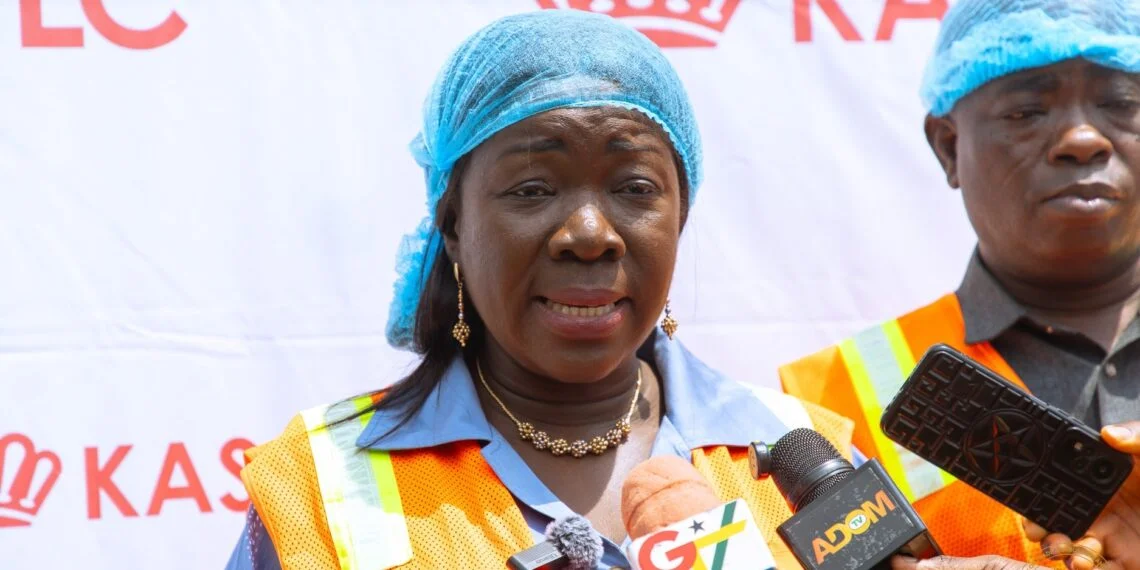
The Ministry of Trade, Agribusiness and Industry (MoTAI) has reaffirmed its commitment to a “manufacturing-first” economic recovery with the sector Minister, Hon. Elizabeth Ofosu-Adjare, conducting a high-stakes working tour of two of Ghana’s industrial anchors: Kasapreko PLC and Guinness Ghana Ltd.
The visit served as a strategic platform to assess the health of the beverage industry and to announce targeted interventions aimed at stabilizing the domestic supply chain. Accompanied by her Deputy, Hon. Sampson Ahi, the Minister emphasized that the private sector remains the primary engine for Ghana’s long-term development.
“With macroeconomic indicators showing a significant appreciation of the cedi, the Ministry is now shifting its focus from currency stabilization to resolving the granular, on-the-ground bottlenecks that hinder factory floor productivity.
“The Hon. Minister urged importers to transition into manufacturing and source locally where capacity existed, explaining that local production reduced pressure on ports and strengthened the domestic economy”Ministry of Trade, Agribusiness and Industry
At the Kasapreko PLC headquarters, Managing Director Mr. Richard Adjei provided a transparent look into the operations of the 36-year-old company.

While acknowledging the government’s success in reforms that had stabilized the economy, including the reduction of borrowing costs and duties, he highlighted a critical legislative victory: the extension of the export proceeds repatriation period from 60 to 120 days. This shift has provided much-needed liquidity for exporters operating in volatile regional markets.
However, the “Spintex Enclave,” where many of these factories are located, faces a persistent infrastructure deficit. Mr. Adjei raised alarms over inadequate water supply and logistics delays at the borders, which are often exacerbated by non-tariff barriers.
Furthermore, the threat of smuggled rival goods continues to undermine local manufacturing efforts, prompting a call for stricter border enforcement
Read also:
- Speaker Bagbin orders anti-LGBTQ bill scheduled for parliamentary debate
- Ghana declares Wednesdays as “Fugu Day” to promote traditional attire
- Renowned educationist Dr Richard Asiedu appointed President-General of Eminent West Africa Nobles Forum
- Civil society group petitions Mahama to remove COCOBOD CEO
- We need renovation — Ashaiman traders protest over redevelopment plan
Resolving the Spintex Water Crisis
In a direct response to the concerns raised at Kasapreko, Hon. Ofosu-Adjare pledged immediate inter-ministerial coordination.
Recognizing that water is the lifeblood of beverage manufacturing, she committed to working with the Ghana Water Company and the Ministry of Water Resources to ensure that industrial zones receive the prioritized supply necessary to sustain 24-hour operations.

The Minister also noted that as the cedi continues its upward trajectory against major currencies, the “exchange rate anxiety” that previously stalled expansion plans is beginning to fade. This newfound stability is expected to support Kasapreko’s upcoming milestone – the opening of a state-of-the-art production facility at Adeiso in the Eastern Region.
The tour continued to Guinness Ghana Ltd, where Managing Director Mr. Frédéric Ferraille emphasized the need for a “partnership-based relationship,” between the state and large-scale manufacturers. Guinness, a staple of the Ghanaian industrial landscape, is currently exploring ways to deepen its local sourcing of raw materials to align with the government’s agribusiness goals.
Hon. Ofosu-Adjare used the Guinness visit to push the 24-hour economy policy, urging the company to take full advantage of the Accelerated Export Development Programme. By operating multiple shifts and leveraging export incentives, the Minister believes the beverage sector can lead the charge in reducing Ghana’s trade deficit.
“Mr Ferraille described the visit as an important opportunity to deepen collaboration between Government and Guinness Ghana, stressing the need for a partnership-based relationship”Ministry of Trade, Agribusiness and Industry
According to MoTAI, the tour signals a move toward a more hands-on industrial policy. By addressing the documentation hurdles at the ports and the utility shortages in the Spintex enclave, the government is attempting to create a “frictionless” environment for manufacturing.

As importers are encouraged to pivot toward local production, the Ministry is positioning 2026 as the year of the Ghanaian Industrial Renaissance.