Els: MBN360 News
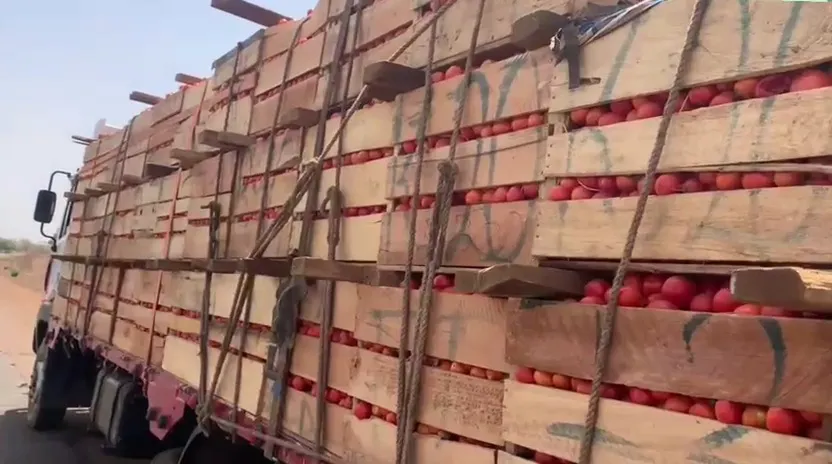
Tomato traders and transporters in Ghana have resumed transporting produce from neighbouring Burkina Faso, despite recent deadly attacks in the Sahelian region.
The decision follows rising prices at home and assurances of protection from authorities in both countries.
Nana Agyenim Boateng, a leading member of the Ghana National Association of Tomato Traders and Transporters, said economic necessity had forced drivers to return to Burkina Faso, where much of Ghana’s tomato supply is sourced.
He says Burkinabe authorities had given assurances that Ghanaian drivers would be protected along key transport corridors.
“We had a meeting with the Ghana ambassador to Burkina Faso and the Burkina Faso Minister for the Interior and they have assured us they have demarcated some areas along the farmgate that are terrorist-prone areas”, Agyenim Boateng said.
“So they have communicated to the farmers that they have to bring the fruits to a safe place for the Ghanaian transporters and the traders to purchase them. So they have directed some of the safe areas for our drivers to go”.
So it will take those in Paga, the border town, 72 hours to reach Burkina Faso while those in Kumasi will spend four days”, he added.
Travel advisory
Meanwhile, security analyst, Col Festus Aboagye (Rtd) is asking government to among others issue formal travel advisories for citizens travelling to the Sahel region, citing limits to ECOWAS free movement protections.
He stressed that the Ghanaian government has a primary duty to protect its citizens abroad and provide guidance on areas deemed high-risk, particularly for traders whose livelihoods depend on cross-border commerce.
Read also:
- Transparency key to fighting corruption – NCCE Chairperson
- Nigeria to hold inquest into death of Chimamanda Ngozi Adichie’s toddler
- Tiwa Savage partners Berklee to train 100 young Nigerian music creators
- Beating Heart of Lions was crucial ahead of Hearts of Oak Clash this weekend- Gold Stars Executive
- Parliament approves Ghana Accelerated National Reserve Accumulation Policy
“Government must regularly issued what has become known as travel advisories to let Ghanaians know the risk. And then expect that Ghanaians will oblige.
“This ECOWAS protocol of free movement of goods, people and services does not apply to the AES…it’s got its own passport and all manner of mechanisms. And they have not binding responsibility except under international law to ensure that people are safe within the territorial borders of Burkina Faso.”
Bagre dam gains
Executive Director of the West Africa Center for Counter Extremism, Mutaru Mumuni Muqthar, has also warned that Ghana is losing an opportunity to use water from Burkina Faso’s Bagré Dam for irrigation.
He made the remarks in an interview on The Forum, a current affairs programme on Asaase Radio, on Saturday (22 February).
“The Bagré Dam, every year we are spilling the water onto our spaces, that often claim life and property. This is a huge opportunity to cultivate that and make sure we are using it for irrigation purposes. We are losing that opportunity to utilise it and we are suffering for it,” he told the host Wilberforce Asare.
“Because everyday people are evacuated, lives are lost and sometimes there is a lot of fatigue talking about it. Government must take this seriously and put in place a mechanism that addresses it in a very comprehensive and sustainable way.”
Structural weaknesses
Muqthar was adding his voice to a recent terror attack in Burkina Faso on 14 February that led to the death of eight Ghanaian tomato traders.
He linked the issue to Ghana’s heavy dependence on tomato imports from Burkina Faso, arguing that structural weaknesses in agricultural planning and high local production costs are pushing traders to source cheaper produce across the border.
“One of this challenge is the culture of the Ghanaian trader. They bypass and go to Burkina Faso to buy tomatoes because our own is more expensive than what they have in Burkina Faso. And so, the cost of production for them is excessively higher,” he said.
“Some also make the argument that we tend to be exploitative whiles we don’t have enough, those who do have tend to escalate the prices in ways that are prohibitive to the Ghanaian traders. And I think that we need a strategy that is sustainable to ensure that we are dealing with this effectively.”