
Read also:
- Macron Deems US-Greenland Standoff As Europe’s Wake-up Call
- Mahama Clears GH¢115.9m Premix Fuel Arrears
- Call from constituents drove Amina Adam’s decision to contest – Spokesperson
- Supreme Court throws out AG’s request to review key aspect in Adu-Boahene case
- VALCO to Get New Lease on Life with Modernization Push
Els MBN360 News
President of the Ghana Institute of Horticulturists (GhIH), Dr. Mohammed Mujitaba Dawuda, has issued an urgent appeal for government intervention following a catastrophic infestation of root-knot nematode (RKN) in the Upper East Region, during a high-level working visit to the region.
Dr. Dawuda revealed at the Regional Directorate of Agriculture and the United Nations World Food Programme in the region that the soil-borne pest has caused yield losses exceeding 70 percent, specifically devastating the tomato sub-sector.
This agricultural crisis has delayed crop maturity and significantly compromised product quality in the Northern parts, forcing many smallholder farmers to abandon vegetable production entirely.
“The situation in the Upper East is a national emergency. We are seeing farmers lose nearly three-quarters of their anticipated harvest to a pest that lives out of sight in the soil.
“Public funding is essential to make biosafe nematicides accessible to smallholders. We cannot talk about food security while the very foundation of our vegetable production is being hollowed out by this infestation”Dr. Mohammed Mujitaba Dawuda, President of the Ghana Institute of Horticulturists
The institute warned that without immediate biosafe soil treatments, Ghana’s reliance on vegetable imports from neighboring countries will continue to rise. Dr. Dawuda emphasized that the Upper East Region, despite possessing vast tracts of arable land, is currently battling a “national agricultural challenge.”

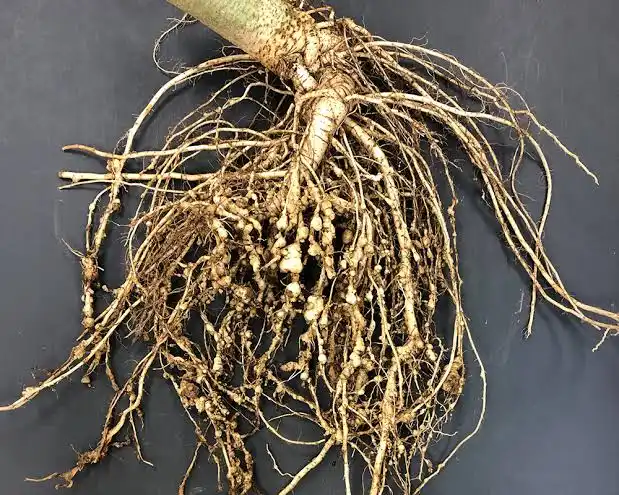
The root-knot nematode attacks the root systems of crops, creating characteristic “galls” or knots that prevent the uptake of water and essential nutrients. This biological blockage mimics the symptoms of drought and nutrient deficiency, often leading farmers to misdiagnose the problem and apply ineffective treatments.
Dr. Dawuda, who also serves as the Head of Horticulture at the University for Development Studies (UDS), underscored the necessity for a shift toward environmentally safe nematicides and biofumigants to restore soil health immediately.
Revitalizing Irrigation
Stakeholders at the discussion identified the lack of sustainable water sources as a primary constraint that exacerbates the impact of nematode damage. Participants specifically called for the rehabilitation of the Pwalugu Dam and other local irrigation schemes to support year-round production.
They argued that ensuring a steady water supply, farmers can better manage crop stress and implement effective crop rotation strategies, which are critical for breaking the nematode life cycle.
The Upper East Regional Director of Agriculture, Alhaji Fuseini Zakaria, noted that current chemical management strategies are often too costly or environmentally harmful for the average farmer to sustain.
To address these technical gaps, GhIH pledged to collaborate with the Ministry of Food and Agriculture (MoFA) and the United Nations World Food Programme on a massive capacity-building drive.

According to Dr. Dawuda, this partnership will focus on “training Agricultural Extension Agents in the latest soil-management technologies and the use of RKN-resistant crop varieties.”
Building Local Capacity
The visit also marked the official move to establish a GhIH Upper East regional branch, a tactical step to decentralize horticultural expertise. By embedding specialized researchers and practitioners within the region, the institute aims to provide real-time solutions to local production constraints.
Dr. Dawuda emphasized that the Upper East has the potential to become a net exporter of onions and tomatoes if the “nematode hurdle,” is cleared through strategic research and policy engagement.
“The potential of the North is immense, but it is currently being undermined by biological and infrastructural deficits. By establishing a permanent branch here, the Ghana Institute of Horticulturists is committing to a long-term presence.
“We are not just here to identify problems; we are here to anchor Ghana’s ambition of a modernized, round-the-clock agricultural economy”Dr. Mohammed Mujitaba Dawuda, President of the Ghana Institute of Horticulturists

The Regional Directorate of Agriculture commended the GhIH for its proactive stance. Regional Director Alhaji Fuseini Zakaria reiterated that revitalizing the horticultural sector is a prerequisite for job creation and economic growth in Northern Ghana.