Read also:
- Mahama Hails Historic Education Reset to Ghanaians in Zambia
- Mahama Credits Energetic Team for Historic Turnaround
- Government Injects Millions and 660 Tractors into Food Security
- Kennedy Agyapong Rules Out Independent Bid but Slams Betrayal
- President Mahama arrives in Zambia for three-day State visit
Els MBN360 Agribusinee
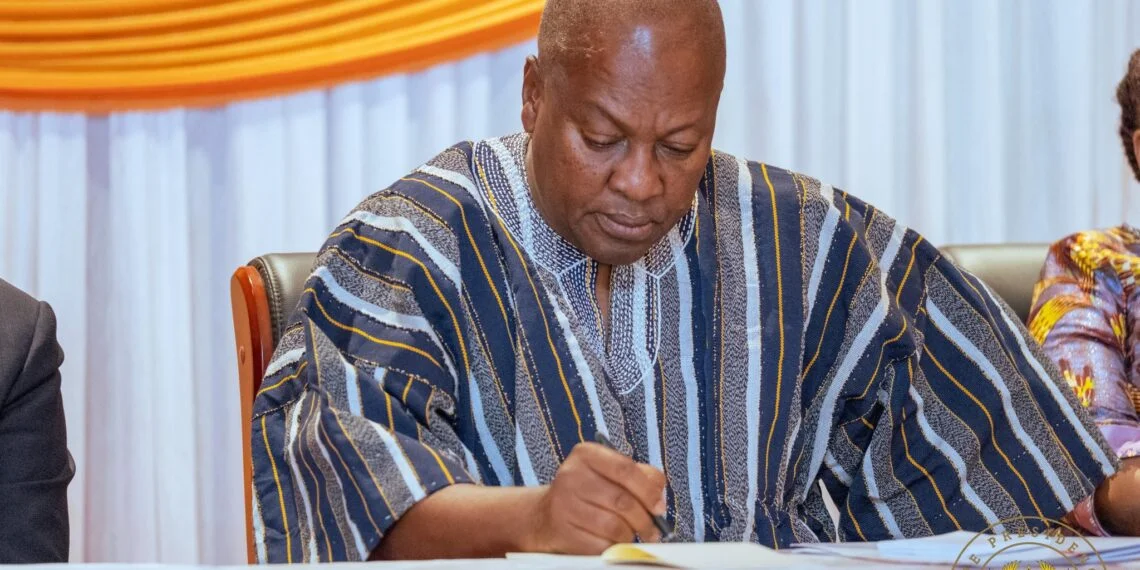
Speaking to a vibrant gathering of the Ghanaian community in Zambia during his three-day state visit, President John Dramani Mahama has signaled a strategic shift in his administration’s agricultural policy.
While the Agriculture for Economic Transformation pillar of the Reset Agenda has successfully triggered a massive surge in food production, the President noted that the resulting price drops now require the government to move from a “production-first” model to an “investor-protection” framework.
The President’s address highlighted the dual success of grassroots poverty alleviation and large-scale commercial farming. However, the sheer volume of grain now hitting the market – specifically maize and soya bean – has created a “good problem,” that the government is now moving to stabilize.
This creates a repeatable six-week wealth-creation cycle, allowing families to sell, profit, and immediately re-register for a new batch.
Beyond Household Farming
President Mahama also pointed to the broader success of the Feed Ghana Programme, noting that commercial agriculture has seen an unprecedented increase in grain production. The promotion of soya bean and maize at scale was intended to feed the local poultry industry and reduce import dependency.

“Aside from the Nkoko Nkitikiti there are other aspects like the vegetable programme, which has seen an increase in vegetables. There’s also the promotion of commercial agriculture that has seen an increase in grain production maize, soya bean and so many things”President John Dramani Mahama
However, the President reiterated that the success of the vegetable and grain sectors has been so rapid that the market is currently experiencing a steep price decline.
For him, this is the clearest evidence that the Reset Agenda is working, though it now necessitates state intervention through the National Bufferstock to ensure that farmers do not become victims of their own productivity.
President Mahama emphasized that the ultimate goal of these programs is to ensure that “income enters the household,” consistently. By providing the feed and the birds, the government has effectively de-risked the poultry sector for the average Ghanaian.

As the administration looks toward the second half of 2026, the focus will remain on maintaining this momentum while implementing price floors to safeguard the livelihoods of those at the center of the transformation.