Els: MBN360 Agribusiness
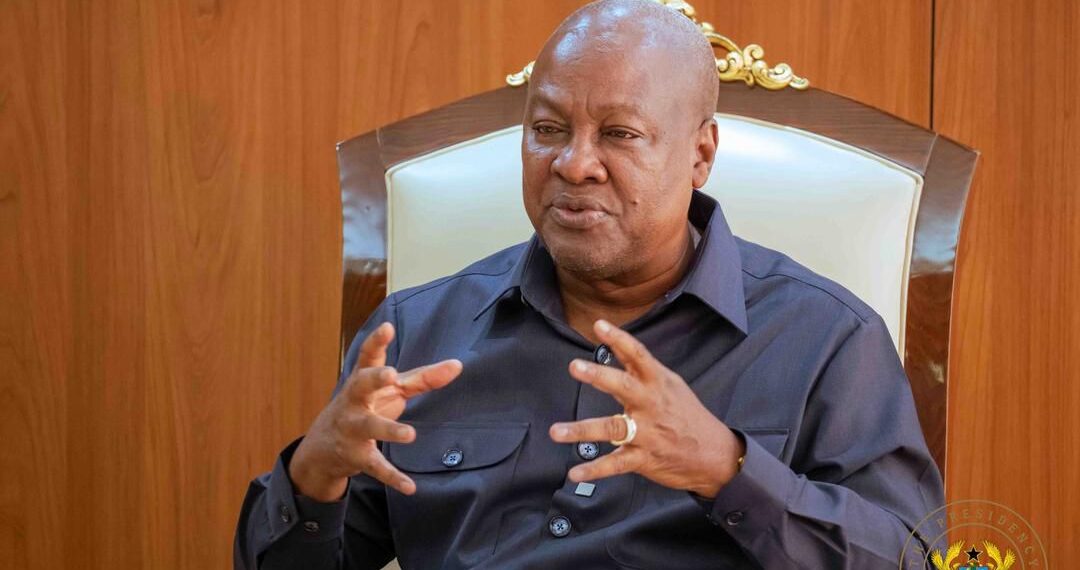
President John Dramani Mahama has called on Ghanaians, particularly public office holders and traditional authorities, to take agriculture seriously and actively engage in farming, describing it as both a national economic necessity and a personal passion shaped by his upbringing. He made the appeal while addressing participants at the Ghana Tree Crops 2026 Investment Summit and Exhibition.
Speaking candidly, President Mahama described himself simply as a farmer, stressing that agriculture remains one of the most important contributors to Ghana’s gross domestic product despite being undervalued socially for many years.
“I have two experiences. One, the son of a farmer. My father was at one time the biggest commercial rice farmer in Ghana, and so I grew up on the farm. And so, for me, agriculture is a passion, it’s a hobby”.President John Dramani Mahama
According to him, watching crops grow gives him personal satisfaction, reinforcing his belief that farming should be embraced with pride rather than treated as a fallback option.
He noted that agriculture is both a business and a passion, one that demands respect and commitment from those who benefit from the nation’s land and resources.
Lessons from Other Regions
President Mahama drew comparisons with experiences from his travels across Africa, particularly in East Africa, where farming among public officials is common practice.
He observed that in many of those countries, it is almost impossible to schedule meetings with senior public servants on weekends because they spend that time working on their farms before returning to official duties during the week.
He said the culture of farming among leaders in those regions demonstrates that agriculture can coexist with public service and professional life. According to him, this mindset reflects a deeper respect for land use, food security, and wealth creation through agriculture.
He argued that Ghana must adopt a similar attitude if it is to unlock the full potential of its agricultural sector. Farming, he said, should not be seen as incompatible with leadership or governance but rather as an extension of national responsibility.
Role of Traditional Authorities and Land Access
President Mahama emphasized that one of the major challenges facing tree crop development in Ghana is access to land. He therefore called on traditional rulers, as custodians of the land, to take a keen interest in initiatives that promote tree crops across the country.
He encouraged traditional authorities to support region specific crop development based on ecological suitability. According to him, northern Ghana is well positioned for sheanut plantations, the Brong Ahafo area for cashew, the Western Region for rubber and cocoa, and areas such as Dodowa for mango production.
He stressed that aligning crops with geography would enhance productivity and sustainability. He noted that agriculture, particularly tree crops, requires long-term commitment and secure land tenure.
Read also:
- CDD raises red flag over GH₵20,000 gift threshold in ministers’ code
- GSA, Indian Investors Forge New Industrial Cooperation Path
- National Executive Council (NEC) of CLOGSAG threatens nationwide strike on March 9
- Majority, Minority clash over bill to revert NIB name to BNI and overhaul national security structure
- “I like players who give me problems”- Black Stars Head Coach Otto Addo
For that reason, the involvement of traditional rulers is critical to ensuring that land access challenges do not continue to hinder growth in the sector. President Mahama also spoke about his personal farming ventures to illustrate why policy decisions in agriculture must be informed by lived experience.
He expressed gratitude to Daasebre Kwebu Ewusi VII, Paramount Chief of Abeadze Traditional Are for granting him fifty acres of land on which he planted cocoa, making him a cocoa farmer himself. He explained that being directly involved in farming allows him to empathize with farmers when policy decisions are made.
“And so, when the price was reduced by the government, it affected me too. I want to be able to empathise with farmers so that when we take any policy decision, we know that it has an effect on farmers and we feel it ourselves. If there’s no fertiliser, or if the price is high, I feel it myself because I also buy fertiliser”.President John Dramani Mahama
When cocoa prices are reduced, he said, he feels the impact personally. When fertilizer is scarce or expensive, he experiences the same challenges faced by ordinary farmers because he purchases inputs himself.
He further revealed that he recently acquired an additional one hundred acres of land, which he has dedicated to oil palm cultivation. He said irrigation systems are being installed on the farm, demonstrating his commitment to modern and sustainable agricultural practices.
A Call to Walk the Talk
President Mahama endorsed calls for leaders to actively invest in agriculture, stating that leadership must be demonstrated through action rather than rhetoric. He suggested that engagement in farming should become a consideration in public leadership, noting that when leaders farm, they better understand the realities facing rural communities.
“And so, I’m endorsing Andy’s suggestion. When I’m going to do a reshuffle, the mitigating factor will be that you must have a farm. So, public servants, ministers, you know, priests, clergymen, traditional rulers, everybody, you know, try and do some agriculture.”President John Dramani Mahama
According to him, neighboring Cote d’Ivoire offers a strong example, where nearly every public servant owns or manages a farm alongside official responsibilities.
He stressed that Ghana cannot continue to encourage citizens to return to the land if leaders themselves are disconnected from agriculture. Leading by example, he said, is the only credible way to change perceptions and restore confidence in farming as a viable and respected profession.
President Mahama concluded by reaffirming that agriculture, especially tree crop development, holds immense potential for employment, export earnings, and rural transformation.
He called on all Ghanaians to take a renewed interest in the sector, emphasizing that national development cannot be sustained without a strong agricultural foundation.
He said repositioning agriculture requires cultural change, policy support, and personal commitment from leaders and citizens alike. By embracing farming and valuing the land, he noted, Ghana can secure its food systems, strengthen its economy, and ensure inclusive growth for future generations.