Els: MBN360 Health
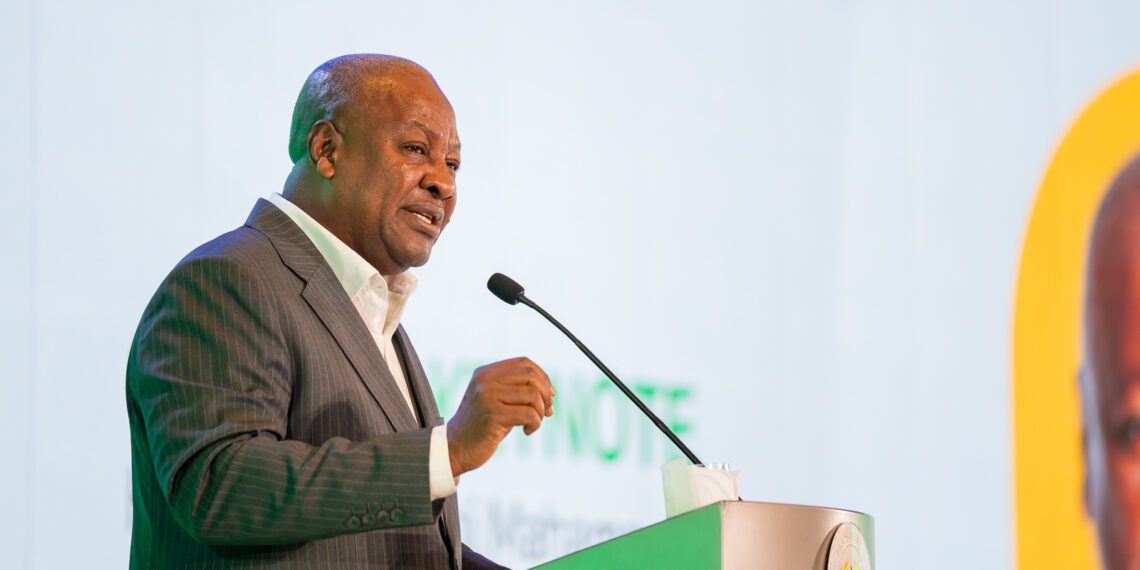
President John Dramani Mahama has called for urgent and coordinated global action to address mounting public health threats, warning that the world is facing a convergence of crises that require immediate and practical responses.
Speaking as co-chair of the One Health Summit in Lyon alongside French President Emmanuel Macron, he urged world leaders to move beyond declarations and commit to concrete action.
Addressing distinguished delegates, policymakers, and global health experts, President Mahama expressed appreciation to the French government for convening the summit and acknowledged the role of international organisations in advancing the One Health agenda.
He noted that the world is undergoing significant shifts, with longstanding assumptions being challenged across multiple sectors, particularly in global health.
ADVERTISEMENT
“We are living in truly interesting times, and much of what we previously took for granted is now being questioned, and our old answers have now become the new questions”.President of the Republic of Ghana, HE John Dramani Mahama
Interconnected Crises Demand Unified Response
President Mahama highlighted the growing complexity of global health challenges, pointing to the interconnected nature of human, animal, and environmental health. He warned that the surge in cross border health threats is affecting every aspect of life, from ecosystems to food systems.

“Every species is in the crosshairs, animals, humans, and plants,” he stated, linking environmental degradation to the rise in disease outbreaks and health vulnerabilities. He cited climate change as a central driver of these challenges, noting its visible impact across oceans, forests, and agricultural systems.
Drawing from Ghana’s experience, he referenced the impact of disease and pests on cocoa farmers, which threatens livelihoods and national economic stability. He also pointed to illegal mining activities that degrade forests and pollute water bodies, disrupting biodiversity and weakening natural systems that support human health.
According to the President, these challenges are not isolated. They are interconnected and mutually reinforcing, increasing in frequency and severity. He stressed that the One Health approach offers a practical framework for addressing these risks in a holistic manner.
Africa’s Traditional Knowledge Informs Modern Solutions
President Mahama underscored Africa’s long standing tradition of integrated living with nature, describing it as a foundation for the One Health concept. He noted that many African communities have historically relied on natural remedies and ecosystem based knowledge systems to manage health.
“In Africa, our lived experience leads us to accept without question that human survival, animal well being, and environmental care form a single interconnected system”.President of the Republic of Ghana, HE John Dramani Mahama
He pointed to the continent’s cultural heritage as evidence of early adoption of integrated health practices, including plant based therapies and community driven responses to disease and environmental challenges.
He argued that this knowledge should be combined with modern scientific approaches to strengthen global health systems.

Lessons from Recent Health Crises
Reflecting on recent global health emergencies, including COVID 19, mpox, Lassa fever, and Marburg virus outbreaks, President Mahama said these events have reinforced the importance of prevention and preparedness.
“These public health emergencies have taught us a simple truth, that prevention is not only more effective, but also much more cost-effective than cure”.President of the Republic of Ghana, HE John Dramani Mahama
He highlighted Ghana’s efforts to strengthen preventive healthcare through initiatives such as the Ghana Medical Trust Fund and Free Primary Healthcare programmes. These initiatives, he explained, aim to promote lifestyle changes and integrate traditional knowledge into modern health strategies.
The President also drew attention to the rising burden of non communicable diseases in Africa, revealing that such conditions account for 42 percent of all mortality in Ghana. He stressed the need for comprehensive approaches that address both infectious and non infectious health challenges.
Call for Equity in Global Health Systems
A central theme of President Mahama’s address was the need for fairness in global health governance. He warned that countries most vulnerable to health threats often lack the resources needed to respond effectively.
“The countries that are most at risk have the least resources to cope. This must change,” he said, calling for equitable access to financing, technology, data, and innovation.

He argued that a healthy and resilient Africa would contribute positively to global progress, rather than pose any threat. To achieve this, he urged the international community to support capacity building and strengthen health systems across developing regions.
The President also called for enhanced research collaboration and knowledge sharing, as well as greater investment in infrastructure to support prevention, detection, and response mechanisms.
Three Key Calls to Action
President Mahama outlined three priority actions for global leaders. First, he called for a transition from commitments to implementation, urging countries to move beyond declarations and focus on tangible outcomes. “Let us shift from commitment to action. The period of declarations must come to an end,” he said.
Second, he advocated for the integration of One Health strategies into national development plans and global security frameworks. He emphasised that public health must be recognised as a core component of sustainable development.
Third, he called for the establishment of robust surveillance and early warning systems capable of detecting and responding to emerging threats. He stressed that these systems must be dynamic and efficient, avoiding unnecessary bureaucratic complexity.

President Mahama concluded by urging participants to treat the Lyon summit as a turning point in global health cooperation. He emphasised that the decisions made at the gathering would have lasting implications for future generations.
“The decisions we make at this summit will shape the future of global health security,” he said, calling for measurable outcomes that benefit both people and the planet.
His remarks reinforced the urgency of collective action in addressing global health challenges and highlighted Ghana’s commitment to contributing to international efforts aimed at building resilient and inclusive health systems.