Els: MBN360 News
Deputy Finance Minister Thomas Ampem Nyarko has issued a strong warning to State-Owned Enterprises, declaring that loss-making entities will face decisive action, including restructuring, mergers, privatisation, or outright closure.
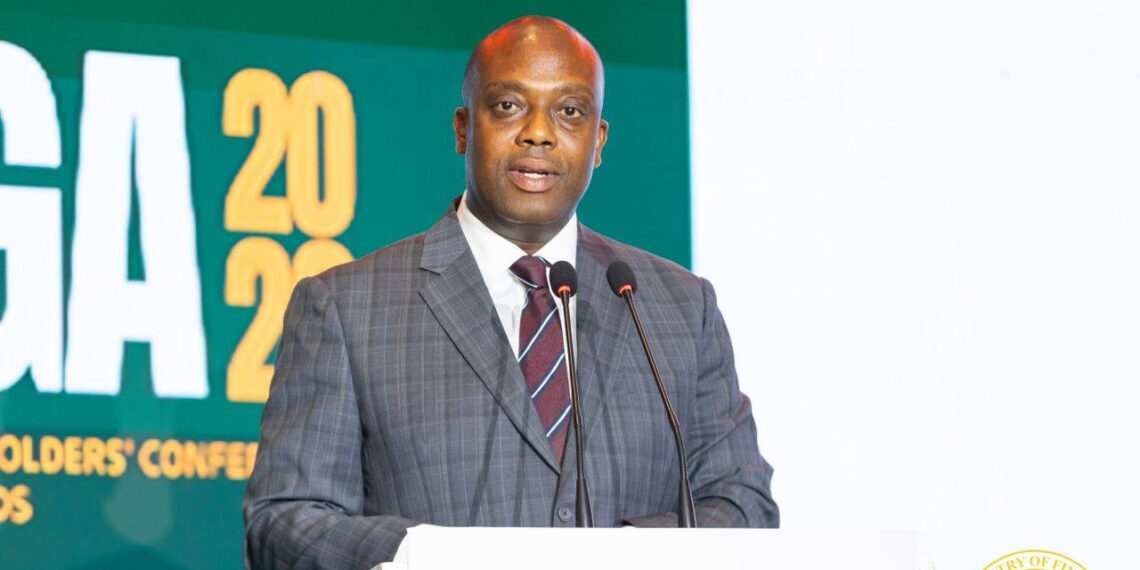
Delivering remarks at the 2026 Stakeholder Conference organised by State Interests and Governance Authority on behalf of Finance Minister Dr. Cassiel Ato Forson, he emphasized that the era of persistent underperformance within public enterprises will no longer be tolerated.
He reiterated the government’s position in clear terms, stating that “loss-making SOEs will no longer be tolerated. They will be swiftly reformed, merged, privatised, or shut down.” The message forms part of a broader push under President John Dramani Mahama’s economic reset agenda.
The Deputy Minister highlighted significant improvements in Ghana’s macroeconomic environment, noting that stability has been restored after a challenging period. Inflation, he said, has declined sharply to 3.3 percent in February 2026 from 23.8 percent in January 2025, signaling improved price stability.
He added that the Ghanaian cedi has shown signs of resilience, while fiscal consolidation efforts are progressing steadily. Economic growth has also strengthened, with the Ghana Statistical Service reporting a 6 percent expansion in 2025.
Monetary conditions have also improved, with the Bank of Ghana reducing the policy rate significantly from 28 percent in March 2025 to 14 percent. According to him, these developments have eased financial pressures that previously constrained SOEs, particularly the high cost of borrowing.

“With this macroeconomic improvement, things will definitely improve,” the Deputy Finance Minister noted, stressing that stability now provides a foundation for better performance.
SOEs Must Deliver Results
Despite the improved economic conditions, the Deputy Minister made it clear that State-Owned Enterprises must now rise to the challenge. He stressed that macroeconomic stability is not an end in itself but a platform for productivity and value creation.
He outlined three key expectations for SOEs moving forward, including performance, value creation, and alignment with national priorities. According to him, public enterprises must operate with commercial discipline, efficiency, and accountability.
He observed that institutions with private sector participation tend to perform better, attributing this to stronger efficiency and governance practices. This, he said, underscores the need for reforms within fully state-controlled entities.
The Deputy Minister drew attention to the significant fiscal risks posed by underperforming SOEs, particularly in key sectors such as energy and finance. He revealed that government continues to spend heavily to address inefficiencies.
In the energy sector alone, Ghana spends approximately 1.47 billion dollars to cover shortfalls. He also highlighted persistent inefficiencies at the Electricity Company of Ghana, which loses about 40 percent of power through technical and commercial losses.
In the financial sector, the government has injected more than 2 billion Ghana cedis into institutions such as the National Investment Bank, Consolidated Bank Ghana, and Agricultural Development Bank to stabilise operations.
Read also:
- Tamale Hospital reports surge in stroke cases, urges regular checks
- Denounce ‘abject’ Afcon decision – senior CAF member.
- Police nab 12 over highway attacks in Ashanti Region, recover weapons
- Eid-ul-Fitr: Chief Imam urges Ghanaians to protect environment
- Managing Chronic Constipation in Adults: New evidence-based dietary guidance

Additionally, plans are underway to convert approximately 5.8 billion Ghana cedis of legacy debt from COCOBOD into equity. These interventions, he noted, are necessary but highlight the scale of fiscal pressure created by inefficiencies. “Every inefficiency in an SOE is a tax on the Ghanaian people,” he stated, emphasizing the broader economic impact.
Accountability and Discipline Take Centre Stage
To address these challenges, the government is strengthening oversight mechanisms and enforcing stricter accountability standards. The Deputy Minister warned that both boards and management teams will be held responsible for performance outcomes.
He stressed that compliance with directives from the State Interests and Governance Authority will no longer be optional. Entities that fail to meet reporting and governance requirements will face sanctions.
“Where boards fail in oversight, they will be held accountable. Where management fails in execution, there will be leadership consequences.”Deputy Finance Minister Thomas Ampem Nyarko
He also announced new controls on governance practices, including a directive that board trainings should be conducted locally rather than abroad. Additionally, any review of board allowances must receive prior approval from the Finance Ministry, ending the practice of boards determining their own compensation.
Ending Rewards for Loss-Making Entities
A particularly strong point in his address was the rejection of bonus payments in loss-making institutions. He described the practice as unacceptable and inconsistent with responsible management of public resources.
“It does not make sense that you make losses and pay bonuses to yourself,” he said, calling for a culture where incentives are tied to performance and profitability.
He added that profitable SOEs must pay dividends to the state, while loss-making entities must transparently declare their financial positions and account for them fully.

The Deputy Minister concluded by framing the reforms as part of a broader transformation in how Ghana manages its public assets. He emphasized that State-Owned Enterprises are not private entities but national assets that must deliver value to citizens.
He noted that the country has entered a new phase defined by fiscal discipline, governance discipline, and performance discipline. With macroeconomic stability restored, the focus has now shifted to results.
“Every cedi invested in a state-owned enterprise must return value to the Ghanaian people,” he stated, underscoring the government’s commitment to efficiency and accountability.
The reforms, he said, are aimed at turning SOEs into engines of growth, capable of supporting national development and contributing to long-term fiscal sustainability.