
Read also:
- Minister Naa Momo Lartey Brings Joy to Krowor Constituency with Christmas Children’s Party
- NDC Favored to Win 2028 Elections, Says Martin Kpebu
- Prioritize Job Creation Over GDP Growth, Govt Urged’.
- Fact-Check: Claim by GoldBod CEO that Ghana’s foreign reserves was $9bn in 2016 FALSE
- Ghana’s International Reserves Projected to Hit $13 Billion by Year-End
Els MBN360 News
The government is working to strengthen the Legal Aid Commission, aiming to improve access to justice for Ghanaians. The Commission provides legal assistance to those who can’t afford it, and the government believes empowering it will help ensure fairer justice delivery.
Deputy Attorney-General and Minister for Justice, Dr Justice Srem-Sai, has outlined an ambitious plan to reposition Ghana’s Legal Aid Commission as a more proactive, better-funded, and geographically inclusive institution capable of delivering fairer access to justice for vulnerable citizens.
Speaking on the rationale behind the newly constituted governing board of the Commission, Dr Srem-Sai said the government is deliberately assembling leadership with the capacity to tackle longstanding funding, outreach, and structural challenges that have constrained the Commission’s effectiveness over the years.
According to the Deputy Attorney-General, chronic underfunding remains the single biggest obstacle confronting the Legal Aid Commission. While the Commission receives allocations from the national budget, he acknowledged that government funding alone has never been sufficient to support the breadth of services the institution is mandated to provide.
This reality, he said, informed the careful selection of board members with proven experience in mobilising resources beyond the state purse to champion the course of the commission.
“As you have seen, our selection of the members of the governing board of the Legal Aid Commission is based on certain expectations. We have noticed that one of the biggest challenges the Legal Aid Commission has is funding.
“So we selected individuals who have a track record in raising funds from civil society or international organisations, as well as human rights organisations, to back their activities.”Deputy Attorney-General and Minister for Justice, Dr Justice Srem-Sai
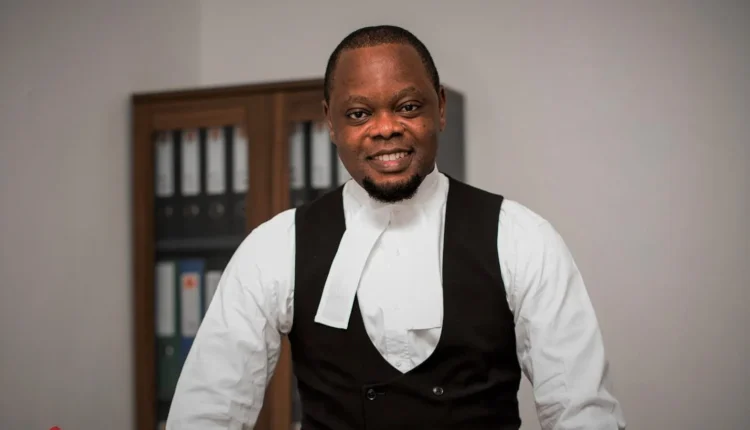
He cited Professor Raymond Atuguba as a key example, noting his long-standing record in human rights advocacy and large-scale fundraising. Dr Srem-Sai recalled that Professor Atuguba had successfully mobilised millions of dollars to support the work of the Constitutional Review Commission in the past, demonstrating the kind of capacity the Justice Ministry hopes to leverage for the Legal Aid Commission.
Human rights activist and legal practitioner Oliver Barker-Vormawor, also appointed to the board, was similarly highlighted for his hands-on approach to providing legal assistance to disadvantaged individuals.
Beyond funding, the Deputy Attorney-General stressed that the new board is expected to inject a culture of proactiveness into the operations of the Legal Aid Commission.
Traditionally, legal aid services in Ghana have largely depended on individuals seeking help on their own initiative, a model that Dr Srem-Sai believes leaves many vulnerable people excluded.
“We often expect that when people need legal services, and they do not have the means to afford them, they will approach the Legal Aid Commission.
“That is good, but it is even better if the Legal Aid Commission can approach certain people who have been identified as needing legal services but do not have the means to.”Deputy Attorney-General and Minister for Justice, Dr Justice Srem-Sai
He noted that many Ghanaians who require legal assistance are either unaware that they need legal services or lack the knowledge and confidence to approach the Commission. This gap, he argued, undermines the principle of equal justice and calls for a more outward-looking legal aid system that actively identifies and supports those in need.
Dr Srem-Sai also sought to correct what he described as a widespread misconception about the scope of legal aid in Ghana. While many people associate the Legal Aid Commission primarily with the defence of accused persons in criminal cases, he emphasized that its mandate extends far beyond criminal representation.

“Legal Aid is not just about representing accused persons,” he said. “It is also designed to assist persons who have civil claims.” He explained that individuals with constitutional matters, labour disputes, employment issues, family law concerns, such as divorce, or other civil claims, are all entitled to support from the Commission if they lack the means to hire private legal representation.
However, he admitted that due to resource constraints, the Legal Aid Commission has been forced in practice to narrow its focus largely to criminal cases. With improved funding and human resource capacity, Dr Srem-Sai said the Commission would be better positioned to fully activate its civil litigation mandate and provide more comprehensive support to citizens.
At the heart of the government’s renewed focus on legal aid, the Deputy Attorney-General said, is the principle of equality before the law. He argued that true equality cannot exist if access to legal representation depends solely on one’s ability to pay.
“As I mentioned, the truth of the matter is that when we say equality before the law, we mean equal access to the law. You are not equal before the law if you don’t have the money to go and hire a lawyer to represent you in court.
“So it is a very significant and important institution that we need to pay attention to, and that is exactly what this government, the government of President John Mahama, is intending to do.”Deputy Attorney-General and Minister for Justice, Dr Justice Srem-Sai
Solving Geographical Disparities
Geographical disparities in access to legal services were also flagged as a major concern. Dr Srem-Sai observed that an overwhelming majority of lawyers in Ghana are concentrated in Accra, Kumasi, Takoradi, and a few other urban centres, leaving large parts of the country underserved.
He described the Legal Aid Commission as a critical bridge between the law and citizens in remote and rural areas, provided it is adequately resourced and strategically deployed.
Responding to questions about funding arrangements, Dr Srem-Sai confirmed that the Legal Aid Commission continues to receive government funding approved by Parliament.
However, he reiterated that these allocations are insufficient to support expanded services, digital transformation, and nationwide coverage. As a result, the Commission is being encouraged to explore supplementary funding sources, including donor support and partnerships with international organisations, as permitted by law.
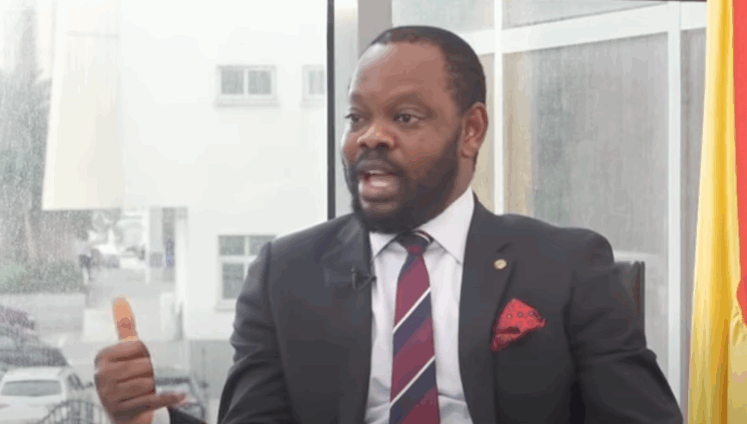
Addressing concerns about infrastructure and digitalisation, the Deputy Attorney-General acknowledged the challenges associated with transitioning from manual systems to modern digital platforms.
He said the Commission’s leadership has developed plans to improve infrastructure and digitise operations but again underscored that funding remains the determining factor in how quickly these reforms can be implemented.
Dr Srem-Sai concluded by reaffirming the Mahama administration’s commitment to strengthening the Legal Aid Commission as part of a broader effort to deepen access to justice.
By combining stronger leadership, diversified funding, proactive outreach, and expanded geographic presence, he said the government aims to ensure that more Ghanaians can meaningfully exercise their rights and stand equal before the law.