
Read also:
- AI replays, drones, and transparent torches: The tech transforming the 2026 Winter Olympic Games
- Kenneth Odeng Adade appointed Chief Operations Officer as Accra hosts Africa’s top armwrestlers
- Transport Scarcity: G.P.R.T.U to Withdraw Task-Force
- Mahama Hints at Full Rollout of Free Primary Healthcare
- Africa’s Minerals Crucial for Global Green Energy – Samuel Jinapor
Els MBN360 Education
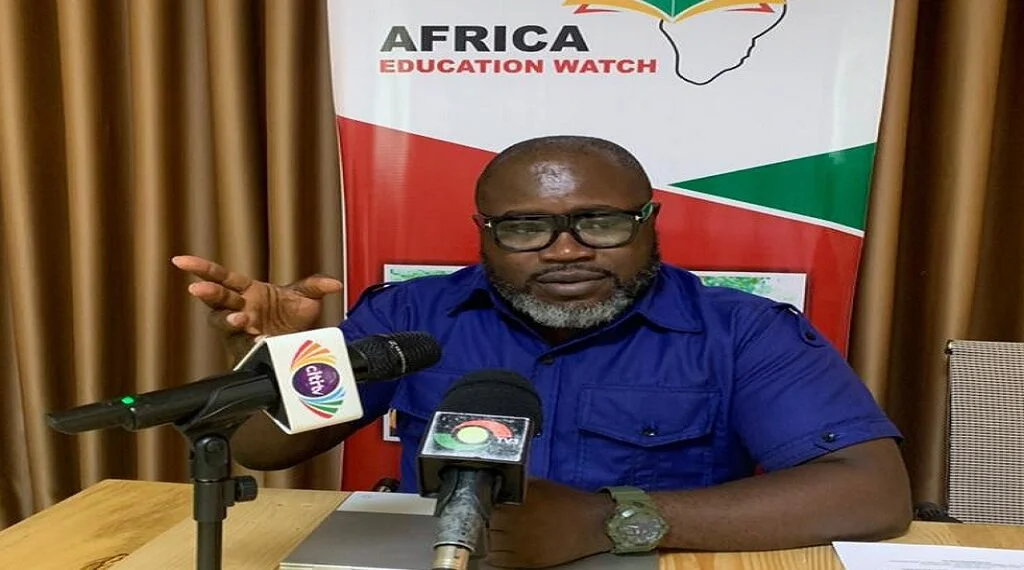
The Executive Director of Africa Education Watch, Kofi Asare, has argued that Ghana’s recent reduction in poverty will not be sustained unless the government places far greater emphasis on skills development, particularly in technical and vocational education and training.
He made the case in response to new data from the Ghana Statistical Service which shows notable progress in reducing multidimensional poverty over the past year. According to the Ghana Statistical Service, about 950,000 people escaped poverty between the third quarter of 2024 and the third quarter of 2025.
As a result, multidimensional poverty declined from 23.9 percent to 21.9 percent within the period. The figures have been widely cited as evidence that social and economic interventions are yielding positive results for households across the country.
Mr Asare welcomed the improvement but cautioned against celebrating the figures without examining their long term implications. He said much of the public and policy attention has focused narrowly on the number of people lifted out of poverty, while overlooking what he considers the most important finding in the report.

In his view, the data underscores the urgent need for sustained government investment in skills training to prevent a reversal of recent gains. He explained that poverty reduction driven mainly by social protection programmes is inherently fragile.
While initiatives such as cash transfers and welfare support can help households meet immediate needs, they do not automatically provide a pathway to stable income.
According to Mr Asare, when people are lifted out of poverty without a reliable economic foundation, they are likely to fall back once the support ends or economic conditions worsen.
This, he said, explains why poverty tends to be cyclical. Individuals may temporarily cross the poverty line, only to slip back due to unemployment, low wages, or lack of employable skills.
For Mr Asare, the lesson from the latest poverty data is that Ghana must focus more deliberately on building human capital that can sustain livelihoods over time.
TVET Infrastructure Deficit
Central to his argument is the state of technical and vocational education and training in Ghana. Mr Asare said the country is experiencing a serious infrastructure crisis within its TVET institutions, one that limits access to quality skills development.

He noted that many TVET schools operate with outdated facilities, inadequate workshops, and insufficient equipment, making it difficult to train students for modern industry needs.
He argued that this infrastructure deficit cannot be resolved through routine annual budgetary allocations alone. According to him, the current pace of investment reflects a gradual approach that is too slow to address the scale of the challenge.
At that rate, he estimated that it could take as long as 20 years to provide even basic infrastructure to about 80 percent of TVET schools nationwide. Mr Asare warned that such delays undermine equity and quality in education.
Young people from poorer backgrounds, who stand to benefit most from practical skills training, are often the ones denied access to well resourced institutions. Without decisive intervention, he said, the skills gap will continue to widen, limiting employment opportunities and reinforcing cycles of poverty.
Adopting an Ambitious Financing Strategy
To address the situation, Mr Asare called on government to adopt a more ambitious financing strategy. He proposed that Ghana secure a large scale loan specifically aimed at overhauling TVET infrastructure across the country.
He pointed to the 1.5 billion dollar loan contracted in 2019 to support the implementation of free senior high school as an example of what is possible when education is treated as a national priority.
In his view, borrowing to finance transformative skills development should not be seen as reckless spending. Rather, he described it as one of the most viable investments Ghana can make for its future.
He argued that a strong TVET system would produce a skilled workforce capable of driving industrial growth, supporting small and medium enterprises, and reducing long term dependence on social welfare programmes.

Mr Asare emphasized that sustainable skills development would have benefits that extend beyond individual incomes. A well equipped and accessible TVET system, he said, would strengthen local production, improve productivity, and enhance the resilience of the economy. Over time, this would help ensure that people who escape poverty do not return to it.
As discussions continue around the latest poverty figures, Mr Asare urged policymakers and development partners to resist the temptation of short-term optimism. He said true progress should be measured by whether Ghana is building systems that prevent poverty from recurring.
For him, the Ghana Statistical Service report should serve as a reminder that lasting poverty reduction depends not only on social interventions, but on deliberate and sustained investment in skills development.