
Read also:
- Unite Behind Constitutional Reforms – Barker-Vormawor Urges Ghanaians
- Kotoka Airport to be Renamed Accra International Airport
- Speaker Bagbin Demands Discipline, Renewal as Parliament Resumes
- $22.6m World Bank support to boost Ghana’s food security – Ato Forson
- Parliament Reconvenes Today: Anti-LGBT Bill, Mining Issues on Table
Els MBN360 News
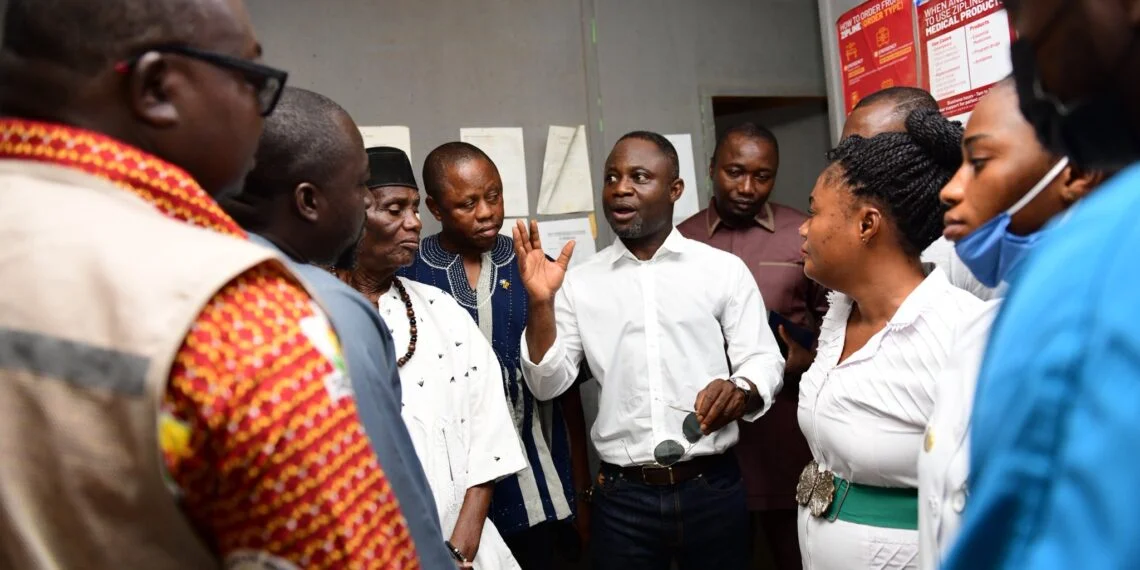
Ghana’s Minister for Health, Hon. Kwabena Mintah Akandoh, has concluded a two-day working visit to the Oti Region with a strong commitment to urgent reforms aimed at reversing what he described as persistently poor health outcomes in the area.
The visit formed part of a broader ministerial retreat to review the performance of the health sector in 2025 and to project priorities and key government interventions for the year 2026.
Speaking to stakeholders during the visit, the Health Minister explained that the decision for the Ministry of Health to temporarily relocate its operations to the Oti Region was driven by data that revealed worrying trends.
According to him, an internal assessment conducted during the retreat showed that the region consistently recorded some of the weakest health indicators in the country, making immediate attention unavoidable.

He said the purpose of the visit was not ceremonial, but practical, focused on listening, diagnosing challenges, and agreeing on solutions with those directly affected.
“The challenge is such that no one person can sit anywhere and prefer solutions to the challenges, and so since yesterday, we’ve been engaging the major stakeholders, the chiefs, the health professionals, the MPs, the DCEs, the regional minister, all stakeholders within the region to find solutions to these problems.”Minister for Health, Kwabena Mintah Akandoh
One of the most pressing concerns identified during the engagements was the severe shortage of health professionals, particularly medical doctors. The Minister revealed that despite multiple posting exercises, the region continues to struggle to attract and retain critical staff.
He cited a striking example from 2025, when about 25 medical doctors were posted to the region, yet only two reported for duty. He described the situation as both troubling and unsustainable, stressing that such staffing gaps inevitably translate into poor health outcomes for residents.
Comprehensive Audit of all Health Facilities
In response, Hon. Akandoh announced that he had directed the establishment of a committee to conduct a complete and comprehensive audit of all health facilities in the Oti Region.
The audit, he explained, would examine infrastructure, staffing levels, equipment, accommodation availability, and service delivery capacity. The findings are expected to guide targeted interventions rather than blanket policies that fail to address the unique challenges of the region.

The Minister acknowledged that reluctance among health professionals to accept postings to Oti was influenced by several factors, including lack of decent accommodation, inadequate transportation, and limited incentives.
To address this, he said stakeholders had proposed a set of practical measures, which received broad consensus during the meetings. These include securing befitting accommodation for health workers, making vehicles available to ease mobility challenges, and introducing internally arranged allowances to motivate professionals to accept and remain at their posts.
From the government’s perspective, Hon. Akandoh assured residents that the state was committed to playing its part. However, he made it clear that the government could not reverse posting decisions already made.
According to him, the role of government is to declare vacancies and deploy health professionals to areas where they are most needed, not necessarily where they are most comfortable. He stressed that equitable access to healthcare requires a willingness by professionals to serve in all parts of the country.
Unfair Distribution of Medical Personnel Nationwide
The Minister used the opportunity to draw attention to what he described as a deeply unfair distribution of medical personnel nationwide. He disclosed that about half of all medical doctors in Ghana are concentrated in the Greater Accra Region alone.
When combined with the Ashanti Region, he said, the figure rises to between 65 and 70 percent of the country’s total number of doctors. In his view, such an imbalance undermines national cohesion and denies many communities their fair share of public services.
Hon. Akandoh argued that healthcare equity is a national responsibility and that every Ghanaian, regardless of location, deserves access to quality medical care. He said it was neither just nor sustainable for rural and emerging regions like Oti to remain underserved while urban centers continue to attract the bulk of skilled professionals.

Addressing this imbalance, he added, would require both policy firmness and stakeholder cooperation. The Health Minister expressed optimism that the outcomes of the two day visit would mark a turning point for the region.
He praised the openness and commitment shown by local leaders and professionals during the discussions and noted that the collective agreement on proposed measures demonstrated a shared resolve to change the narrative.
According to him, sustained engagement and accountability would be key to ensuring that the commitments made translate into measurable improvements. As the ministry prepares its projections for 2026, Hon. Akandoh said the experiences and data gathered from the Oti Region would directly inform national planning.
He reaffirmed that improving health outcomes in underserved regions remains a priority of government, adding that the success of the health sector must be judged by how well it serves the most vulnerable communities.