Read also:
- IMF Warns of Ghana’s Banking Sector Vulnerabilities Amidst Government Reforms
- ‘Get It Done’: Barker-Vormawor Tells Mahama to Lead Reform
- Akandoh Calls for Unity in Western North Development Efforts
- Ghana’s Gold Sector: A Recipe for Disaster?
- Ghana Aims to Reform Prisons, Ease Overcrowding – Dr Justice Srem-Sai
epos MBN360
The government of Ghana has consistently expressed optimism about the potential for economic sustainability and expansion in 2026.
The government has envisioned 2026 as a year of continued stability, job creation, and inclusive growth across the economy. The government insists that job creation is at the heart of all its initiatives and projects, and 2025 serves as the foundation for a broad plan to develop the industrial sector and its sub-sectors.
The 2026 Budget, serving as a guide through the uncertain year ahead, seeks to anticipate Ghana’s economic progress despite the shocks that lie ahead. As the Finance Minister, Dr. Cassiel Ato Forson, said during the 2026 Budget presentation, “I will present the policies, priorities, and resource allocations that will drive Ghana’s growth, jobs, and economic transformation in 2026 and beyond.”
The government has themed its 2026 economic strategy as “Resetting for Growth, Jobs, and Economic Transformation,” and it has declared that the strategy is private-sector-led. The government’s role will be to create an enabling environment for the private sector to drive growth and investment.

Some of the private-sector initiatives and investments, according to the government, will be in industrialization (agro-processing, manufacturing), infrastructure (24-Hour Economy), skills training (apprenticeships, coding), and supportive policies for entrepreneurs, aiming to create hundreds of thousands of jobs through initiatives like the Big Push and by empowering SMEs to tackle bottlenecks and leverage digitalization.
The government’s focus next year is a blend of state support (subsidized interest, infrastructure) and private ownership and management of factories, with a focus on driving value-added production and improved export revenue.
The government seeks to develop infrastructure for manufacturing zones to attract investment and create jobs through the Big Push, while reducing regulatory hurdles (faster registration/loans), providing accessible finance, and tackling informality for SMEs.
While all sectors require government support for their diverse and necessary impact on the economy, the real sector is the foundation of growth. The government has therefore committed to investing in and expanding the productive sectors.

A major plan to create over 500,000 jobs is to expand economic crops such as oil palm. The government has also launched sector-specific initiatives through the 24-Hour Economy, where certain sectors will operate factories and services around the clock to boost productivity and create diverse shifts for workers.
Skills training programs like the National Apprenticeship, Adwumawura, and One Million Coders are aimed at bridging skills gaps. Improvements to technical and vocational education are underway to strengthen TVET and build a more ready workforce. These initiatives are intended to create a workforce for the development of the Ghanaian economy.
The government, led by the Ministry of Finance and the Bank of Ghana, has promised more collaboration in 2026 to maintain macroeconomic stability by ensuring the Cedi remains stable, inflation remains low, public debt obligations are met on time, and the government uses the resources the country owes to develop the country to reduce reliance on foreign aid while welcoming foreign investment.
Furthermore, the government intends to ensure availability for all sectors, such as farmers, exporters, and businesses, while keeping interest rates low. The broad objective is to create a stable environment for investment and business growth.

The Government of Ghana is pursuing a comprehensive energy sector expansion and reform strategy, primarily guided by the Ghana Energy Transition and Investment Plan (GETIP) and the Renewable Energy Master Plan (REMP). Key initiatives focus on diversifying the energy mix, achieving universal electricity access, and ensuring financial sustainability. Not only do these guide the government’s operations in 2026, but they also serve as a way to measure the government and the economy’s progress.
The government is using digitalization to support business growth and revenue through tax initiatives, which the Ghana Revenue Authority (GRA) has begun rolling out and will intensify next year.
In essence, Ghana aims to move from stabilization to transformation by actively fostering private enterprise, modernizing key sectors, and equipping its youth with relevant skills.
Challenges to the Government’s Optimism
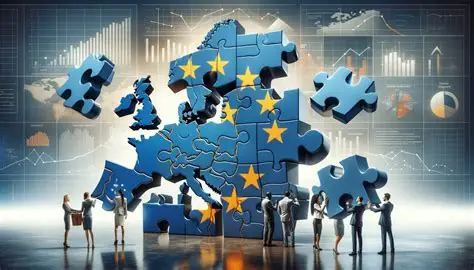
However, 2026 holds certain challenges that the government, in its optimism, should take note of. Shocks posing a threat to Ghana’s economic well-being include regional instability (Sahel insurgency) impacting security/investment, potential resurgence of Cedi volatility despite recent strength, global economic slowdown affecting trade/financing, and challenges in meeting ambitious fiscal targets (debt, inflation) amidst ongoing structural reforms and domestic pressures like youth employment.
Since the government has promised to reform the structural integrity of the economy and country, the execution of these reforms can be a challenge in the fast-approaching year. Delays or implementation challenges with structural adjustments, tax changes (like VAT), and productivity drives could hinder progress.
Disruptions in key sectors of the economy, such as energy, infrastructure, youth unemployment, and social unrest, could destabilize the stability of the economy. Disruptions in key infrastructure projects (energy, transport) vital for growth could be a setback. The persistence of youth unemployment underpins the economy’s vulnerability, impacting social stability and economic participation.
Therefore, while the economic sustainability and expansion gives hope to initiatives and economic well-being, the shocks and challenges must also be noted and addressed in due time to prevent setbacks.