Els: MBN360
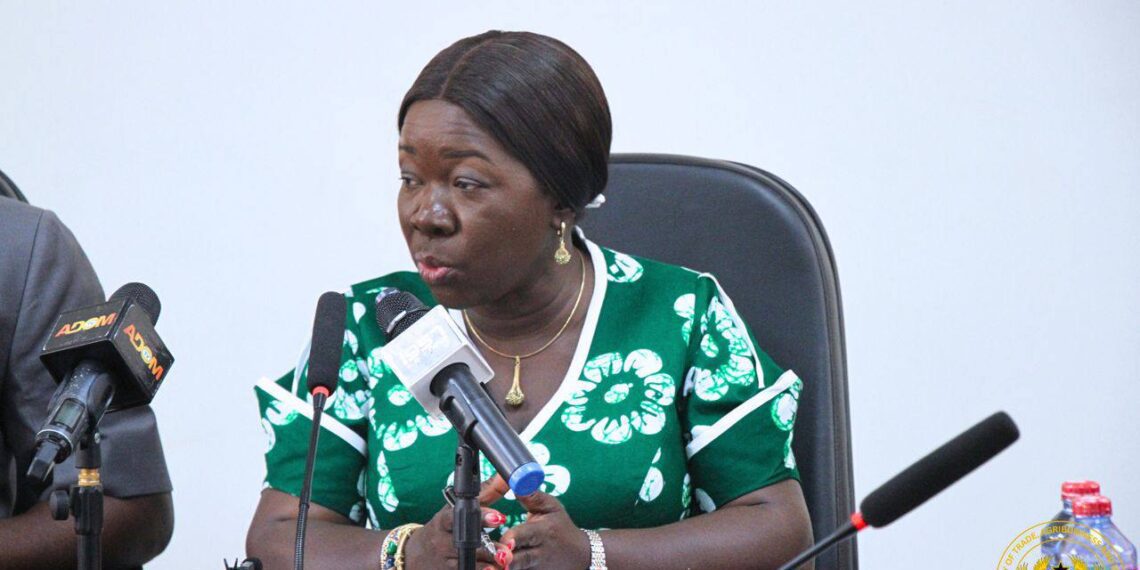
The Minister for Trade, Agribusiness and Industry, Hon. Elizabeth Ofosu-Adjare, has triggered an emergency intervention to rescue Ghana’s cement industry from a mounting logistics crisis by convening a high-stakes meeting with the Chamber of Cement Manufacturers Ghana (COCMAG) and the Association of Ghana Industries (AGI).
The meeting was to address severe port congestion that has left critical raw materials stranded at sea. With clinker vessels currently facing wait times of up to 20 days, the industry is battling massive demurrage costs that threaten to destabilize cement pricing across the country.
“The Ministry acts swiftly when industry challenges are brought to its attention, noting that even a single day of delay in business operations can translate into millions of dollars in losses. The cement industry is leaking financially due to mounting demurrage costs… these costs threaten to eventually be passed on to consumers if not urgently addressed”Hon. Elizabeth Ofosu-Adjare, Minister for Trade, Agribusiness and Industry
The crisis stems from a mismatch between current vessel sizes and the port’s existing berth capacity as most “modern clinker shipments exceed the current 8,000-tonne limit of available berths,” leading to a backlog that has effectively “bottlenecked” the supply chain.

For manufacturers, every hour a vessel sits idle in the deep sea translates into thousands of dollars in penalties – costs that the government warns could eventually be passed on to the Ghanaian consumer if left unchecked.
During the deliberations, which included Minister for Transport, Hon. Joseph Bukari Nikpe, the government made it clear that operational efficiency is the only sustainable path to price stability.
Hon. Ofosu-Adjare emphasized that the Ministry’s role extends beyond mere price monitoring; it is about actively removing the industrial “clogs” that drive up production costs. She framed the resolution as a mutual bargain: the government will provide the infrastructure and flexibility, while industry players must maintain fair market prices.
The CEO of COCMAG, Bishop Dr. George Dawson-Ahmoah, painted a grim picture of the current situation. He noted that while manufacturers have tried to absorb the costs of these delays, the sheer scale of the current congestion – where vessels wait between 13 and 20 days – has brought the sector to a breaking point.
Read also:
- Ayawaso East by-election: Police to deploy 80 officers per polling station.
- GMet to be upgraded into an Authority – Sam George
- Poll shows widespread public approval of CJ’s halt to EC and Special Prosecutor removal
- No-bed syndrome more of attitudinal issues exhibited by healthcare providers – Abuakwa South MP
- Roman Ridge School sets new QCEC record with 364 medals
Two-Phase Recovery
The government responded with a dual-track solution aimed at providing both immediate relief and a permanent fix to the capacity issues. The Ministry of Transport noted during the meeting that it is currently overseeing an aggressive dredging campaign to deepen the harbour.

Currently, the port is restricted to handling smaller vessels, but by June 2026, the dredging will allow for vessels with capacities exceeding 20,000 tonnes. This upgrade is expected to reduce vessel traffic density by allowing larger, more efficient shipments to dock directly.
In the immediate term, the government is fast-tracking work around Berth 14, with completion expected within the next seven to fourteen days. This will provide partial relief to the current backlog.
Additionally, the Ministry of Trade, Agribusiness and Industry has granted “operational flexibility,” allowing manufacturers to divert non-dust-producing materials like gypsum and slag to alternative berths. This tactical move is designed to “free up dedicated clinker berths,” and accelerate the discharge of the most critical raw materials.
The President of the AGI, Pharm. Kofi Nsiah-Poku, commended the swiftness of the inter-ministerial response.
For the AGI, the port delay is not just a cement issue; it is a threat to the broader construction sector, which serves as a pillar for the administration’s 24-hour economy initiative. Delays in cement production trigger a domino effect across the housing and infrastructure sectors, potentially stalling national development projects.
The Trade Minister reiterated that in a globalized trade environment, even a single day of operational inefficiency can result in losses totaling millions of dollars. By resolving these bottlenecks, the government aims to ensure that the domestic cement industry remains globally competitive and locally affordable.

As the dredging continues, all eyes are now on the Ghana Ports and Harbours Authority (GPHA) to meet the June deadline. For now, the interim measures represent a critical lifeline for an industry that has been gasping for operational air.