Els: MBN360
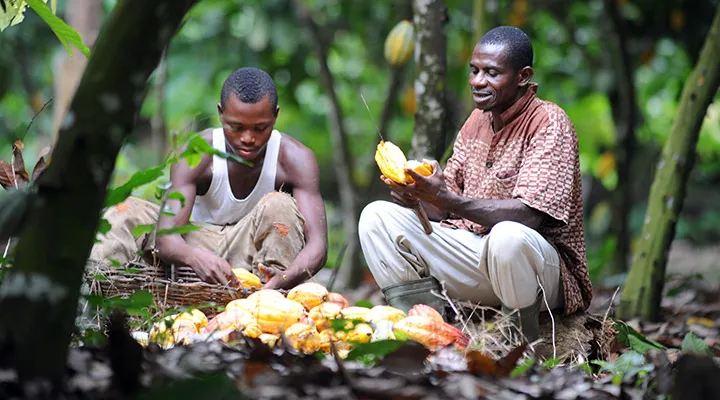
The Mahama administration has released GHC855 million to settle arrears owed to cocoa farmers, following months of delayed payments despite deliveries to licensed buying companies.
The payment forms part of an emergency intervention aimed at stabilising the cocoa sector and restoring confidence among farmers and buying companies.
In parallel, the government announced a broad package of reforms to restructure the industry and place the Ghana Cocoa Board (COCOBOD) on a more sustainable financial footing. These include a controversial reduction of over GHC1,000 in the producer price per bag, a move that has sparked debate across the sector.
Briefing
Speaking to journalists in Parliament, Isaac Adongo, chairman of the Finance Committee, defended the measures, describing them as “difficult but necessary steps to rescue a sector he said has been under severe financial strain for years.”
“The bottom line of all that has happened is that some amounts were owed to cocoa farmers, and the government took a decision to repay those monies so that the cocoa buying companies can settle the outstanding obligations,” he said.
Read also:
- Energy Commission Advances Ghana EV Charging Infrastructure Regulation
- Ghana can supply steel to entire West Africa if domestic steel industry thrives – Mahama
- GHS condemns attacks on staff, pledges enhanced security measures
- Majority Leader fires back at Sefwi protesters
“I’m happy to report that this morning, the government has released 855 million cedis for that purpose. But we have also decided to introduce a number of reforms that are long overdue. The cocoa sector has been under enormous strain over the years, and we have been pretending to service cocoa farmers while destroying the very vehicle we use to support them.”
NPP blamed
Mr Adongo also blamed the crisis on the previous New Patriotic Party (NPP) administration, rejecting claims that responsibility lies with the current government.
“COCOBOD entered 2025 with about GH¢17.8 billion in loans, plus significant operational liabilities. When you add everything together, the exposure was over GH¢60 billion. That vehicle could not be sustainable and had to be addressed,” he said.
“You have 60 billion of somebody’s money, it’s not free money. You are not paying, and yet you are saying we should continue to go and borrow more.”
He added that the release of funds to farmers, combined with structural reforms in pricing, financing and operations, is intended to stabilise the sector, protect farmers in the long term, and rebuild COCOBOD into a financially viable institution capable of sustaining Ghana’s cocoa economy.