Els: MBN360 News
Ministry of Fisheries and Aquaculture Development (MoFAD) has officially designated scientific research as the primary engine for Ghana’s maritime transformation by formalizing a landmark partnership with the University of Cape Coast (UCC) to operationalize the “Blue Knowledge,” component of the nation’s Blue Economy Strategy (2025–2035).
According to the Ministry, this move – which took place in a high-level strategic engagement recently held in Accra – signals a departure from traditional, intuition-based fisheries management toward a data-driven regime capable of restoring Ghana’s depleted marine stocks.
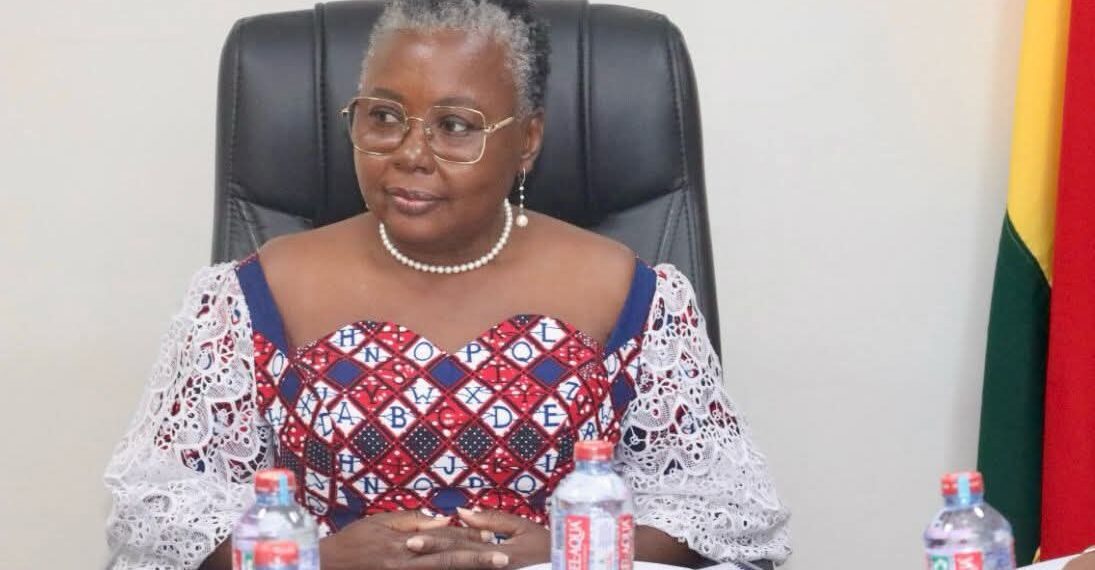
“Led by Hon. Emelia Arthur, Minister for Fisheries and Aquaculture Development, the initiative seeks to bridge the chronic gap between academic findings and frontline policy implementation.
“By embedding the University of Cape Coast – long recognized as a regional leader in maritime excellence – into the state’s governance architecture, the Ministry aims to create a “knowledge-driven” maritime sector that can withstand the dual pressures of climate change and illegal fishing”MoFAD
For decades, the artisanal and industrial fishing sectors in Ghana have struggled with fluctuating yields and the encroaching threat of Illegal, Unreported, and Unregulated (IUU) fishing.

Minister Emelia Arthur was blunt in her assessment of past failures, noting that sustainable governance cannot survive on guesswork. The new strategy insists that every closed season, every net size regulation, and every aquaculture permit must be backed by rigorous stock assessments and socio-economic analysis.
“Sustainable fisheries implementation must be anchored in continuous research, stock assessments, climate science, socio-economic analysis, and innovation. Research is not supplementary – it is the engine of reform.
“Protecting our fish stocks, safeguarding coastal ecosystems, and securing livelihoods require decisions grounded in evidence”Hon. Emelia Arthur, Minister for Fisheries and Aquaculture Development
This “research-first” mandate is designed to ensure that the recovery of Ghana’s small pelagic stocks – essential for national food security – is monitored in real-time.
The Ministry is no longer viewing research as a luxury but as the literal fuel for the “engine of reform,” required to modernize the sector.
Read also:
- Ghana’s Foreign Reserves Hit $13.8bn, Targets 15-Month Reserve War Chest
- Lands Minister: 500 excavators seized, 490 impounded since taking office
- Senya Breku: Gunmen raid fishermen, seize outboard motors at sea.
- We’re not interested in your theories – Afenyo-Markin rejects gov’t reserve policy, demands jobs
- Ayawaso East by-election: Police to deploy 80 officers per polling station.
UCC as the Academic Anchor

The University of Cape Coast, under the leadership of Acting Vice-Chancellor Professor Denis Worlanyo Aheto, is positioned to become the intellectual backbone of the forthcoming Blue Economy Commission. The partnership is not merely a memorandum on paper; it is a structural alignment of academic resources with national priorities.
Citing “marine conservation, climate adaptation, aquaculture innovation, and coastal livelihoods,” Professor Aheto, underscored that the sustainability of the ocean is inextricably linked to the livelihoods of coastal communities and the broader economic health of the nation.
Under this framework, UCC will lead the centralized coordination of marine research, ensuring that the work of young marine scientists is directly funneled into government datasets.
This alignment is expected to fast-track innovation in aquaculture, providing the private sector with the technological tools needed to expand fish farming as a viable alternative to wild-capture fisheries.
MoFAD noted that a central feature of this collaboration is the establishment of the Blue Knowledge Hub. This facility will act as the “analytics engine,” for the Blue Economy Commission, serving as a clearinghouse for scientific data, community-based traditional knowledge, and government metrics.

The Hub’s primary function is “translation” – taking complex climate models and biological data and turning them into “policy-relevant evidence” that a minister or a director can use to make a decision in 24 hours.
The Ministry’s commitment to this “Research-Policy-Implementation” cycle marks a significant shift toward transparency. By making the data central to the reform, the Ministry is essentially creating a roadmap that is visible to stakeholders, financiers, and international partners.
As Ghana looks toward 2035, the success of the Blue Economy Strategy will depend on its ability to protect the millions of Ghanaians whose lives depend on the sea.
Hon. Emelia Arthur reaffirmed that this partnership with UCC is a signal to the world that Ghana is serious about building a resilient, knowledge-based economy that prioritizes the environment as much as it does profit.
The Ministry and UCC are now moving into technical consultations to define the specific timelines for the launch of the Blue Knowledge Hub, ensuring that the “engine of reform,” is fully fueled and ready for the decade ahead.