
Read also:
- Ghana Aims to Reform Prisons, Ease Overcrowding – Dr Justice Srem-Sai
- Term Extension Risks Ghana’s Weak Institutions – Victoria Bright
- 30-Something Presidents Lack Experience’ – Prof Agyeman-Duah
- Hearts of Oak Move to Second Place with Win over Samartex
- Legal Aid Commission to Get a Boost Under Govt Plans
El Samuels: MBN360
Ghana’s gold sector is facing serious concerns over deep structural flaws, which could undermine the country’s economic growth and environmental sustainability. A recent report by Global Financial Integrity (GFI) and the Integrated Social Development Centre (ISODEC-Ghana) highlights the risks of illicit financial flows (IFFs) in the gold mining supply chain, resulting in significant revenue losses for the government ¹.
The Ghana Gold Board (GoldBod), established in 2025, aims to enhance transparency and compliance in the gold market. However, critics argue that the centralized system may lead to bureaucratic inefficiencies and limit accessibility for small-scale miners. The GoldBod’s dual role as a commercial entity and regulator has also raised concerns about conflicts of interest and market distortion.
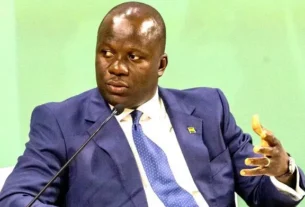
Professor Godfred Bokpin of the University of Ghana Business School described the situation as troubling, arguing that it reflects long-standing failures in managing the country’s mineral resources responsibly. According to him, the debate over GoldBod and the BoG’s response points to systemic problems that go beyond accounting issues.
“The way GoldBod and BoG have responded to this issue actually marks the real challenge in the sector in how the GoldBod and the pricing regime are done.”Professor Godfred Bokpin of the University of Ghana Business School
He traced the roots of the problem back several decades, arguing that Ghana has struggled to establish a sustainable and responsible small-scale mining framework.

“For several decades after independence, we are incapable as a country of doing responsible mining because, largely, the artisanal small-scale miners are incapable of doing responsible small-scale mining, which is what the data is telling us.”Professor Godfred Bokpin of the University of Ghana Business School
In his view, the controversy becomes even more concerning given the government’s recent push to formalise gold purchases and exports through state institutions.
“In addition to that, we are saying that in 2025, when Ghana has decided that now we want to buy the gold and export, that one too we cannot even break even, from that point. That is very sad for us as a country.”Professor Godfred Bokpin of the University of Ghana Business School
IMF Flags Financial and Environmental Risks

The gold sector’s challenges are further complicated by environmental degradation, with over 60% of water bodies polluted and widespread deforestation caused by illegal mining (galamsey). The government’s efforts to combat galamsey have been inconsistent, leaving communities vulnerable to environmental and health risks.
To address these concerns, experts recommend empowering artisanal and small-scale miners, strengthening anti-galamsey initiatives, and promoting transparency and accountability. The government must also ensure that the GoldBod operates with transparency and impartiality, prioritizing the interests of Ghanaian citizens and the environment.
The concerns echo warnings raised by the International Monetary Fund (IMF), which in its recent review of Ghana’s economic programme identified potential downside risks associated with the DGPP.
The IMF attributed the risks to transactions involving artisanal and small-scale mining dore gold, as well as what it termed “GoldBod off-taker fees.”
Economist Dr. Patrick Asuming said the IMF’s observations should be taken seriously, describing them as legitimate issues that require transparent and proactive responses.
He stressed that beyond financial performance, environmental sustainability must remain central to any gold purchasing strategy.
“The issues flagged by the IMF regarding the financial risks associated with the Domestic Gold Purchase Programme are legitimate concerns that should be addressed.”Economist Dr. Patrick Asuming
Dr. Asuming added that the public deserves assurance that state-backed gold purchases are not indirectly encouraging environmental degradation.
“The GoldBod and the Bank of Ghana should continuously assure us that the domestic gold purchase programme is not contributing to the destruction of our environment.”Economist Dr. Patrick Asuming
Questions Over BoG’s Response

Dr. Asuming was also critical of the BoG’s dismissal of reported losses as speculative, arguing that the central bank’s response lacked sufficient factual rebuttal. “I think it is a legitimate concern raised by the IMF,” he said, before accusing the BoG of engaging in speculation itself.
“Your response itself is also speculative; the BoG statement did not dispute the claim,” he argued, suggesting that clearer data and transparency would help settle the debate and restore public confidence.
The Bank of Ghana has maintained that any figures circulating about losses from GoldBod-related operations are premature, noting that its annual external audit is still ongoing.
According to the central bank, audited financial statements will provide a clearer picture when they are published in line with statutory requirements.
Structural Challenges Persist

While the IMF acknowledged that Ghana’s macroeconomic environment has improved markedly, it also noted that some structural reforms have faced delays due to their complexity. Analysts say the gold sector debate illustrates why these reforms are critical to long-term stability.
Experts argue that pricing regimes, governance structures, and environmental safeguards must be strengthened if the DGPP is to achieve its intended objectives of boosting reserves and supporting currency stability without imposing hidden costs.
For Professor Bokpin, the episode should prompt a national conversation about how Ghana manages its mineral wealth. He believes that without fundamental reforms in artisanal mining practices and state-led trading mechanisms, similar challenges will persist regardless of policy intentions.
As debate continues, economists are urging policymakers to embrace greater transparency, publish verifiable data, and align gold sector reforms with environmental and fiscal sustainability goals.
They argue that doing so would not only address IMF concerns but also rebuild public trust in institutions managing one of Ghana’s most strategic resources.
With gold playing an increasingly central role in Ghana’s macroeconomic strategy, the handling of the DGPP and GoldBod operations is likely to remain under close scrutiny from both domestic stakeholders and international partners in the months ahead.