Read also:
- Minister Backs Mother Tongue Push During Ga Mantse Visit.
- Ghana and Pakistan Sign Strategic MOUs, Launch Political Talks
- Ghana’s Economy Set to Soar: Deloitte Forecasts 5.9% Growth
- Ghana Faces Money Laundering Scrutiny: Accra Undergoes Crucial Test
- IShowSpeed politely declines libation schnapps during cultural visit to Ghana
Els MBN360 News
very January 26, the International Day of Clean Energy invites the world to reflect on how energy shapes our lives, economies, and environment. But for countries like Ghana, this day must be more than symbolic.
It is a reminder that clean energy is not only about cutting emissions or installing solar panels; it is about people, equity, and opportunity.
Declared by the United Nations General Assembly under Resolution A/77/327, the International Day of Clean Energy calls for a just and inclusive transition that benefits both people and the planet.
This call resonates strongly in Ghana, where energy remains a powerful lever for development, but also a mirror reflecting persistent inequalities.
Ghana’s Clean Energy Moment

Ghana has made notable progress in expanding electricity access over the past two decades. Yet access alone is not enough. The next phase of Ghana’s energy journey must focus on how energy is produced, who it reaches, and who benefits from it.
Clean energy presents a rare opportunity to tackle multiple challenges at once: climate action, energy security, and economic growth.
With abundant solar resources, growing interest in mini-grids, and increasing policy attention on renewables, Ghana is well-positioned to lead in West Africa. But this leadership will only be meaningful if the transition is inclusive and people-centred.
Leaving No One Behind

According to the United Nations, about 666 million people worldwide still live without access to electricity, nearly 85 percent of them in Sub-Saharan Africa. While Ghana’s national electrification rate is relatively high, pockets of energy poverty persist, especially in rural and island communities.
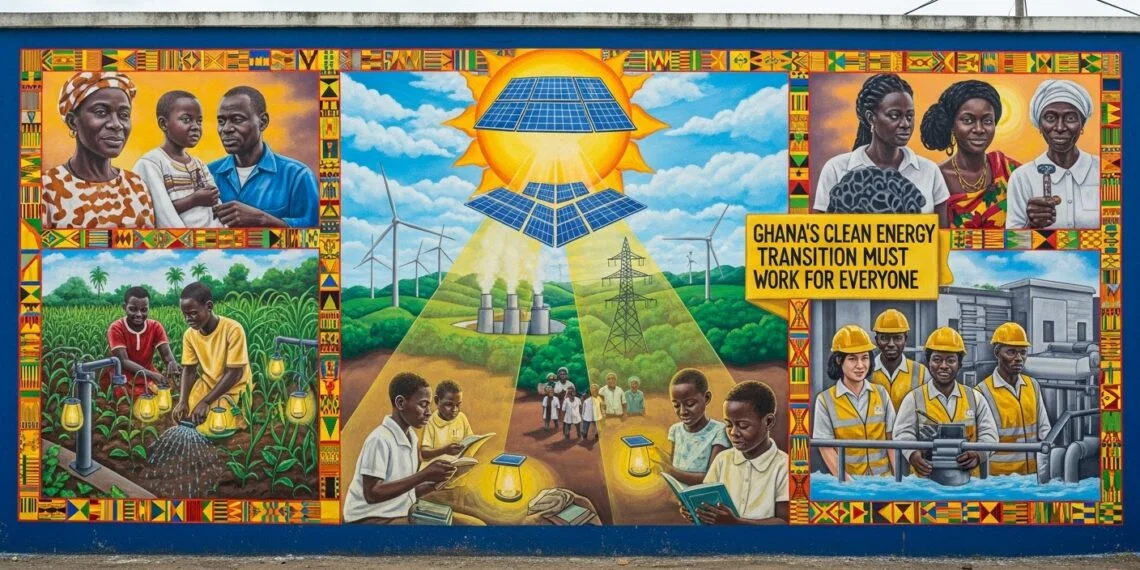
An inclusive clean energy transition means expanding decentralised renewable energy solutions, such as solar mini-grids and stand-alone systems to underserved areas.
These technologies are not just environmentally sound; they are practical tools for social justice. Reliable electricity enables clinics to function, schools to use digital tools, small businesses to grow, and households to improve their quality of life.
Clean energy, in this sense, becomes a development accelerator rather than a luxury.
Youth, Women, and the Green Jobs Opportunity

Energy sits at the heart of a dual challenge: advancing inclusive socio-economic development and protecting the planet. For Ghana, this challenge is inseparable from the future of its young population and the economic empowerment of women.
Investing in clean energy must go hand in hand with investing in people. Green skills training, technical education, and entrepreneurship support can turn the energy transition into a major source of decent jobs.
From solar installation and maintenance to energy efficiency services and climate-smart innovation, the clean energy value chain offers opportunities that Ghana cannot afford to miss.
Women, in particular, must be intentionally included—not only as beneficiaries of energy access, but as decision-makers, technicians, and business owners. An energy transition that excludes women risks reinforcing existing inequalities rather than dismantling them.
Communities at the Centre of Energy Decisions

Too often, energy planning happens far from the communities it affects most. A truly just transition requires that communities are actively involved in energy decision-making—from project design to implementation and monitoring.
Community participation builds trust, ensures local needs are met, and reduces resistance to new energy projects. It also recognises that people are not passive consumers of energy, but active stakeholders in shaping their energy future.
In Ghana, placing communities at the centre of clean energy planning can help avoid past mistakes, where infrastructure development failed to deliver lasting benefits at the local level.
Ghana is already feeling the effects of climate change, from erratic rainfall affecting agriculture to rising temperatures straining water and energy systems. Clean energy is not just an environmental choice; it is a climate resilience strategy.
Reducing reliance on fossil fuels and diversifying energy sources, Ghana can strengthen its energy security while contributing to global climate goals. At the same time, clean energy investments can attract financing, stimulate local industries, and position Ghana as a regional hub for sustainable energy innovation.
From Commitment to Collective Action
The International Day of Clean Energy is ultimately a call to action. For Ghana, it is a reminder that the energy transition must be fair, inclusive, and grounded in local realities.
Government, private sector, civil society, and communities all have roles to play in ensuring that clean energy delivers shared prosperity.
If done right, Ghana’s clean energy transition can power more than homes and industries. It can power dignity, opportunity, and a future where no one is left behind, while protecting the planet we all depend on.