
Els: MBN360 Education
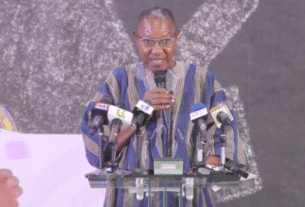
The Minister for Education and Member of Parliament for Tamale South, Hon. Haruna Iddrisu, has pledged decisive action to address declining standards in Ghana’s basic education sector, announcing a new intervention supported by approximately 118 million dollars in international funding.
According to the minister, the government is increasingly concerned about the weakening quality of foundational learning in many schools and intends to implement targeted reforms aimed at improving literacy, numeracy and overall classroom outcomes.
Speaking on the issue, Hon. Haruna Iddrisu stressed that strengthening the foundation of the education system is critical to improving learning outcomes across all levels of schooling. “Our concern is that the quality of basic education is declining, and we need to strengthen foundational learning,” he explained.
The financial support is being provided by the Global Partnership for Education and other development partners who are collaborating with the government to support reforms within the sector.
Global Funding to Support Foundational Learning
The funding package from the Global Partnership for Education is expected to support a range of initiatives designed to improve teaching and learning at the early stages of education.

Government officials say the programme will focus on strengthening foundational literacy and numeracy while also introducing innovative teaching approaches that can improve engagement among young learners.
Hon. Haruna Iddrisu indicated that one of the key approaches being promoted is play-based learning, a method widely recognised by education specialists as effective for early childhood development.
The approach encourages interactive learning experiences that help children develop cognitive and social skills while improving their understanding of basic academic concepts.
Education authorities believe that introducing such methods at the early stages of schooling will help improve comprehension and retention among pupils.
Local Language Instruction Encouraged
Another central component of the government’s strategy involves encouraging the use of local languages in the early years of education.
The Education Minister explained that research shows children learn more effectively when they are taught in languages they already understand during their formative years.
However, he clarified that this approach does not replace English as the country’s official language of instruction. “English remains Ghana’s official language,” Hon. Haruna Iddrisu stated, adding that the initiative simply encourages greater use of Ghanaian languages in early education to support comprehension.
Under the proposed approach, schools will be encouraged to teach in widely spoken local languages depending on the region. In the Greater Accra Region, for example, the ministry is encouraging the teaching of Ga.

In areas dominated by Akan speakers, schools will promote the teaching of Twi, while in the northern regions languages such as Dagbani will continue to be used. Additional languages have also been proposed for inclusion, including Gurenli, Bulsa and Ahanta.
Education authorities say the policy aligns with global research on multilingual education, which shows that early instruction in familiar languages often improves learning outcomes.
Read also:
- Pink Ladies Cup: Black Queens win tournament after last game called off
- Boost Your Eyesight: 4 Nutritious Foods to Support Vision Health
- Oil price at two-year high after Qatar warns all Gulf production could stop within days
- GPL: No Time to Panic- Medeama Head Coach on four game winless run
- King Charles III hails UK–Ghana partnership on 69th Independence Anniversary
Integrating Technology and Artificial Intelligence
The Ministry of Education is also exploring ways to integrate modern technology into the learning environment. Hon. Haruna Iddrisu recently suggested that artificial intelligence tools could eventually support Ghanaian languages in educational applications and digital platforms.
He explained that his comments were intended to encourage technology companies to expand language support for Ghanaian users rather than introduce a new government programme.
The minister referenced earlier work conducted by Google which experimented with a limited number of Ghanaian languages in artificial intelligence applications.
According to him, the long term goal is to see more Ghanaian languages supported by emerging technologies so that local communities can benefit from digital learning tools.
Curriculum Review to Introduce New Learning Areas
Alongside these reforms, the Ministry of Education has established a curriculum review committee tasked with evaluating and updating the current national curriculum.
Hon Haruna Iddrisu revealed that about 20 million Ghana cedis has been allocated through the Ghana Education Trust Fund to support the committee’s work.

The review is expected to introduce several new areas of study designed to strengthen character development and civic responsibility among students. Among the subjects being considered are ethics, financial literacy, patriotism and civic education.
According to the minister, the inclusion of such topics is necessary to help young people develop values that support national unity and responsible citizenship. “You talk about corruption, patriotism, and love of country. These values must form part of the formative training of our children,” he explained.
Education stakeholders have long advocated for stronger character education within Ghana’s school system, arguing that academic achievement alone is not enough to prepare students for responsible participation in society.
Addressing Discipline and Social Behaviour in Schools
The proposed curriculum changes also aim to address concerns about indiscipline and violence within some educational institutions. Hon. Haruna Iddrisu suggested that introducing structured lessons on ethics and civic responsibility could help promote mutual respect among students while encouraging a stronger sense of national identity.
He noted that schools should not only provide academic knowledge but also shape attitudes and behaviours that contribute to peaceful coexistence within communities.
Education experts say integrating such values into classroom learning can help students develop empathy, cooperation and a stronger sense of responsibility. The minister emphasised that strengthening foundational education is essential to the country’s broader development agenda.
A strong basic education system, he explained, ensures that students acquire the literacy and problem solving skills needed to succeed in higher education and the workforce.

The government therefore intends to work closely with development partners, educators and policy experts to ensure that the reforms are effectively implemented.
If successful, the initiatives supported by the 118 million dollar funding package from the Global Partnership for Education could significantly improve learning outcomes for thousands of pupils across Ghana.
Education officials say the reforms represent an important step toward reversing the decline in foundational learning and building a stronger education system capable of meeting the country’s future needs.