Read also:
- I will be ordering more fugu for myself – President Hakainde Hichilema
- Payment delays: COCOBOD working on solutions – Randy Abbey assures cocoa farmers
- Kandifo Institute Withdraws Petition Over Alleged Unlawful Activities in Goldbod Operations
- Ghana-Zambia relations strengthen as smock diplomacy boosts AfCFTA ties
- Agradaa’s sentence reduction sends wrong message about justice – Lawyer and MP for Bongo
Els: MBN360 Business
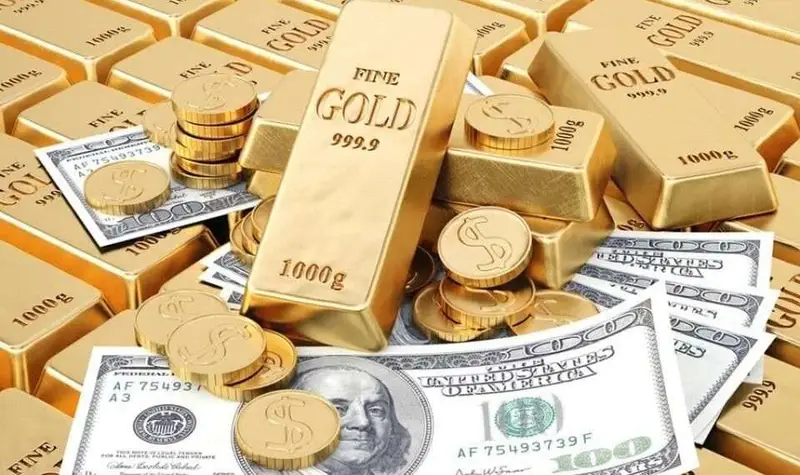
President John Dramani Mahama has announced an ambitious plan for Ghana to build its foreign exchange reserves beyond $20 billion by 2029, positioning the target as a cornerstone of the country’s renewed economic recovery and long term resilience strategy.
The announcement signals a clear policy direction focused on stability, self reliance, and reduced vulnerability to external shocks.
Speaking Speaking at the Ghana Zambia Business Dialogue in Lusaka, President Mahama said the accumulation of strong foreign reserves is central to Ghana’s broader Reset Agenda, which seeks to restore macroeconomic credibility and rebuild confidence among investors, development partners, and citizens alike.
“Building robust foreign reserves is central to safeguarding our national economy and ensuring we can meet our obligations without undue dependence on external financing,” President Mahama said.
Protecting the Economy and Stabilising the Cedi
According to the President, a stronger reserve position is not merely an accounting milestone but a practical shield against global economic volatility. He explained that adequate reserves would help Ghana absorb external shocks, support currency stability, and strengthen the country’s capacity to manage balance of payments pressures.
With global financial conditions remaining uncertain and commodity dependent economies exposed to sudden price swings, President Mahama noted that reserve accumulation would play a vital role in stabilizing the Ghanaian cedi and preserving purchasing power.
He added that improved reserve buffers would also reinforce investor confidence by signalling disciplined economic management and policy predictability, both of which are essential for attracting long term capital.
Leveraging Natural Resources and Productive Sectors
President Mahama outlined a multi pronged approach to achieving the $20 billion target, anchored in the effective use of Ghana’s natural resource endowments and productive sectors. Key initiatives include increased gold exports, enhanced value addition within the mining sector, and the implementation of prudent fiscal and monetary policies.
The President stressed that exporting raw materials alone would not deliver sustainable reserve growth. Instead, he said Ghana is prioritising domestic value addition to retain more foreign exchange earnings within the economy and create jobs along strategic value chains.
He also pointed to stronger partnerships with both domestic and international investors as critical to unlocking new sources of foreign exchange inflows and supporting export led growth.

Advocating African Control of African Capital
Beyond national measures, President Mahama used the platform to advocate for a broader continental rethink on how Africa manages its foreign reserves. He argued that a significant portion of Africa’s reserves is held in Western financial institutions, limiting the continent’s ability to finance its own development priorities.
Read also:
- Trade Minister Pledges Infrastructure Support for Beverage Giants
- MIIF Unveils Strategic Investment Agenda for Critical Minerals
- Starmer’s Chief of Staff Morgan McSweeney Resigns
- Ghana Scores 72% in World Bank Financial Index
- Mahama Recalls Baba Jamal as Ghana High Commissioner to Nigeria
According to the President, redirecting even a fraction of these reserves into African financial institutions could unlock transformative opportunities.
He noted that channeling 30 percent of Africa’s foreign reserves back into African controlled systems could create a vast pool of capital for infrastructure development, industrialisation, and long term economic transformation across the continent.
IMF Exit and Renewed Economic Confidence
In addition to the reserve target, President Mahama announced that Ghana is on course to exit its International Monetary Fund programme by April 2026, citing improvements in key macroeconomic indicators and a gradual return of investor confidence.
The President noted that sustained fiscal reforms have stabilised the economy, with inflation easing and foreign reserves strengthening.
“We are steadily exiting the IMF’s Extended Credit Facility with dignity as partners, not as supplicants,” he stressed.
The President highlighted Ghana’s success in renegotiating its debt obligations on terms that protect national sovereignty and ensure sustainability.
President Mahama pointed to recent economic data as evidence that the Reset Agenda is delivering tangible results. Inflation, which stood at over 23.4 percent at the end of 2024, declined sharply to 3.8 percent in January 2026. He also noted that the Ghanaian cedi appreciated by 32 percent, ranking among the world’s five best performing currencies in 2025.
“We have restructured our debt to invest in people, not just to service loans. This is what ‘Resetting Ghana’ means, and it is delivering results,” President Mahama said.
Regional Cooperation and Trade Expansion
The President emphasised that Ghana’s economic recovery carries positive implications beyond its borders. He described Zambia as a natural partner and highlighted complementarities between the two economies in mining, agriculture, energy, and manufacturing.
According to him, these shared strengths create strong prospects for joint ventures, value chain development, and expanded bilateral trade, particularly within the framework of the African Continental Free Trade Area.

President Mahama concluded that Ghana’s $20 billion reserve target reflects a determined effort to combine fiscal discipline, strategic investments, and regional cooperation in pursuit of sustainable growth and long term prosperity.
“By 2029, Ghana would have built foreign reserves beyond $20 billion, providing security, stability, and a platform for sustainable growth.” John Dramani Mahama