Els: MBN360 Education
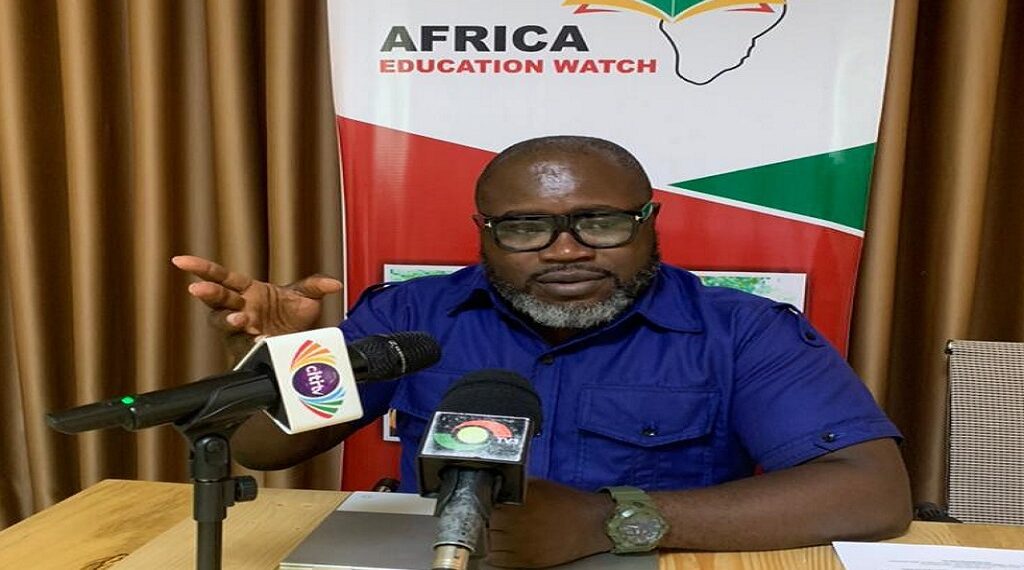
The Executive Director of Africa Education Watch, Kofi Asare, has issued a stark warning about the growing teacher crisis in Ghana, urging the Finance Minister to urgently release funds to allow the Ghana Education Service to recruit and deploy teachers.
He argued that continued delays in recruitment are deepening educational inequality and undermining national learning outcomes, particularly in rural communities.
According to him, at least seven other schools in the same area face similar shortages, forcing parents to make difficult choices between sending children to school or keeping them at home to help on farms.
“This morning, as many parents prepare to drop their children off at school, parents in Nogmado are being encouraged to take theirs to the farm instead,” he said, describing a system that is failing to provide even the most basic educational staffing.
Mr Asare rejected the notion that Ghana’s education challenges are accidental or unavoidable. In his assessment, the shortages reflect deliberate policy choices and prolonged indecision at the highest levels of government.

While education policymakers in Accra debate why nearly one million children remain out of school or why WASSCE failure rates persist, the foundational causes remain unresolved.
“WASSCE failure starts from situations like Nogmado. The rest are symptoms,” Mr. Asare stated, emphasizing that poor learning outcomes at the secondary level are rooted in neglected primary education.
He noted that in communities like Nogmado, statistics suggest that only five out of every ten pupils are likely to complete primary school, with at most two progressing to second-cycle education.
For Mr Asare, these figures highlight a structural injustice that consistently disadvantages rural children and perpetuates cycles of poverty and exclusion.
Funding Delays and Fiscal Priorities
Central to Eduwatch’s criticism is the continued failure of the Finance Ministry to release funds for teacher recruitment in 2025 and 2026. Mr. Asare argued that the drive to achieve single-digit inflation should not come at the cost of worsening teacher deficits and collapsing classrooms.
Read also:
- Transparency key to fighting corruption – NCCE Chairperson
- Nigeria to hold inquest into death of Chimamanda Ngozi Adichie’s toddler
- Tiwa Savage partners Berklee to train 100 young Nigerian music creators
- Beating Heart of Lions was crucial ahead of Hearts of Oak Clash this weekend- Gold Stars Executive
- Parliament approves Ghana Accelerated National Reserve Accumulation Policy
“The Finance Minister has still not released cash to recruit teachers. He is too busy achieving single-digit inflation at the cost of a worsening teacher deficit,” he said. In his view, macroeconomic targets lose their meaning when children are denied access to qualified teachers and basic instruction.

He described the deprivation faced by rural communities as a national moral failure, stressing that the education situation in Zabzugu District represents a scar on the nation’s conscience, even though conditions in other districts may be worse.
Beyond recruitment, Mr Asare raised concerns about inequitable teacher deployment across the country. He argued that even when teachers are hired, weak deployment policies often result in overstaffing in urban areas and acute shortages in rural districts.
The current situation, he said, reflects an education system that presides over inequity while debating its consequences. Without immediate financial clearance for recruitment, the Ghana Education Service is unable to correct these imbalances or respond to the most deprived communities.
“Our problems are not accidental. They are the deliberate products of policy decisions and indecisions. They are self-inflicted,” Mr Asare said, underscoring the urgency of reform.
Call for Immediate Action
Eduwatch has therefore called on the Finance Minister, Dr Cassiel Ato Forson, to open the public purse and grant immediate clearance for teacher recruitment. Mr Asare insisted that silence from the Finance Ministry is not a solution and only worsens an already fragile system.
He argued that timely recruitment would not only improve learning outcomes but also restore confidence in public education among rural families who increasingly see little value in sending children to understaffed schools.
In a striking metaphor, Mr. Asare warned that neglecting classrooms today would carry serious social consequences in the future. “A nation that starves its classrooms will feed its prisons,” he said, invoking a proverb to stress the long term costs of underinvestment in education.

As Ghana continues to pursue economic stabilization and fiscal discipline, the teacher recruitment crisis presents a test of national priorities. For Eduwatch, stabilizing the economy cannot be separated from investing in human capital, particularly at the basic education level where learning foundations are laid.
Mr Asare maintained that releasing funds for teacher recruitment is not merely an administrative decision but a statement of commitment to equity, opportunity, and national development.
Without urgent action, he warned, rural communities like Nogmado will continue to bear the brunt of policy inaction, with lasting consequences for Ghana’s education system and social cohesion.