
Read also:
- Invest in TVET to Sustain Poverty Reduction – Eduwatch Boss
- AI replays, drones, and transparent torches: The tech transforming the 2026 Winter Olympic Games
- Kenneth Odeng Adade appointed Chief Operations Officer as Accra hosts Africa’s top armwrestlers
- Transport Scarcity: G.P.R.T.U to Withdraw Task-Force
- Mahama Hints at Full Rollout of Free Primary Healthcare
Els MBN360 Extractives/Energy
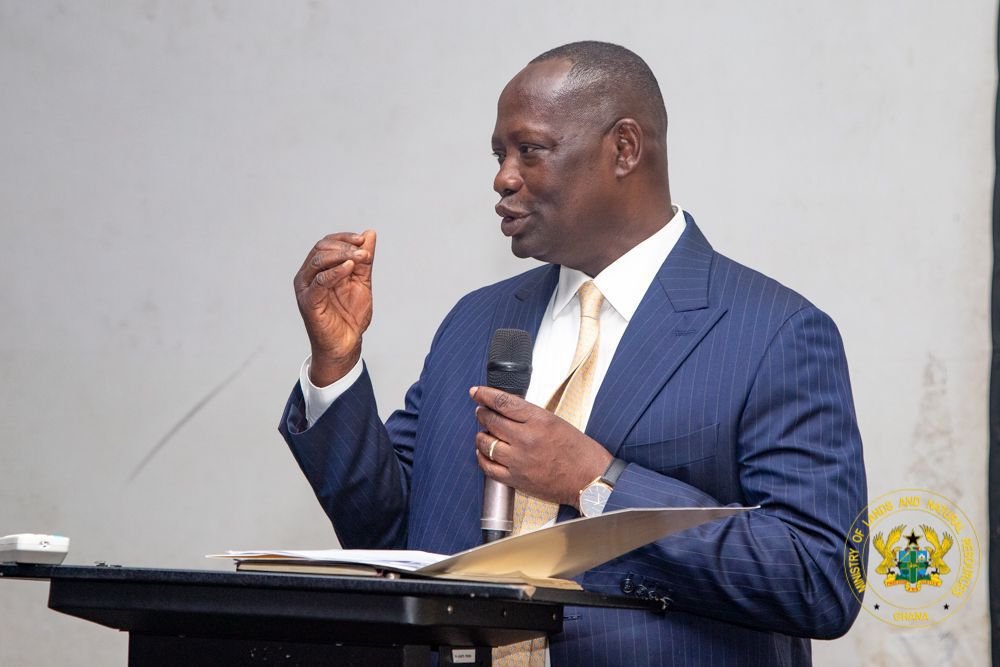
Hon. Samuel Abu Jinapor, the former Minister for Lands and Natural Resources, has issued a clarion call for a fundamental restructuring of Africa’s extractive industry to prioritize the active inclusion of women, youth, and Small and Medium-sized Enterprises (SMEs).
Delivering his opening remarks at the 2026 Africa Prosperity Dialogues (APD) Mining Breakfast Meeting in Accra, he argued that the era of viewing mining through the “narrow lens of extraction” must end if the continent is to achieve genuine prosperity.
The former Minister for Land and Natural Resources’ view encapsulates a strategic shift toward a “full value chain” approach, where mineral wealth is measured not by the volume of dirt moved, but by the level of domestic economic participation it triggers.
“For Africa to truly prosper from its mineral wealth, then its women, youth, and small and medium-scale enterprises must be empowered to participate in the full value chain of the industry. Participation must mean access to skills, access to technology, access to finance, and access to markets. It must mean inclusion across exploration, engineering services, equipment manufacturing, mineral processing, refining, logistics, data services, and downstream manufacturing.”Hon. Samuel Abu Jinapor
Hon. Abu Jinapor noted that despite Africa’s status as a mineral powerhouse evidenced by Ghana’s status as a leading producer with 4.8 million ounces of gold in 2024 the sector remains plagued by “weak linkages in domestic economies.”
To rectify this, he proposed that empowerment must move beyond the traditional “digging minerals out of the ground” and instead focus on providing local actors with “access to skills, technology, finance, and markets.”
By deliberately integrating these demographics into high-value segments such as engineering, equipment manufacturing, and data services, African nations can finally bridge the gap between resource abundance and sustainable development.
Redefining the Value Chain: From Pits to Processing

The shift from a “narrow extraction” model to a comprehensive value chain is essential for capturing the economic multipliers inherent in the mining sector.
Research indicates that for every direct job created in a large-scale mine, up to six indirect jobs can be generated in the supply chain if local SMEs are sufficiently integrated.
By empowering youth and women in downstream manufacturing and mineral processing, countries like Ghana can retain the value that is traditionally exported to foreign refineries. This transition requires what Hon. Jinapor describes as “clear and enforceable frameworks” that move beyond simple employment targets to focus on procurement and supplier development.
Catalyzing SMEs through Local Content Frameworks

Small and Medium-scale Enterprises constitute the backbone of African economies, yet they often face prohibitive barriers to entry in the specialized mining market.
To foster “enterprise development and skills transfer,” public policy must prioritize the de-risking of local businesses. This includes establishing “resource corridors” and regional clusters where SMEs can collaborate on equipment manufacturing and logistics.
By mandating that a significant percentage of mining procurement be sourced from local, women-led, or youth-led firms, governments can ensure that the “true value chain of mining” fuels domestic industrialization rather than just providing fiscal revenue.
Leveraging Human Capital for Sustainable Growth
With over 60 percent of Africa’s population under the age of 25, the youth represent the continent’s most significant competitive advantage in a technology-driven mining future.
Empowerment in this context means aligning educational curricula with the technical demands of modern mining, from autonomous drilling to green refining technologies.
Integrating women and youth into the “exploration and engineering” stages ensures a diverse talent pool that can sustain the industry for decades.
Ultimately, as Hon. Jinapor emphasized at the Accra International Conference Centre, the sustainability of Africa’s mineral wealth depends on transforming it into a catalyst for inclusive growth that “continues well beyond the mine gates.”