
Read also:
- Minority Blasts Government Over Tariff Hikes Demands Immediate Reversal.
- Ghana’s Cancer Burden: 180 New Cases Recorded Annually at KATH
- Canon Empowers Ghanaian Creatives with Master Manual Photography Training
- NSA appeals to corporates to help elevate proactive sports federations
- Ghana, Qatar Launch Labour Mobility Agreement Implementation
Els MBN360 news
President John Mahama has emphasized that education is a fundamental right that should not be denied to any child, especially in conflict-affected areas. He stressed that education is a powerful tool for justice and a means to break the cycle of poverty and violence.
Speaking at a recent event, Mahama highlighted the importance of ensuring access to quality education for all children, regardless of their background or circumstances. He urged stakeholders to prioritize education as a key component of conflict resolution and sustainable development.
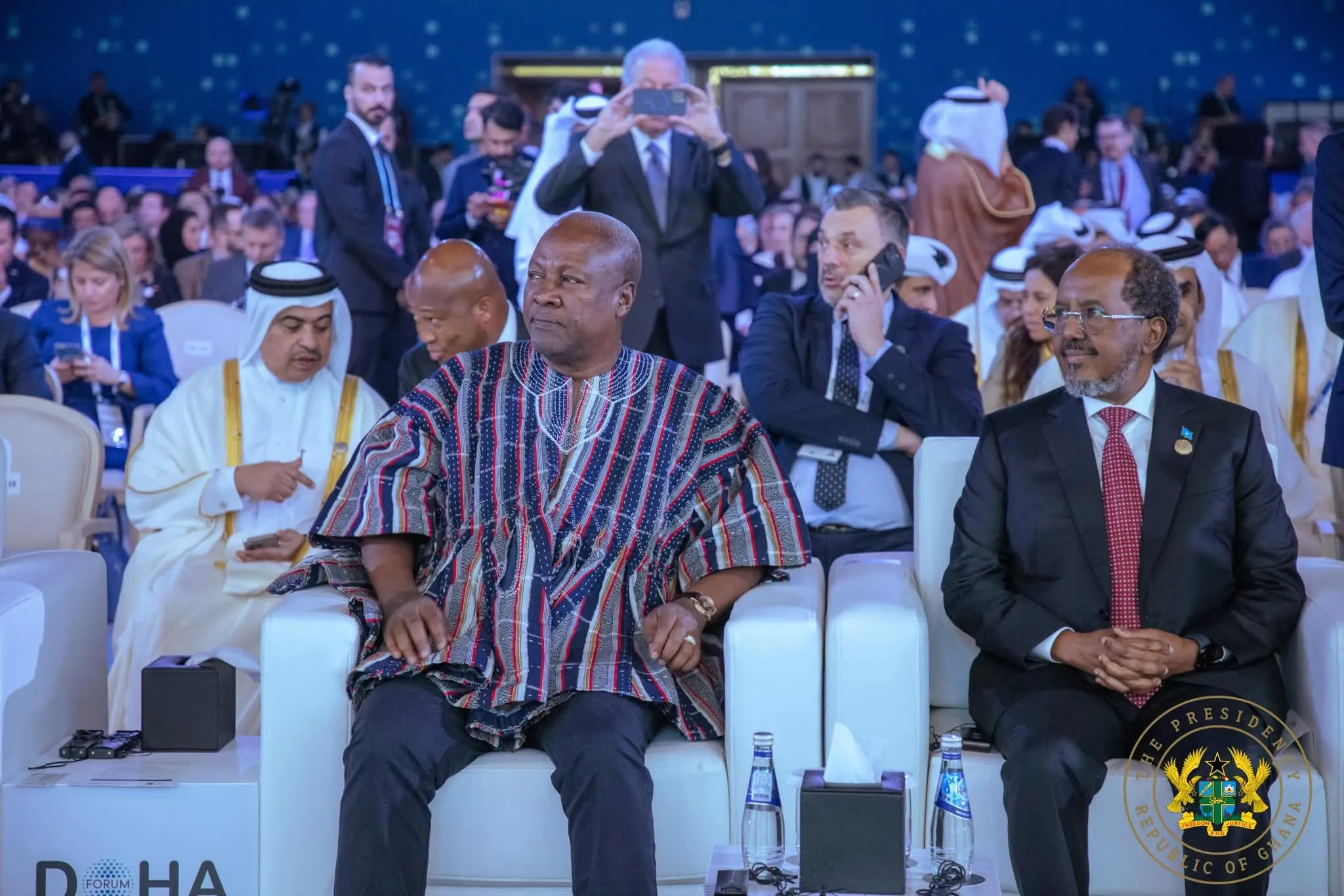
Delivering his speech at the 2025 Doha Forum in Qatar on Sunday, December 7, 2025, President Mahama noted that the world is currently facing overlapping challenges, including wars, pandemics, climate shocks, and economic hardship, which continue to destroy childhoods and interrupt schooling. He argued that education must not be a privilege but a right guaranteed to every child, especially in difficult times.
Mahama said education is justice “when a child uprooted by conflict does not lose her dreams or her future,” adding that learning must continue even during crisis because it protects children and offers hope. He explained that education in emergencies should be treated as life-saving, not optional, and called for stronger global action to support children whose schools have been destroyed or shut down.
He highlighted global conflict zones such as Gaza, Afghanistan, and Sudan, where millions of children have lost access to learning, describing the situation as a humanitarian tragedy that could affect development for decades. He warned that when children are excluded from education, the world loses talent, creativity, and innovation that could contribute to growth.
He emphasized that education must be modern, inclusive, and forward-looking to prepare young people for technology-driven global competition.
He encouraged nations to plant the seeds of justice through education so that the world may harvest peace, prosperity, and shared progress.


