Els: MBN360 News
The IMANI Centre for Policy and Education has made a strong call for Ghana to urgently deepen collaboration among its anti-corruption institutions, fast track the prosecution of high-profile corruption cases, and pass a comprehensive campaign financing law if it is to significantly improve its standing on the Corruption Perceptions Index.
These recommendations form the core of IMANI’s response to Ghana’s 2025 CPI performance, which shows only marginal progress despite years of reform initiatives and strong political rhetoric.
IMANI argued that visible coordination between the Attorney General’s Department and other anti corruption agencies, particularly the Office of the Special Prosecutor, is essential to restoring public confidence.
The policy think-tank maintained that prosecution outcomes, rather than policy announcements, will determine whether citizens and international observers view Ghana as serious about tackling corruption.

The think tank further stressed the need for Parliament to pass a political financing law to improve transparency in party and campaign financing and reduce illicit financial flows that distort democratic competition.
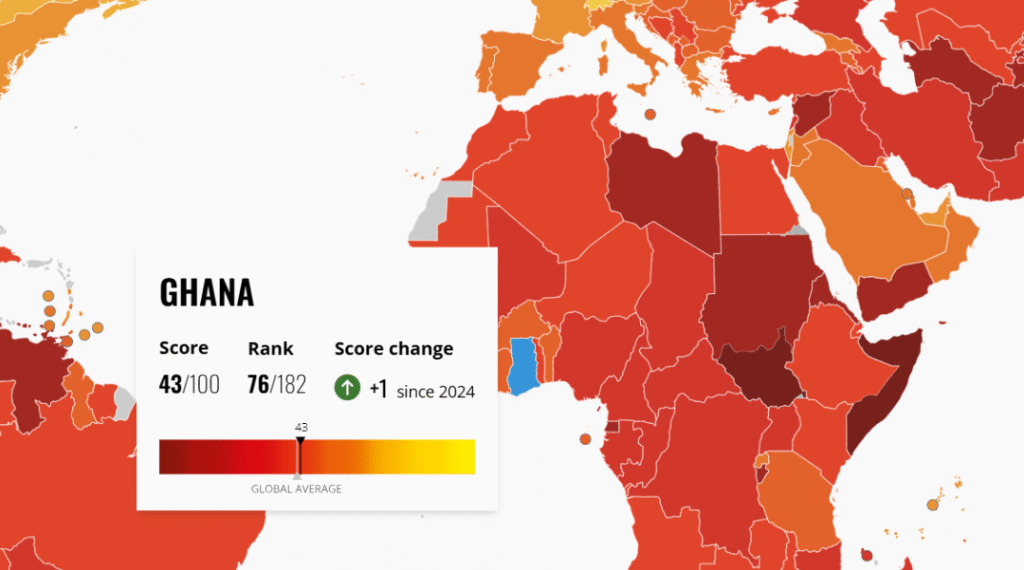
“Ghana has recorded a marginal improvement in the 2025 Corruption Perceptions Index (CPI), scoring 43 out of 100, up from 42 in 2024. While this places the country above the Sub-Saharan African regional average of 32, Ghana remains below its 2014 peak score of 48 and continues to trail regional leaders such as Seychelles, Cape Verde, and Rwanda.”IMANI Centre for Policy and Education
Globally, Ghana ranked 76th out of 182 countries and 11th within Sub Saharan Africa. According to IMANI, the modest gain reflects a decade long struggle to translate anti corruption promises into sustained institutional effectiveness.
Read also:
The CPI measures perceptions of public sector corruption and is widely regarded as an indicator of governance credibility. Ghana’s performance suggests that reforms introduced over the years have not yet delivered the depth of change required to shift public and investor confidence.
Institutional Reforms Under Scrutiny
IMANI’s assessment highlighted persistent concerns about the independence, coordination, and effectiveness of Ghana’s anti corruption institutions. Although several reforms have been introduced to strengthen accountability, public perception continues to reflect frustration over limited results.
A major focus of this concern is the Office of the Special Prosecutor, which was established to investigate and prosecute corruption related offences involving public officials. Despite its mandate, the OSP has faced structural and political challenges that have constrained its operations.
IMANI noted that public debate surrounding the possible abolition of the office in December 2024, a move later reversed by presidential intervention, exposed lingering dissatisfaction and resistance to the agency’s work.
These challenges, IMANI argued, weaken institutional credibility and reinforce perceptions that anti-corruption bodies are not sufficiently insulated from political pressure.
The government’s flagship anti corruption initiative, Operation Recover All Loot, has also come under scrutiny in IMANI’s analysis. Launched with the promise of recovering stolen state resources, the initiative raised expectations of decisive action against corruption.
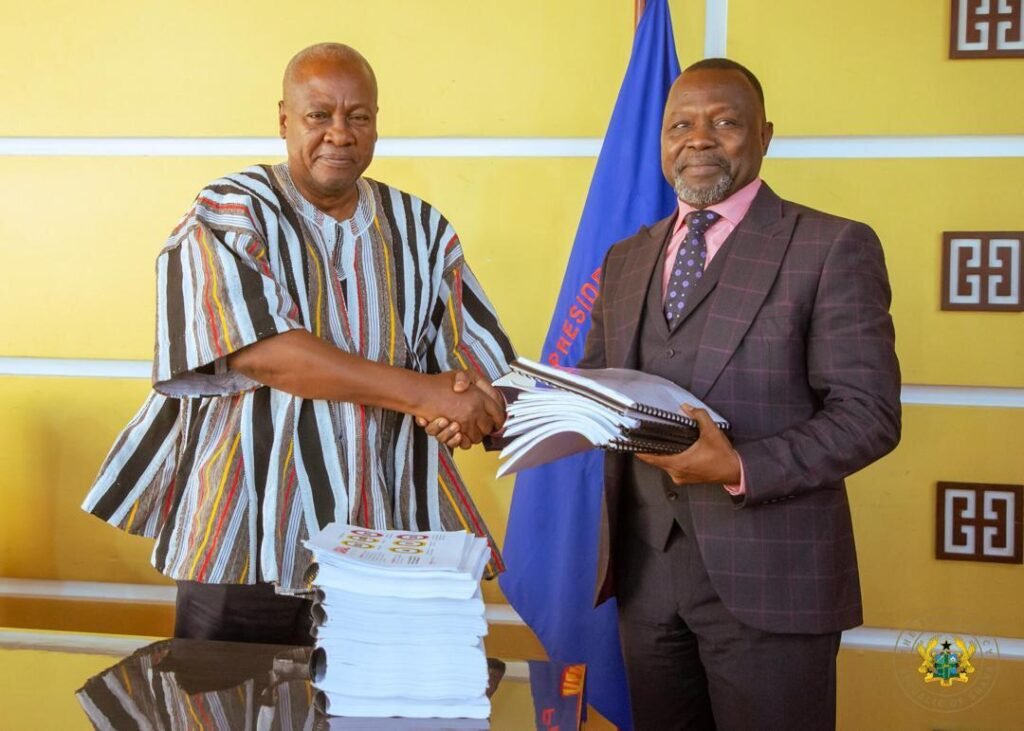
However, IMANI observes that the absence of major or high profile convictions has undermined public confidence. Instead of full prosecutions leading to convictions and comprehensive asset recovery, the Attorney General has been criticised for relying on partial settlement agreements.
According to IMANI, this approach raises concerns about deterrence and accountability, as settlements without convictions may fail to send a strong signal against corruption.