
Els: MBN360 Agribusiness
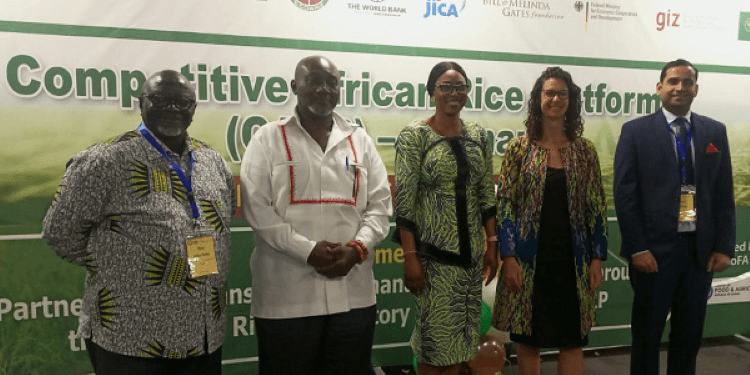
The perennial challenge of Ghana’s rice self-sufficiency has moved from a matter of agricultural policy to a high-stakes economic emergency as the Competitive African Rice Platform (CARP) Ghana launched a decisive three-year project aimed at dismantling the structural barriers that keep local rice from competing with cheaper, often lower-quality imports
Funded by the Alliance for a Green Revolution in Africa (AGRA), this three-year initiative is not merely a subsidy program; it is a new calculated industrial market intervention to address the challenge of the nation’s dinner tables being vulnerable to the whims of global supply chains and foreign exchange volatility.
By targeting 20,000 smallholder farmers across the Northern, Upper East, and Volta regions, the project seeks to close a staggering 51% self-sufficiency gap that drained millions in foreign reserves last year.
“Ghana cannot claim economic sovereignty while importing over half of its staple cereal. This project is about restoring that sovereignty through competitive, local production. It acknowledges that while Ghana has the soil and the soul for rice production, it has lacked the policy clarity and macroeconomic discipline to turn smallholder efforts into industrial power”Competitive African Rice Platform, Ghana
This sentiment, echoed by stakeholders at the launch, underscored a shift in how the state views agribusiness, as the structural deficit in Ghana’s rice production moves to the forefront of the national agricultural agenda.
Unlike previous subsidy-led interventions, this model will utilize a market systems development approach, creating a direct link between primary producers and 150 identified SMEs, including millers and processors. This ensures that the transition from harvest to retail is seamless, addressing the long-standing issue of local rice struggling to compete with imported brands on urban shelves.

“The objective is to anchor CARP Ghana as the primary national platform for rice sector competitiveness. Ghana has to move away from fragmented support toward a unified market system that guarantees off-take for our farmers and quality for our consumers”Competitive African Rice Platform, Ghana
Read also:
Demographic Focus
The rollout was keen on its demographic focus, with a dedicated track for 5,000 women and youth entrepreneurs.
This inclusion is designed to institutionalize better corporate governance and professionalize agribusiness at the grassroots level, as focusing on the “middle ground,” of the value chain – processing and milling – ensures that the increased output from the 20,000 farmers does not result in post-harvest losses.
For CARP Ghana, closing the 51% gap requires more than just seeds and fertilizer. It requires a robust link to the private sector, hence the integrating of so many SMEs into the platform, building a sustainable ecosystem where “the miller is just as invested in the farmer’s success as the farmer is.”
The project aligns with the National Rice Investment Action Plan (NRIAP) and the broader ECOWAS Rice Observatory roadmap for 2025 – 2035. As global supply chains face increasing volatility due to energy shocks and shipping disruptions, the CARP Ghana initiative serves as a critical buffer for national food security.
The focus remains on maximizing output through technical partnership and mentorship, ensuring that indigenous rice firms can scale their operations to meet the growing domestic demand.

The three-year window is a call to action for all stakeholders in the rice value chain, to make local rice the preferred choice by price and quality – setting the foundation for a future where Ghana no longer relies on external markets for its most basic staple.
As the 2026 planting season gains momentum, the onboarding of these 20,000 farmers represents a pivotal moment in the nation’s drive for agricultural sovereignty. The success of the CARP platform will be measured by its ability to reduce the import bill and stabilize the market prices of local rice across the country’s major trading hubs.
“The focus is clear: productivity, inclusivity, and competitiveness. By empowering everyone within this 20,000-farmer network, we are ensuring that the country’s rice sector becomes a sustainable engine for rural economic growth and national self-reliance”Competitive African Rice Platform, Ghana