Els: MBN360 Sports
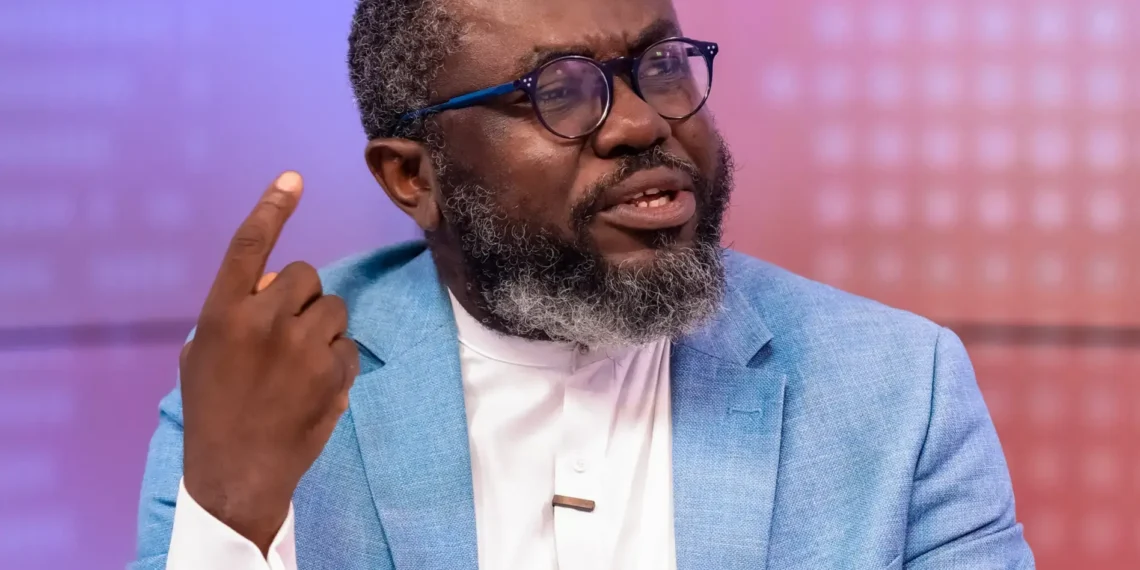
Private legal practitioner and activist Osagyefo Oliver Barker-Vormawoe has strongly opposed suggestions that government resources could be used to sponsor supporters to the 2026 FIFA World Cup, calling instead for those funds to be redirected toward critical social interventions such as healthcare.
His remarks follow public discussions triggered by comments attributed to the Sports Minister Hon. Kofi Adams, regarding potential financial support for fans traveling to the tournament.
Barker-Vormawoe expressed deep concern over what he described as misplaced national priorities, arguing that at a time when Ghana faces pressing economic and social challenges, any consideration of spending millions of dollars on fan travel would be inappropriate.
He emphasized that such decisions risk undermining public confidence in governance and fiscal discipline.
“I watched and read with dismay the statements made by the Sports Minister that the government will be funding not more than 800 supporters at a cost of 9,250 dollars per head to go to America and watch the Black Stars”.Private legal practitioner and activist Osagyefo Oliver Barker-Vormawoe
According to him, even limiting the number of beneficiaries does not justify the scale of expenditure involved, especially when basic social needs remain unmet for many citizens.

Call to Support MahamaCares Initiative
Central to Barker-Vormawoe’s argument is the need to prioritize healthcare funding through initiatives like the Ghana Medical Trust Fund, popularly known as MahamaCares, introduced by John Dramani Mahama.
He described the initiative as laudable and necessary, particularly in addressing critical health conditions that place financial burdens on Ghanaian families.
He revealed that his law firm had considered contributing financially to the Trust, highlighting the growing interest among private individuals and organizations in supporting the initiative.
However, he cautioned that such goodwill could be undermined if the government is perceived to be allocating significant resources to less urgent expenditures.
“To learn that the Government plans to spend 7.4 million US dollars for people to go and ‘shee jama’ at the World Cup is so unconscionable and incredibly insensitive”.Private legal practitioner and activist Osagyefo Oliver Barker-Vormawoe
He insisted that such funds would be better utilized in strengthening healthcare delivery and supporting vulnerable populations. Barker-Vormawoe further warned that proceeding with such spending could erode trust in the government’s commitment to responsible governance.

He urged authorities to demonstrate consistency in policy decisions, particularly when advocating for public support toward national development initiatives.
Read also:
- Tamale Central Hospital casual workers strike again over unpaid salaries
- BECE candidates to choose schools after results under new system
- One dead, others injured over land demolition dispute at Akwatia Line in Kumasi
- Megan Thee Stallion taken to hospital during Moulin Rouge performance
- Divorced couples in Japan can now share custody of their children
Government Clarifies Position on Fan Sponsorship
Despite the concerns raised, the government has earlier clarified that it will not use public funds to sponsor supporters to the 2026 FIFA World Cup, which will be hosted in the United States, Canada, and Mexico.
President Mahama has reiterated a shift toward fiscal responsibility, emphasizing that state resources must be directed toward priority sectors such as job creation, infrastructure, and social services.
The decision aligns with recommendations from the Dzamefe Commission of Inquiry, which advised against the use of public funds for fan travel following controversies surrounding Ghana’s participation in the 2014 World Cup.
The Commission’s findings highlighted the need for stricter financial controls and greater accountability in sports-related expenditures. Government officials have also pointed to the high cost associated with such sponsorships.

Estimates suggest that even a relatively small group of supporters would require millions of dollars in logistical and travel expenses, making it an unsustainable option under current economic conditions.
Shift Toward Private Sector Participation
In place of state sponsorship, the government is encouraging private sector involvement and alternative funding mechanisms to support fan participation in the tournament.
Initiatives such as the Ghana World Cup Raffle have been introduced to allow individuals to contribute voluntarily while offering opportunities to win sponsored trips.
Corporate Ghana has also shown interest in supporting national team activities, with several companies making financial commitments toward sports development.
This approach is expected to reduce the financial burden on the state while still enabling fan engagement and national support for the Black Stars. Additionally, authorities have pledged greater transparency in the management of sports finances.
For the first time, the budget for the national team is expected to be made public, a move aimed at strengthening accountability and rebuilding public trust. The debate highlights the broader challenge of balancing national enthusiasm for football with the realities of economic management.

While the Black Stars remain a unifying symbol of national pride, policymakers are increasingly being called upon to ensure that emotional investments in sports do not override critical development priorities.
Barker-Vormawoe’s intervention reflects a growing public discourse on accountability and the responsible use of state resources. His call to redirect funds toward healthcare resonates with wider concerns about access to quality medical services and the need for sustainable social protection systems.
As Ghana prepares for the 2026 World Cup, the focus appears to be shifting toward a model that combines private initiative with public oversight. This approach aims to preserve national support for the team while ensuring that limited public resources are deployed where they are most needed.