
Els: MBN360 News
Former NPP Parliamentary Candidate for Dome Kwabenya and Diplomat, Mike Oquaye Jnr has argued that current approval ratings enjoyed by the government must be viewed within the context of a political honeymoon period.
He indicated that such favourable public sentiment is common in the early years of every administration and should not be treated as a permanent measure of performance. Mr Oquaye Jnr recalled that the New Patriotic Party also recorded strong approval ratings during its first two years in office.
“The approval ratings of the NPP for the first two years, between 2017 and 2018 were very high. People were very excited with the work that was going on. In fact, I dare say it went on all the way up to even 2019 until the horrible, worldwide pandemic of COVID-19 attacked all of us.”Mike Oquaye Jnr
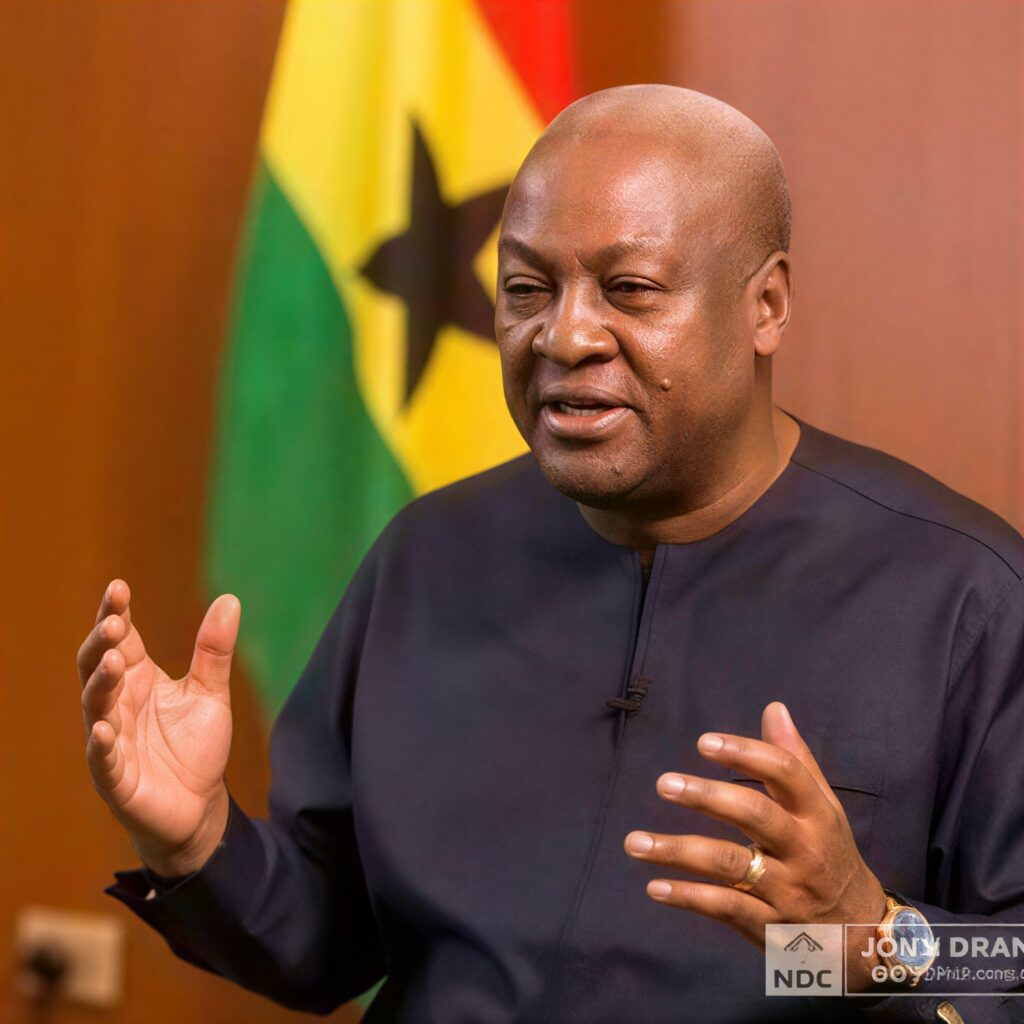
Drawing comparisons with global economic conditions, he noted that Ghana’s inflation spike during the pandemic should be understood within a wider international context. He added that even the United Kingdom recorded inflation levels unseen since the Second World War.
He argued that the previous administration handed over an economy with important financial buffers. In his view, gold reserves and foreign exchange holdings created resilience that helped stabilise the economy during transition.
“It’s not as if we left you an empty coffer. We left you tons of gold, which you were able to sell to buffer the economy. We left the economy in a position which was resilient: $9 billion of reserve. All of these allowed the NDC to make a decision because we have two different ways of handling money.”Mike Oquaye Jnr
On the management of gold reserves by the Bank of Ghana, Mr Oquaye Jnr explained that the liquidation of gold reserves to support the cedi should still be recognised as drawing on savings accumulated under the previous government.
Using the analogy of inherited property, he suggested that savings built over time deserve acknowledgment even when later converted into liquid assets. The Diplomat said economic continuity requires governments to recognise foundations laid by predecessors.
Referencing the IEA survey and Global infoAnalytics, he argued that public goodwill often declines as administrations age. He said current approval levels could gradually weaken as expectations begin to confront lived economic realities.
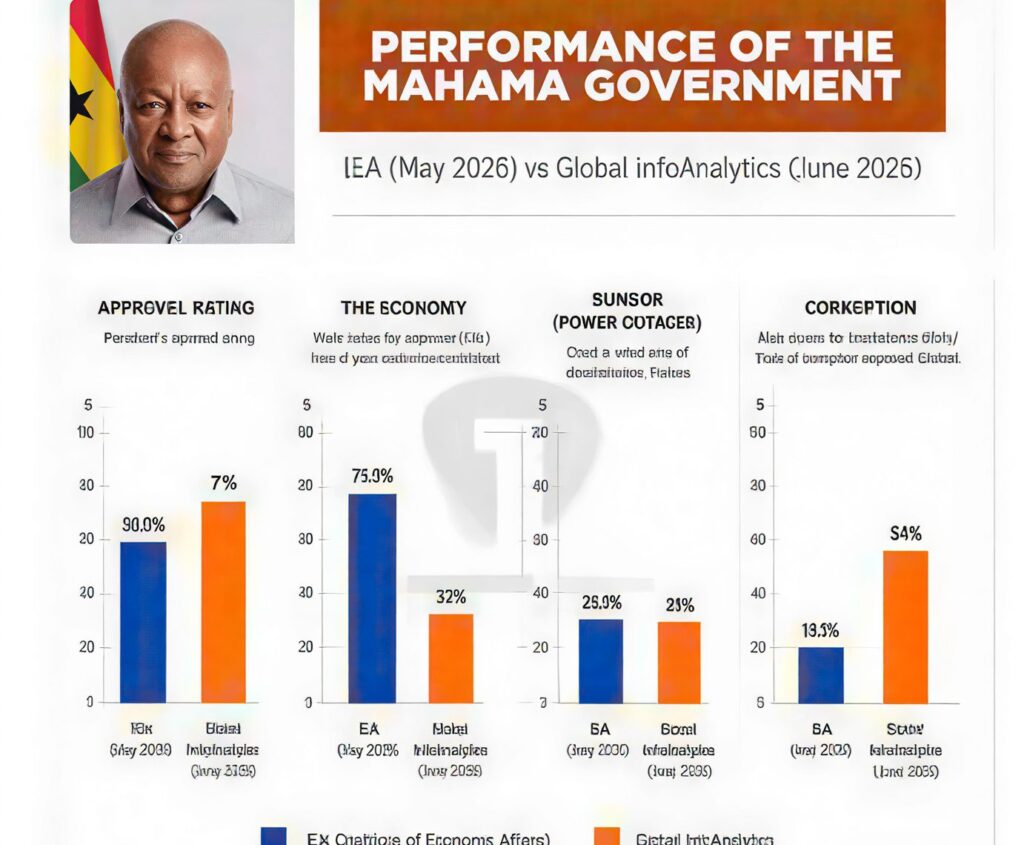
Moreover, Mr Oquaye Jnr examined the appreciation of the cedi against the dollar and warned that currency strength alone does not guarantee economic progress. He explained that while a stronger cedi supports imports, it can weaken export competitiveness.
Read also:
- AMA to lock up shops over unpaid fees and property rates
- Israel and Hezbollah agree to ceasefire after intensified fighting threatens US-Iran talks
- NEDCo unveils digital billing revolution to eliminate delays and improve accuracy
- 2026 World Cup: USA beat Australia to sit on top of Group D
- Historic Accra conference adopts landmark Reparatory Justice roadmap as global support grows
He cited production and export markets as areas requiring stronger policy attention. China, he noted, deliberately manages currency competitiveness to protect production and industrial growth.
Unmet Promises Test Public Patience Across Key Sectors
Mike Oquaye Jnr also questioned the government’s delivery on major campaign promises, arguing that early goodwill may erode if visible progress remains slow. He said unmet expectations in education, agriculture and mining are increasingly influencing public opinion.
Central to his criticism was the unresolved double-track school system. Mr Oquaye Jnr recalled earlier assurances that the system would be phased out within nine months, yet noted it remains in operation.
He also challenged explanations surrounding funding requirements for the education sector. The Diplomat argued that timelines promised to the public must remain the standard for accountability.
Beyond education, he focused on the proposed 24-hour economy initiative. He indicated that many citizens are still waiting to see concrete implementation despite repeated public discussions.
Mr Oquaye Jnr criticised proposals involving boreholes for cocoa farms, arguing that such ideas fail to reflect the practical realities of cocoa cultivation. Furthermore, he commented on the fight against illegal mining by questioning the government’s current anti-galamsey posture.

Additionally, he raised concerns over falling agricultural commodity prices. He cited cashew prices, which he said dropped from 25 cedis per kilogram in 2024 to 10 cedis currently.
The former parliamentary candidate further questioned whether polling data sufficiently captured dissatisfaction among rural producers. He mentioned cocoa and cashew farmers as groups whose experiences may differ sharply from national survey averages.
He acknowledged the pollster’s professional work. Nonetheless, Mr Oquaye Jnr argued that field realities across multiple sectors tell a more complex story than headline approval figures suggest.
He ultimately stated that the honeymoon period is temporary and public judgment will increasingly depend on measurable delivery. The Diplomat added that future assessments of the administration will rest on fulfilled promises and economic outcomes.