
Els: MBN360 Economy
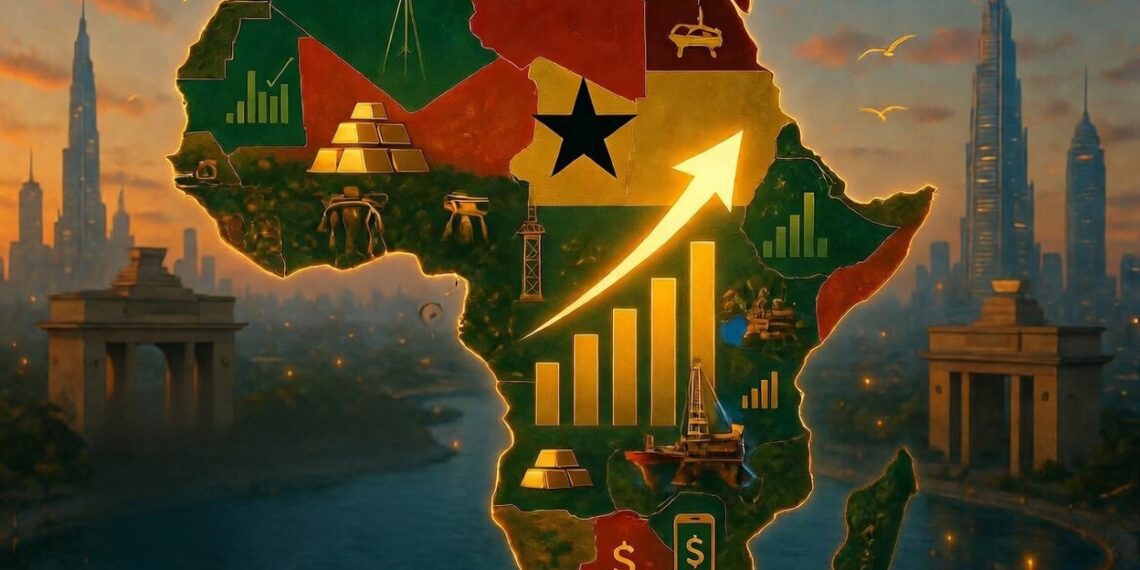
Ghana has reached a new economic milestone after emerging as the eighth largest economy on the African continent, reinforcing the country’s growing influence in regional and continental trade.
The latest Gross Domestic Product figures place Ghana’s economy at approximately $118.29 billion in 2026, reflecting strong momentum from key sectors including mining, technology, financial services, oil, and industrial production.
The new ranking marks a significant improvement for Ghana, which occupied the tenth position just a year earlier. The jump in rankings reflects not only economic expansion but also the resilience of the Ghanaian economy amid global financial pressures, inflation concerns, debt restructuring challenges, and external market vulnerabilities.
Ghana Climbs the Continental Ladder
Ghana’s rise among Africa’s top economies signals a broader transformation of the country’s economic structure. With an economy that continues to diversify beyond traditional exports, analysts say the West African nation is increasingly positioning itself as one of the continent’s most stable and competitive markets.
Data from multilateral economic assessments show that Ghana recorded consistent GDP growth over the past year, driven largely by strong performances in the mining sector, especially gold production, as international gold prices remained elevated throughout the period.
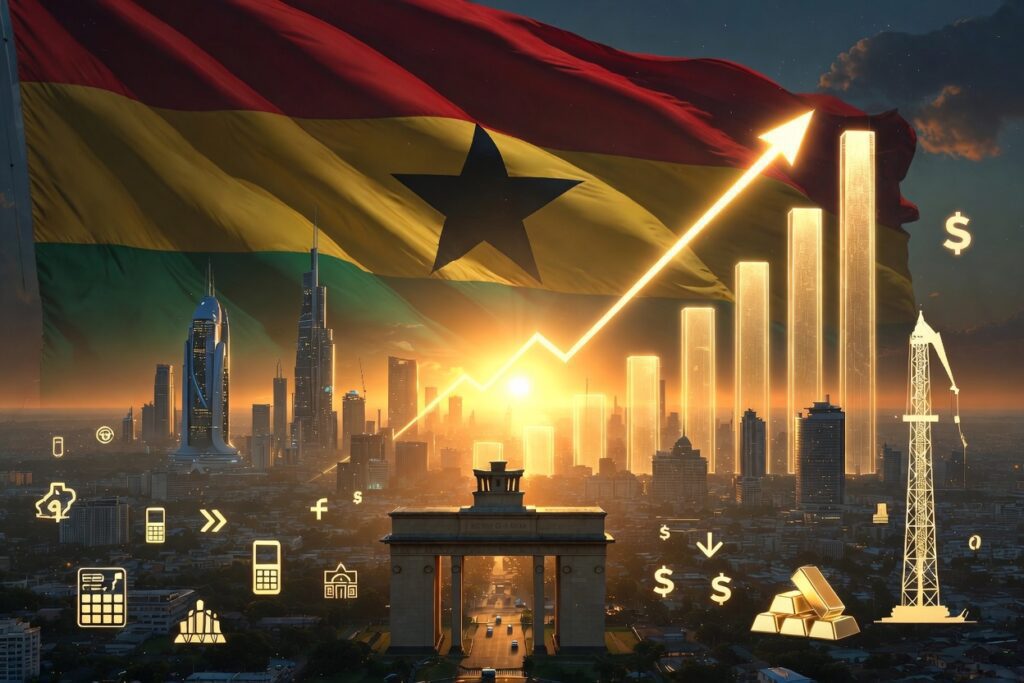
Gold continues to serve as a major anchor of Ghana’s economy. As one of Africa’s largest gold producers, the country benefited significantly from increased global demand for safe haven assets. The mining sector delivered higher export revenues and strengthened foreign exchange inflows, supporting macroeconomic stability.
Industry experts believe the commodity boom created additional fiscal space for government spending and investment, even as authorities continued efforts to manage public debt and implement economic reforms.
Technology and Financial Services Drive Expansion
Beyond mining, Ghana’s rapidly expanding Information and Communication Technology sector has emerged as one of the strongest contributors to GDP growth.
The digital economy has become increasingly important, supported by growing internet penetration, mobile money adoption, fintech innovation, and investments in digital infrastructure. Local startups and established firms alike have benefited from expanding consumer demand for digital financial solutions, e-commerce platforms, and technology-driven services.
The financial services sector also contributed significantly to Ghana’s economic growth. Banks, insurance companies, and digital finance providers have expanded their reach, creating more opportunities for financial inclusion and capital mobilization.
Observers say the growing synergy between finance and technology continues to transform business operations across sectors, particularly among small and medium-sized enterprises.
Oil and Gas Add Stability
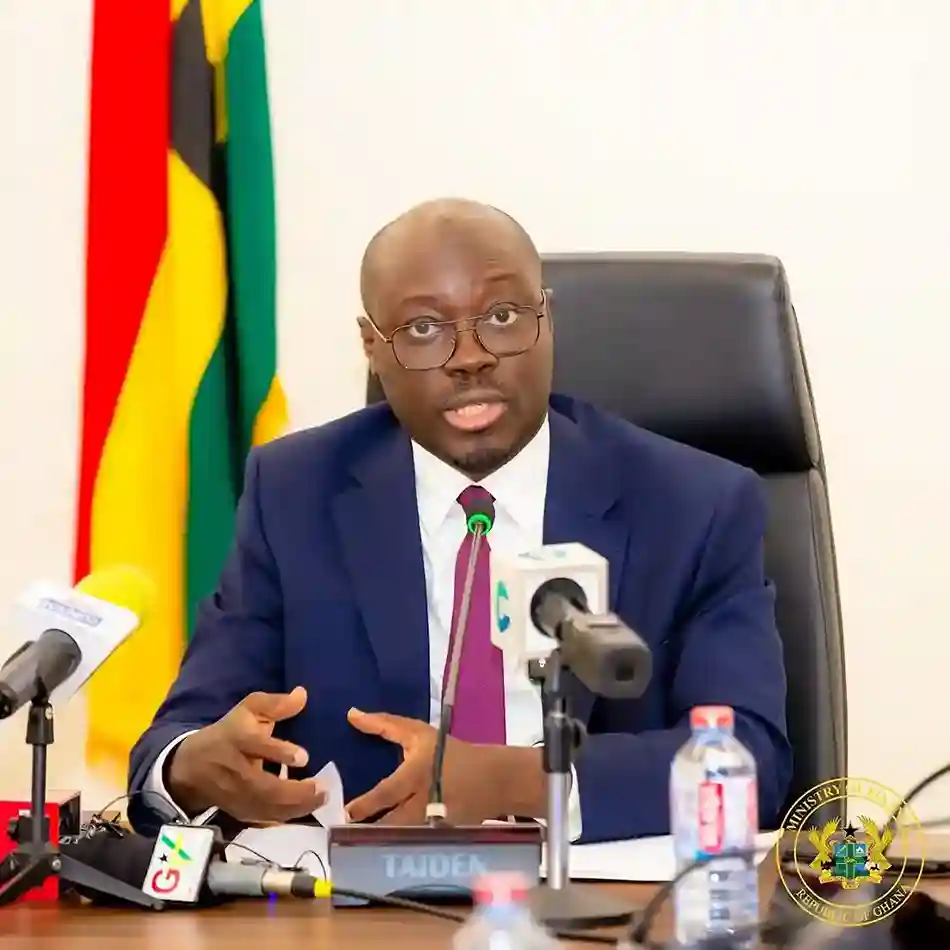
Ghana’s oil and gas industry has also played an increasingly strategic role in supporting national output. Production from offshore fields has continued to contribute to both GDP growth and government revenues.
The sector has helped cushion the economy against fluctuations in traditional export commodities such as cocoa, while also supporting foreign exchange reserves.
Read also:
- NPP has the edge to win 2028 polls – Afoko
- Over 70km cleared for Kumasi Expressway project — Mahama
- Nothing Celebratory for Us Over Ofori-Atta’s Residency Ruling — Ahiagbah
- Petroleum Commission Urges Strategic Regional Investment for West African Gas
- Minority Demands Appearance of Gold Board CEO Amid Procurement Questions and Financial Scrutiny
Combined with mining and services, the energy sector has become an important pillar in Ghana’s diversified economic framework.
Regional Leadership in West Africa
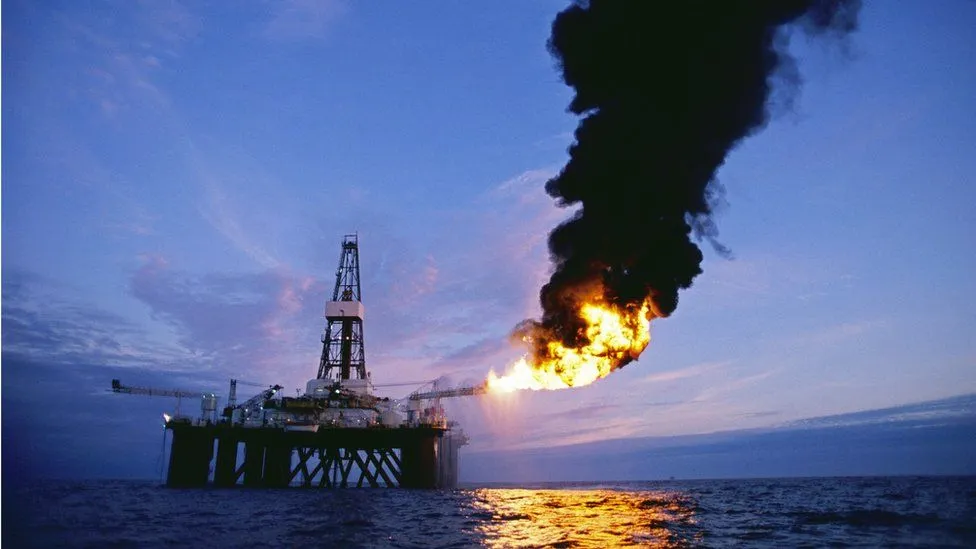
Ghana’s latest economic standing places it ahead of several major African economies and strengthens its position as one of West Africa’s leading economic hubs.
While Nigeria remains the region’s largest economy with a GDP of $377.37 billion, Ghana’s consistent performance has made it one of the most watched emerging markets on the continent.
Analysts note that Ghana’s relatively diversified economic base sets it apart from many regional peers that remain heavily dependent on a single commodity or sector.
This diversification has helped maintain investor confidence, attract foreign direct investment, and sustain long-term growth prospects.
Africa’s Largest Economies
At the continental level, South Africa retained its position as Africa’s largest economy with a GDP of $479.96 billion. The country’s advanced financial systems, industrial capacity, and strong capital markets continue to drive its dominance.
Egypt ranked second with a GDP of $429.65 billion, supported by major infrastructure development, tourism expansion, and energy investments.
Nigeria secured third place following a strong economic rebound linked partly to currency adjustments and reforms.
Other top economies include Algeria, Morocco, Angola, and Kenya.
Ghana’s inclusion among these economic heavyweights signals a major achievement for policymakers, businesses, and investors alike.
Challenges Still Remain
Despite the impressive ranking, economists caution that challenges remain. Public debt management, exchange rate pressures, inflation control, and export competitiveness continue to demand careful policy attention.
Global economic uncertainties, including commodity price volatility and tightening financial conditions, could also test Ghana’s resilience in the coming years.
However, many analysts remain optimistic that continued investments in industrialization, technology, infrastructure, and private sector growth could sustain the country’s upward trajectory.
Currently, the country is not only growing, but steadily building the foundations for long-term economic leadership on the continent.