
Els: MBN360 Extractives/Energy
Hon. Dr. John Abdulai Jinapor
Ministry of Energy and Green Transition has officially launched an ambitious 18-month, GH¢4 billion intervention programme designed to overhaul Ghana’s electricity distribution network and systematically eliminate persistent power outages across the nation.
This critical initiative, which has already entered its preliminary emergency response phase, seeks to rectify long-standing technical faults that have increasingly hindered reliable power delivery to homes and commercial enterprises.
This massive undertaking is structured across four distinct, high-impact phases aimed at addressing both immediate infrastructure gaps and systemic bottlenecks.
The rollout prioritizes the urgent deployment of roughly 3,000 transformers nationwide the majority being distribution-grade units to alleviate the strain on an aging network that has struggled to keep pace with rapid urban development and rising population demands.
By systematically replacing deteriorated electrical poles, installing thousands of new fuses and distribution panels, and upgrading backbone infrastructure like 33-kilovolt feeders, the government intends to transition from a reactive maintenance model to a more robust, stable power delivery system.
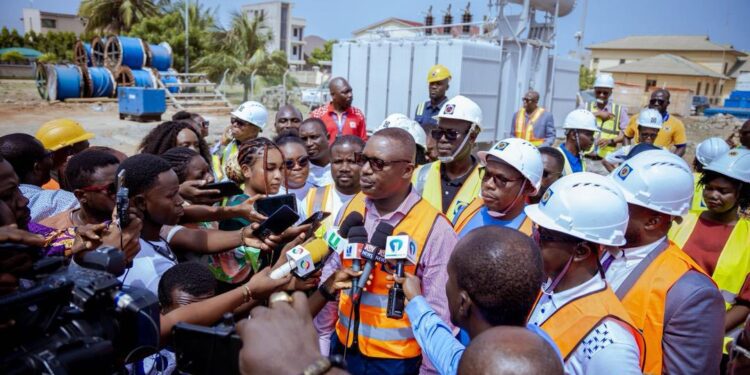
“You are not looking at anything less than GH¢4 billion to be able to deal with that. If you know the population of Lashibi and the buildings there, you would agree that today it has changed. You are seeing duplexes, apartments and commercial buildings. Demand has gone up, and the capacity of that transformer cannot serve the area.”Mr. Richmond Rockson, Head of Communications and Spokesperson for the ministry.
Bridging the Investment Gap in Distribution

Historically, Ghana’s energy sector investment has been heavily skewed toward generation and transmission capacity, often leaving the distribution side of the value chain underfunded and neglected. This imbalance has left critical infrastructure some installed over two decades ago—severely overloaded.
Using Lashibi as a key example, officials highlighted how residential and commercial growth has rendered original transformers obsolete.
Through this new plan, the ministry is finally prioritizing the “last mile” of power delivery, ensuring that electricity successfully reaches the end user without frequent voltage drops or system failures.
Read also:
- OSP is confusing contructive criticism with calls for him to be scrapped – Dafeamekpor
- Passion, not survival, should drive career choice – Dr Kofi Annan
- Ocloo Announces Planned Demolition Of Unauthorised Sakumo Ramsar Structures
- Former CSA boss calls for a review of cybersecurity education to close skills gap
- Rosenior sacked by Chelsea after three months in charge
Technological Integration and Nationwide Rollout

Beyond physical hardware replacement, the government is embedding modern technology into its maintenance strategy.
The Electricity Company of Ghana (ECG) is introducing the use of drones to perform aerial surveillance of the distribution network.
This proactive monitoring allows maintenance teams to identify potential voltage pressure points and technical faults before they escalate into full-scale power interruptions.
As the programme scales, the intervention strategy will move beyond the Greater Accra Region, with comprehensive rollout plans set for Kumasi and other parts of the country by May, supported by significant requests from the Northern Electricity Distribution Company (NEDCo).
Restoring Reliability: Impact on Power Fluctuations

If successfully executed, this targeted investment could fundamentally end the current cycle of power fluctuations by addressing the root cause: capacity mismatch.
When distribution infrastructure such as transformers and cables is undersized for current demand, the system suffers from frequent tripping and low voltage, which are often mistaken for larger grid failures.
By upgrading these components, the network’s thermal and electrical capacity is expanded, allowing it to handle peak loads without shutting down.
Furthermore, the systematic replacement of thousands of deteriorated poles and the installation of modern distribution panels will significantly reduce technical losses and the frequency of local outages caused by aging equipment.
For the consumer, this translates to more stable voltage levels, reduced risk of fire-related faults, and a more resilient power supply that is no longer prone to tripping during periods of high demand.
By integrating drone-assisted fault detection and improved response protocols, the utility providers will be better equipped to contain local faults, preventing them from spreading across wider networks.