Els: MBN360 UK
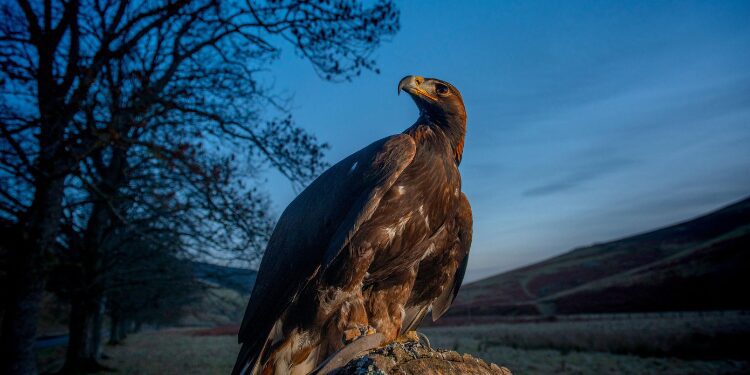
Golden eagles are set for a historic return to England after more than a century-long absence, following a government-backed move to explore a major recovery and reintroduction programme.
The species, which was once widely distributed throughout the nation and mentioned over 40 times in William Shakespeare’s plays, was nearly wiped off in England during the Victorian era as a result of persistent persecution.
A major turning point in the nation’s conservation efforts has now been reached, as a new feasibility assessment has found that England could sustain viable populations of the apex predator once more.
Eight possible “recovery zones,” primarily in northern England, are identified as ideal habitats for golden eagles in the Forestry England study. These discoveries follow decades of almost complete disappearance, with only sporadic sightings documented and the 2016 death of England’s last known golden eagle in the Lake District.
The report suggests that, with appropriate environmental conditions and management strategies, the species could re-establish itself over time, either through natural recolonisation or carefully managed reintroduction.
Environment Secretary, Emma Reynolds welcomed the study’s findings and approved £1m of additional funding to explore a reintroduction programme with the potential for juveniles, six to eight weeks old, to be released as early as next year, adding, “we will work alongside partners and communities to make the golden eagle a feature of English landscapes once again.”

“The government is committed to protecting and restoring our most threatened native wildlife and that includes bringing back iconic species like the golden eagle.”Emma Reynolds
Golden eagles, Britain’s second-largest bird of prey, have wingspans of up to two metres and are usually recognized as a keystone species. Apex predators play an important role in preserving ecological balance by managing prey numbers and promoting biodiversity.
Conservationists contend that their reintroduction would not only restore a missing piece of England’s natural heritage, but would also help to achieve broader environmental recovery aims.
Scotland’s Recovery Model Offers Blueprint for England

The recovery of golden eagles in southern Scotland is regarded as a viable foundation for their possible return to England.
Read also:
- There are phony friendships in the music industry – Camidoh
- Irish musician Moya Brennan dies aged 73
- Unpaid teachers protest delayed salaries; government promises arrears payment plan
- Deputy Chief of Staff advocates gender-sensitive reforms in justice system
- Bank of Ghana Governor to perform official tee-off at 3i Africa Invitational Golf tournament
The South of Scotland Golden Eagle Project, a landmark program that combines translocation with strategic habitat management, has helped the region’s population recover to record levels. This accomplishment has not only stabilized the population but has also resulted in early indications of natural range expansion.
Satellite data suggest that some of the translocated birds are moving southward into northern England, indicating that this expansion is already underway. These movements are seen as significant evidence that appropriate habitats exist outside of Scotland, adding to recent discoveries that regions of northern England could once again support golden eagle populations.
According to Mike Seddon, Chief Executive of Forestry England, the goal is for the country’s forests to become the most valuable places for wildlife to thrive and expand in England, adding “we know from our successful reintroduction projects that returning lost species is vital for nature recovery across landscapes.”
“This Defra funding means we can build on the good work we have begun, taking the time to build support and engage with local communities, landowners and land managers and conservation organisations.”Mike Seddon
Furthermore, Forestry England predicts that sightings of Scottish golden eagles in northern England will increase over the next decade, while the establishment of nesting areas may take longer.
To facilitate this shift, Restoring Upland Nature is developing a comprehensive engagement strategy that will bring together stakeholders from farming, game management, conservation, tourism, recreation, and education. The objective is to ensure that conservation aims are connected with land-use practices, producing a balanced and generally accepted framework for recovery..
Moreover, Dr Cat Barlow, CEO of Restoring Upland Nature, characterized the development as a crucial and potentially transformative step towards returning golden eagles to northern England.
She stated that the progress made so far indicates great coordination among conservationists, raptor groups, gamekeepers, and land management, as well as widespread public support throughout southern Scotland.
“Our priority will be to listen, to work in partnership, and to ensure that golden eagle recovery supports both nature and the people who manage these landscapes, so that everyone can enjoy the thrill of seeing golden eagles flying high once again across the uplands of the UK.”Cat Barlow
The newly announced funding follows the government’s historic decision last year to allow the legal reintroduction of another keystone species, beavers, into the wild in England for the first time in centuries, as well as a record £60 million in funding announced last week to protect threatened native species.