Els: MBN360 Economy
Ghana’s economy is expected to remain resilient despite rising geopolitical tensions in the Middle East, with Fitch Solutions projecting that the country will largely be insulated from the fallout of the ongoing US–Iran conflict.
The outlook is underpinned by strong gold prices, rising production levels and a stable external position, all of which are expected to cushion the economy against global shocks.
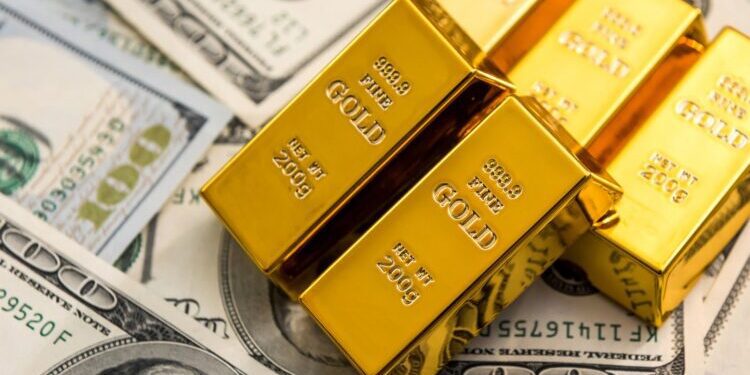
According to Fitch Solutions, Ghana stands to benefit significantly from elevated gold prices even as global uncertainty persists. Although gold prices have declined by about 14 percent since the conflict began in late February 2026, the March 27 spot price of 4,413 dollars per ounce remains exceptionally high compared to historical levels.
This price is nearly three times the 2015 to 2024 average of 1,603 dollars per ounce, highlighting the strength of the current commodities cycle.
The firm’s Commodities team maintains a bullish outlook, forecasting gold to average 4,600 dollars per ounce in 2026, which would mark the highest annual average on record.
“We have shifted to our ‘extend-to-end’ war scenario, which assumes the Middle East conflict persists for roughly another month, although risks remain elevated that we could transition into the ‘extend-to-escalate’ scenario, which is marked by a longer and more intense period of hostilities”.Fitch Solutions
Despite these risks, Ghana’s position as a leading gold exporter places it in a favorable position to benefit from sustained high prices.
Rising Gold Output to Boost Earnings
Beyond pricing advantages, Ghana is also expected to see a notable increase in gold production this year. Fitch Solutions projects output growth of 7.1 percent, driven largely by expanded operations at key mining sites such as Bibiani, Chirano and Namdini.

This increase in production, combined with elevated global prices, is expected to significantly boost export earnings. Gold continues to dominate Ghana’s export profile, accounting for approximately three-quarters of merchandise exports in 2025.
“With gold accounting for around three-quarters of Ghana’s merchandise exports in 2025, elevated prices present substantial upside to export earnings. This impact will be amplified by a projected 7.1% increase in gold output this year, driven by project-led supply growth, particularly at the Bibiani, Chirano and Namdini mines”.Fitch Solutions
As a result, gold export receipts are forecast to rise by 12.9 percent to 23.7 billion dollars. This represents about 1.5 percent of Gross Domestic Product, significantly higher than the long-term average of 0.9 percent recorded between 2010 and 2024.
Strong Dollar Inflows to Support Stability
The surge in gold export revenues is expected to translate into substantial dollar inflows for Ghana, strengthening the country’s external position and supporting currency stability.
Fitch Solutions emphasized that these inflows will help underpin Ghana’s balance of payments, reducing vulnerability to external shocks and easing pressure on foreign exchange reserves.
As Africa’s largest gold exporter, the UK-based firm said Ghana will receive substantial dollar inflows over the coming months, underpinning external stability.
Read also:
This inflow of foreign currency is particularly critical at a time when many emerging markets are facing tightening global financial conditions and currency volatility.

Hydrocarbon Sector Remains Neutral
While rising global oil prices often pose risks to import-dependent economies, Ghana’s hydrocarbons position is expected to remain broadly neutral. The report notes that Ghana has recently resumed operations at the Tema Oil Refinery after a prolonged shutdown caused by debt and maintenance challenges.
This development has improved the country’s energy trade balance, potentially allowing Ghana to shift from being a net oil importer to a neutral or modest net exporter in 2026.
“Although Ghana became a net oil importer in recent years due to the Tema Oil Refinery being offline amid chronic debt and maintenance issues, the refinery resumed crude processing in December 2025. As a result, Ghana is likely to be either neutral or a modest net oil exporter this year”.Fitch Solutions
This neutral stance means that fluctuations in global oil prices are unlikely to have a significant direct impact on Ghana’s trade balance.
Current Account Outlook Remains Strong
Fitch Solutions projects that Ghana’s current account will remain comfortably in surplus despite global uncertainties. The surplus is expected to reach 4.2 percent of GDP, a sharp improvement compared to the average deficit of 3.8 percent recorded between 2010 and 2024.
While higher oil prices could have indirect effects, such as increasing the cost of fertilizer imports, the overall impact on the economy is expected to be manageable.
“At a minimum, higher energy prices should not weigh directly on the trade position and, under a more optimistic scenario, could provide a modest upside”.Fitch Solutions
This strong current account position reflects a combination of favorable commodity prices, increased export volumes and improved trade dynamics.
Resilience Amid Global Uncertainty
The outlook presented by Fitch Solutions highlights Ghana’s growing resilience in the face of global economic and geopolitical shocks. The country’s reliance on gold exports, often seen as a vulnerability, is currently proving to be a strategic advantage.

With elevated gold prices, rising production and stable energy dynamics, Ghana is well-positioned to navigate the uncertainties stemming from the US–Iran conflict.
While risks remain, particularly if the conflict escalates further, the overall outlook suggests that Ghana’s economy will continue to demonstrate strength and adaptability.
In a world increasingly shaped by geopolitical tensions, Ghana’s ability to leverage its natural resource base while maintaining macroeconomic stability offers a compelling narrative of resilience and opportunity.