
Els: MBN360 Economy
Ghana’s inflation rate has continued its downward trend, easing to 3.2 percent in March 2026, marking the fifteenth consecutive month of decline under the NDC-Mahama administration.
The latest figures, released by Government Statistician Dr Alhassan Iddrisu, show a significant improvement from the 22.4 percent recorded during the same period last year, reflecting a notable shift in the country’s price stability outlook.
The marginal drop from 3.3 percent in February 2026 to 3.2 percent in March may appear modest at first glance, but it signals a sustained effort in stabilizing the economy. Monthly inflation has also slowed to 0.1 percent, suggesting that price increases are not only lower but decelerating in real time.
According to Dr Iddrisu, the data points to a period of relative calm in the broader pricing environment, although the benefits are not evenly distributed across all sectors. While the general trend indicates improvement, the lived experience of households still reflects pressure in key areas of daily consumption.
Inflation Driven by Few Essential Items
A key feature of the March 2026 inflation data is its narrow base. Unlike previous periods where inflation was widespread across multiple sectors, current price pressures are concentrated in a limited number of items.

Dr Iddrisu highlighted that just five items, charcoal, green plantain, smoked herrings, senior secondary school fees, and onions, accounted for 61.5 percent of total inflation. This concentration underscores the reality that essential goods and services continue to shape the cost of living for many Ghanaians.
Further analysis shows that specific commodities experienced sharp price increases. Ginger recorded a 61.0 percent rise, followed closely by green plantain at 59.0 percent and charcoal at 53.0 percent.
Cashew and palm fruits also posted notable increases at 47 percent and 39.6 percent respectively. Together, these items contributed 38.3 percent of the total inflation figure for March.
This pattern suggests that while macroeconomic conditions are stabilizing, vulnerabilities remain in supply chains related to food and energy. These are areas that directly impact households and often drive public perception of inflation.
Falling Prices Provide Relief
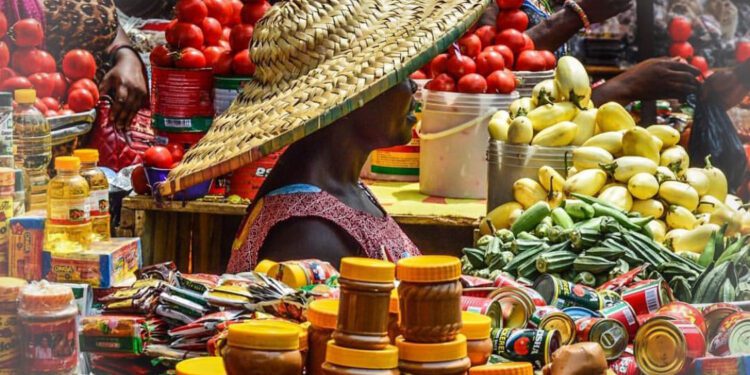
Despite the upward pressure from certain goods, several food items recorded significant price declines, helping to offset overall inflation. Garden eggs saw a sharp drop of 60.3 percent, while fried fish, pawpaw, cocoyam leaves, and fresh okro also recorded substantial decreases.
These declining prices collectively reduced inflation by 18.3 percent in March 2026, offering some relief to consumers. The presence of both rising and falling prices within the same period highlights a more balanced market environment compared to previous years when inflation was more uniformly high.

The interplay between rising and falling prices suggests that supply conditions in certain agricultural sectors may be improving, contributing to price moderation. However, the uneven nature of these changes means that not all households experience the benefits equally.
Read also:
- Cuba to release more than 2,000 prisoners, as pressure from US mounts
- Government to establish new college of education in Ezinlibo – Jomoro MP.
- Walid Regragui distances himself from Black Stars head coach role
- Kurt Okraku defends retention of Otto Addo after AFCON 2025 failure
- King Promise and Mr Eazi release ‘Mariana’ ahead of joint album
While overall inflation is easing, the data reveals that price pressures are still concentrated in critical sectors such as housing and utilities, food, and education. These sectors represent core components of household expenditure, meaning that even modest increases can significantly affect living standards.
Dr Iddrisu noted that inflation is not broad based, but rather driven by specific areas that are essential to daily life. This distinction is important for policymakers, as it shifts the focus from general price control measures to targeted interventions in key sectors.
Housing and utilities, for instance, remain sensitive to fluctuations in energy costs and infrastructure challenges. Similarly, food prices are influenced by factors such as transportation, weather conditions, and supply chain efficiency. Education costs, particularly at the secondary level, also contribute to household financial pressure.
Policy Direction and Economic Implications
The continued decline in inflation provides an opportunity for government, businesses, and households to recalibrate their strategies. For policymakers, the priority is to sustain stability while addressing structural issues in food systems and transport networks.
Dr Iddrisu emphasized that the current environment calls for deliberate investment in areas that directly impact price stability. Improving agricultural productivity, enhancing storage and distribution systems, and reducing transportation costs could help mitigate future inflationary pressures.

For businesses, the easing inflation rate creates room to improve operational efficiency and stabilize pricing. Lower inflation reduces uncertainty, allowing firms to plan more effectively and potentially pass on cost savings to consumers.
Households, on the other hand, are encouraged to take advantage of the improved conditions by planning their spending and building savings. While some essential items remain expensive, the overall trend suggests a more predictable economic environment.
Data Integrity and Institutional Commitment
The Ghana Statistical Service reaffirmed its commitment to providing accurate and timely data to support decision making. Dr Iddrisu expressed appreciation to market traders, data providers, and the media for their role in ensuring the reliability of the statistics.
He also acknowledged the efforts of the institution’s staff, whose work underpins the credibility of the data. The ability to track inflation trends consistently over fifteen months reflects a strengthened statistical system that supports evidence based policymaking.
The sustained decline in inflation marks a turning point for Ghana’s economy, signaling progress after a period of significant instability. However, the data also serves as a reminder that recovery is not uniform and that targeted interventions are necessary to address persistent challenges.

As inflation continues to ease, the focus will shift toward maintaining this stability while ensuring that its benefits are felt across all segments of society. The concentration of price pressures in essential goods highlights the need for policies that directly address the cost of living.
The March 2026 figures present a cautiously optimistic outlook. While the worst of the inflationary surge appears to be behind, the path forward requires sustained effort, strategic investment, and continued vigilance to ensure long term economic resilience.