Els: MBN360 News
The long-delayed Suame Interchange project in Kumasi in the Ashanti Regionis set to resume following government action to settle outstanding financial obligations owed to contractors.
The Minister for Roads and Highways, Hon. Governs Kwame Agbodza, confirmed that payments tied to certified works completed since 2024 have now been cleared, paving the way for contractors to return to the site.
The announcement brings renewed hope to residents and commuters who have endured prolonged congestion and disruptions around the Suame Roundabout, one of the busiest traffic intersections in the Ashanti Region.
According to the Minister, contractors are expected to fully mobilise and resume construction activities within the coming week, signaling a decisive step toward completing the critical infrastructure project. “I have become aware of the concerns raised by some residents in Kumasi regarding the stalled Suame Interchange Project,” the Minister stated.
He explained that government intervention focused on clearing all verified payment arrears, a move intended to restore confidence among contractors and ensure steady progress moving forward. “Contractors [will] fully mobilise back to site next week to complete the project,” he added, while expressing appreciation for public patience.

Strategic Importance of the Interchange
The Suame Interchange project started by the previous NPP administration remains a central component of efforts to modernize urban transport infrastructure in the Greater Kumasi Metropolis.
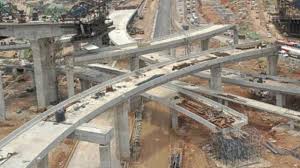
Designed to replace the heavily congested Suame Roundabout with a multi-tier interchange system, the project aims to significantly reduce traffic bottlenecks and improve connectivity across key commercial and industrial zones.
Suame serves as a major hub for automobile spare parts trading and industrial activity, making efficient traffic flow essential for economic productivity. The interchange, once completed, is expected to streamline vehicular movement between the Kumasi central business district and surrounding areas such as Tafo, Bantama, and Manhyia.
Beyond easing congestion, the project includes several complementary works intended to improve overall mobility. These include the construction of multiple overpasses and underpasses at critical junctions, expansion of major roads into dual carriageways, and rehabilitation of approximately 15 kilometers of local roads.
Collectively, these interventions are expected to enhance both intra-city and inter-city transportation efficiency. Despite its importance, the project has faced significant delays and public scrutiny, largely due to financial constraints and changes in its original design.
Initially conceived as a four-tier interchange, the project was later revised to a three-tier structure, a decision that sparked debate among stakeholders. Government officials have defended the modification, citing the development of the Kumasi Outer Ring Road as a mitigating factor.

The new road is expected to divert a substantial portion of northbound traffic away from the city center, thereby reducing pressure on the interchange and justifying a scaled-down design.
Read also:
- Shea Processing Giant BLC Hits 10-Year Free Zone Milestone
- Government to Commence Recruitment of 7,000 Teachers from April 10
- Ghana Launches National Shock Responsive Social Protection Strategy
- 3,000 Tonnes: Maphlix Leads Ghana’s Tomato Recovery
However, critics, including opposition lawmakers and regional political groups, have argued that the revised design may not adequately address future traffic demands. They contend that Kumasi’s rapid urban growth could render the three-tier system insufficient in the long term, potentially shifting congestion to other parts of the city.
The resumption of work, therefore, comes at a time when public expectations remain high, not only for timely completion but also for a solution that meets the city’s evolving transportation needs.
Funding and Contractor Engagement
The Suame Interchange project is being executed through a collaboration involving international and local contractors, including M/S China Henan International Corporation, Grupo Dizmar of Spain, and Rango Construction Limited.
Financing for the Suame Interchange project has been secured from multiple channels, including a €156.4 million facility, and is currently being put under the Mahama’s Big Push initiative.

The recent clearance of outstanding debts is expected to strengthen relationships between government and contractors, ensuring smoother execution of the remaining phases.
Industry experts note that delayed payments have historically been a major challenge in Ghana’s infrastructure sector, often leading to project slowdowns or complete halts.
By addressing these financial bottlenecks, the government aims to restore momentum not only for the Suame Interchange but also for other critical road projects across the country.
Public Expectations and Economic Impact
For residents and businesses in Kumasi, the restart of construction represents more than just infrastructure development. It is a signal of renewed commitment to addressing longstanding urban challenges that affect daily life and economic activity.
Heavy traffic congestion at Suame has long been associated with increased travel times, higher transportation costs, and reduced productivity. Traders and transport operators have repeatedly called for swift completion of the interchange to ease these pressures.
The Minister acknowledged these concerns, emphasizing that the project is part of a broader national agenda to improve infrastructure and support economic growth. “Together, we shall build better infrastructure for Kumasi,” he said, reinforcing government’s commitment to delivering on key development projects.

With contractors set to return to site, attention now turns to the timeline for completion. Authorities have not provided a revised completion date, but the expectation is that sustained funding and effective project management will prevent further delays.
The successful completion of the Suame Interchange is likely to have far-reaching implications, not only for Kumasi but also for Ghana’s broader infrastructure development agenda. It serves as a test case for the government’s ability to resolve funding challenges and deliver large-scale projects efficiently.
As work resumes, stakeholders will be closely monitoring progress to ensure that the project meets both technical standards and public expectations. For now, the focus remains on translating renewed momentum into tangible results on the ground.