Els: MBN360 Agribusiness
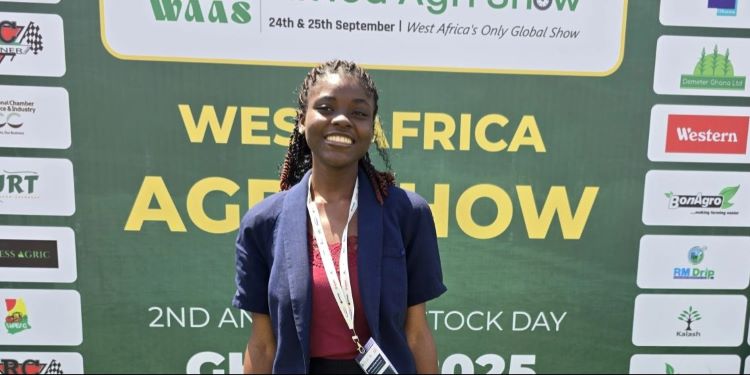
Miss Marylyn Kofie, an Agribusiness and Agricultural Development Researcher, has called for swift intervention over the National Food Buffer Stock Company (NAFCO) and its contractors ignoring a direct mandate to prioritize local farmers for Ghana’s School Feeding Programme, as the situation threatens Ghana’s Agriculture for Economic Transformation Agenda (AETA).
Speaking to the Vaultz News in a recent interview, the researcher addressed accusations made by Dr. Charles Nyaaba, former director of the Peasant Farmers Association of Ghana (PFAG), who accused NAFCO-engaged contractors of favoring foreign rice imports over locally produced ones, despite the government providing massive financial injections for the latter.
“NAFCO may be conducting their own investigations before coming out with a response to the allegations. However, public records on the matter should be made available as soon as possible. They clear the air, build trust, and preserve citizens’ support for state agencies charged with any such responsibilities in the future”Marylyn Kofie, Agribusiness and Agricultural Development Researcher
According to Kofie, this “import-first,” behavior does more than just hurt the bottom line; it actively widens the gap between state policy and the reality at the farm gate, and de-incentivizes the next generation of farmers who see their produce rotting while state funds flow into the pockets of unpatriotic middlemen.
One of the most frustrating aspects of the current crisis is the sheer volume of unsold produce in districts like Shai Osudoku and Kassena-Nankana.
Despite a reported 200,000-metric-tonne glut of local rice and maize currently sitting in warehouses, Dr. Nyaaba suggested that the current procurement chain is being choked by a mix of logistical blindness and outright greed, leaving President John Dramani Mahama’s “buy Ghana” agenda in a state of paralysis.

Kofie noted that the failure of NAFCO aggregators to reach these silos is often blamed on “location constrictions.” In many cases, those tasked with the “mop-up” operations simply do not know where the farmers are, highlighting a massive failure in the mapping and coordination of the local supply chain.
However, Kofie was quick to point out that technical barriers are sometimes used as a smokescreen for financial gain. With the local paddy rice being frequently more expensive than cheap foreign imports, contractors can “shortchange” the government by opting for the latter.
They procure low-cost foreign grains, bill the state for local prices, and keep the surplus for their own pockets. This practice, she noted, not only depletes the GHS 200 million recently released for domestic mop-up but “effectively subsidizes foreign agriculture at the expense of the Ghanaian taxpayer.”
Homegrown Tastes and Transparency
Beyond the immediate financial corruption, Kofie identified a cultural hurdle: the perceived preference for foreign grain “tastes,” arguing that if the average Ghanaian has not yet developed a preference for local produce, the responsibility lies with the state to lead the transition.
The school system, she suggested, should not only be an avenue for “mopping up,” excess local farm produce but an ideal training ground to cultivate a lifelong habit of consuming “Made in Ghana,” products.
“There is no better alternative market for the surplus, unfortunately. The government has to make this work else the produce is bound to get spoiled and the cycle of poverty for rural farmers will only deepen.
Read also:
- Reparations go beyond cash payments – Ablakwa clarifies
- Lands Minister assures workers of no job losses in Damang takeover
- GPRTU gives government 48-hour ultimatum to scrap fuel taxes
- Government Approves College of Education for Ezinlibo in Partnership with Ghana Gas
- Inflation Falls to 3.2% in Fifteen-Month Decline
“This is also how we give these children a taste for Ghanaian produce so that when they grow and make up the regular market, consuming made in Ghana nationwide would not be such a strange thing”Marylyn Kofie, Agribusiness and Agricultural Development Researcher

If the government fails to enforce this, the Agriculture for Economic Transformation Agenda faces total collapse, as farmers who are currently bound to get frustrated will eventually exit the sector, making it even less attractive to the youth.
To restore public trust, Kofie called for a radical shift toward transparency, insisting that NAFCO must provide a district-by-district breakdown of every successful local grain acquisition conducted since the President’s November 2025 directive.
“This data would act as a heat map for investigators, showing exactly where the policy is being implemented and where it is being subverted,” she explained, noting however that this transparency must be backed by regulatory strength.
Kofie maintained that any contractor found substituting local staples meant for Ghanaian Senior High Schools (SHSs) with foreign imports should face severe legal consequences beyond mere blacklisting.
She advocated for a “naming and shaming,” protocol to expose unpatriotic behavior and ensure that the contracts between NAFCO and its suppliers are legally binding and strictly enforced.
Inventory Control
Reflecting on the Buffer Stock Scandal of 2025, Kofie suggested that the only way to prevent a repeat performance is through “strict compliance,” mechanisms. This involves a committee dedicated to monitoring the GHS 200 million release, taking a rigorous inventory of receipts, and demanding physical proof of purchase at the farm gate.
“Periodic briefings where contractors report on their progress – or lack thereof – would allow the state to identify and replace non-performing actors before the damage becomes irreversible. It will also provide an avenue for addressing genuine concerns or challenges the contractors might be facing, and have them resolved for the best possible outcome”Marylyn Kofie, Agribusiness and Agricultural Development Researcher
Ultimately, the researcher’s analysis points to a need for a total overhaul of how NAFCO engages with its contractors. If the agency is truly conducting its own investigations into the current allegations, the results must be made public.

The insights provided by Marilyn Kofie served as a stark reminder that policy without enforcement is merely a suggestion. For the farmers in Shai Osudoku and beyond, the time for “investigation” is running out as their livelihoods remain trapped in silos.
The “buy Ghana,” initiative was intended to be the engine of rural transformation, yet it is currently stalled by the very people paid to drive it. As the government looks to the remainder of 2026, the focus must shift from releasing funds to auditing outcomes.
Whether it is through district-level reporting or the prosecution of unpatriotic contractors, the message from the agribusiness research community is clear: NAFCO must prove it is not complicit in the flouting of the President’s order.
Only then can the Ghanaian farmer truly believe that their hard work is valued, and only then can the nation hope to achieve true economic success through food sovereignty.