Els: MBN360 News
Ghana’s Deputy Attorney General and Minister for Justice, Dr Justice Srem Sai, has called for a more equitable global legal framework to address cross-border fraud, warning against arrangements that disproportionately favour Western jurisdictions.
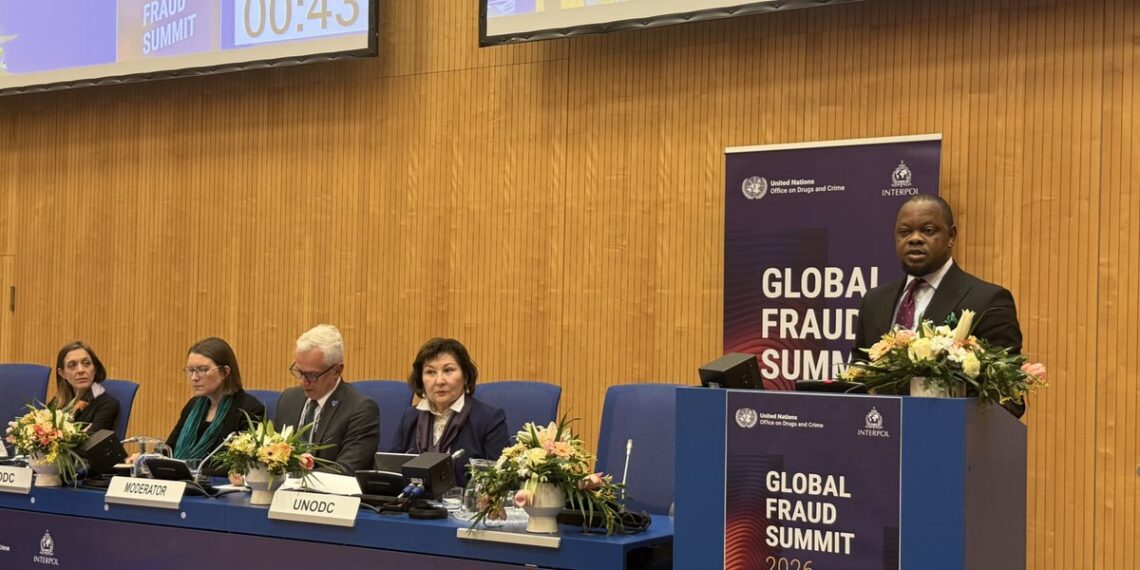
Speaking on the opening day of the Global Fraud Summit, he made it clear that Ghana will not support any system that creates an imbalance in extradition practices.
According to him, Ghana’s position is rooted in fairness and reciprocity. “We will not support an international arrangement on global fraud which establishes a one way traffic of extraditing cybercrime suspects to Western countries,” he stated, emphasizing the need for mutual legal cooperation.
The summit, organised under the auspices of United Nations Office on Drugs and Crime and INTERPOL, is focused on developing a global legal framework to combat transnational fraud.
Dr Srem Sai stressed that Ghana is willing to actively participate in international anti fraud initiatives, but only under conditions that ensure balanced obligations among participating countries.

He argued that any global arrangement must include mechanisms for the swift extradition of political corruption suspects and the recovery of illicit financial flows back to African countries.
“We will, however, support and be part of an arrangement which has a corresponding mechanism for quicker extradition, surrender of political corruption suspects or recovery of loots back to Africa”.Ghana’s Deputy Attorney General and Minister for Justice, Dr Justice Srem Sai
This position reflects growing concerns among African policymakers about perceived inequalities in international justice systems, particularly in cases involving financial crimes and corruption.
Context of Ghana’s Extradition Debate
The Deputy Attorney General’s remarks come at a time when extradition has become a highly sensitive issue in Ghana. Public discourse has intensified around high profile cases involving former government officials and individuals accused of financial crimes.
One of the most prominent cases involves Ken Ofori-Atta, whose extradition from the United States has sparked legal debates and public protests. He is facing multiple charges, including corruption-related offences and procurement breaches.
Efforts to secure his return have been complicated by legal processes in the United States, where authorities must establish dual criminality and ensure fair trial standards.
The case has drawn attention to broader concerns about whether Western countries inadvertently serve as safe destinations for individuals accused of financial misconduct in developing economies.
Read also:
- Kofie: Sidelining Local Farmers Threatens AETA Goals
- Police arrest 77 suspects in anti-drug operation in Tamale, Savelugu
- Lincoln University withdraws Honorary Degree for Mahama over LGBTQ concerns

Civil society groups, including Arise Ghana, have staged protests demanding stronger action to secure the extradition of suspects. Demonstrations at foreign diplomatic missions in Accra have highlighted public frustration over perceived delays in the process.
At the same time, international partners, particularly the United States, have maintained that extradition requests must follow due legal procedures. Officials have reiterated that their judicial systems operate independently and require clear evidence that offences meet legal thresholds in both jurisdictions.
This tension underscores the complexity of cross border legal cooperation, where domestic expectations often clash with international legal standards.
Beyond the Ofori Atta case, Ghana is pursuing several other extradition efforts that illustrate the broader challenges facing the system. These include attempts to bring back individuals accused of corruption and financial misconduct, as well as cases involving cybercrime and digital exploitation.
Among them is Sedina Tamakloe Attionu, who is also subject to ongoing extradition proceedings. Additionally, authorities are seeking the extradition of Vladislav Luilkov, a foreign national accused of exploiting Ghanaian citizens through digital platforms.
Another case attracting public attention involves Frederick Kumi, whose extradition proceedings have faced repeated delays in Ghanaian courts. The protracted nature of these cases has raised questions about the efficiency and effectiveness of existing legal frameworks.
Concerns Over One Sided Enforcement
Dr Srem Sai’s intervention at the summit reflects a broader concern that current international arrangements may disproportionately benefit developed countries.
Ghanaian authorities argue that while African countries often cooperate in extraditing suspects linked to cybercrime, similar urgency is not always applied when African states seek the return of individuals accused of corruption.

Data from recent years shows that Ghana has extradited several individuals to face charges abroad, particularly in cases involving online fraud. However, efforts to recover suspects or assets linked to corruption cases have often been slower and more complex.
This perceived imbalance has fueled calls for reforms that ensure equal treatment and mutual accountability in international legal cooperation. The Global Fraud Summit presents an opportunity to address these concerns and develop a more balanced system for tackling transnational crime.
Ghana’s position signals a shift toward advocating for frameworks that prioritize fairness, sovereignty, and shared responsibility. Dr Srem Sai emphasized that any effective global strategy must recognize the interconnected nature of financial crimes and the need for collaborative solutions that benefit all parties.
He noted that Africa’s participation in such frameworks should be based on principles that protect its interests and promote justice. As discussions continue, Ghana is expected to play an active role in shaping the outcome, pushing for provisions that enhance extradition processes, strengthen asset recovery mechanisms, and close gaps in international cooperation.