
Els: MBN360 Economy
hana’s gross international reserves have surged to US$13.8 billion, representing 5.7 months of import cover, a significant increase from US$8.9 billion, equivalent to 4.0 months of import cover in 2024.
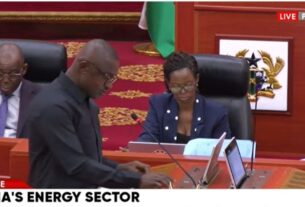
The announcement was made by Finance Minister Dr Cassiel Ato Forson while presenting a statement on the Ghana Accelerated National Reserve Accumulation Policy.
Addressing Parliament, he stated, “Mr. Speaker, the current Gross International Reserve level is above the traditional reserve benchmark of three months of import cover.”
The improvement signals renewed efforts to restore macroeconomic stability after years of financial strain, currency volatility and mounting debt pressures. However, government believes the current buffer is still inadequate to shield the economy from severe global disruptions.
Why Three Months Is No Longer Enough
Despite the rebound, Dr Forson cautioned that the existing reserve level does not provide adequate protection. He explained that global uncertainties and Ghana’s recent economic history demand a stronger cushion.
“This is however not sufficient to provide adequate self insurance against disruptive economic shocks and its impact on the exchange rate like the historical cedi depreciation in 2022–2023.” Dr Cassiel Ato Forson
Ghana’s economy was battered between 2022 and 2023, culminating in debt restructuring and an IMF-supported Extended Credit Facility programme in May 2023. During that period, the cedi depreciated sharply, exposing vulnerabilities in the country’s external buffers.
To address these risks, Cabinet has approved the Ghana Accelerated National Reserve Accumulation Policy, known as GANRAP.
Read also:
- US-Israel Launch ‘Operation Epic Fury’ Strikes on Iran, Prompting Retaliation
- African Health Journalism Struggles with Dwindling Resources and Rising Health Issues
- Ghana Embassy in Doha advises nationals to remain indoors after missile attack
- Iranian Missiles Strike Gulf States: One Dead in Abu Dhabi as Tensions Escalate
- Police undertake ‘show of force’ ahead of Ayawaso East by-election

The 15-Month Reserve Ambition
Under GANRAP, government plans to build reserves to cover fifteen months of imports by the end of 2028. The Finance Minister described the initiative as an economic safeguard.
“Government therefore seeks to accumulate a strategic buffer beyond the conventional reserve adequacy levels and build an ‘economic war-chest’ of 15 months of import cover by end-2028 to: Safeguard macroeconomic stability; Break the cycle of economic downturns; Sustain confidence in the currency; Improve investor confidence; Reduce exposure to external shocks; and Support long-term economic transformation.”Dr Cassiel Ato Forson
He further emphasized, “Mr. Speaker, the objective of this policy is to build reserves to 15 months of import cover to support Ghana’s long-term economic transformation macroeconomic stability.”
The policy is anchored on the Ghana Gold Board Act, 2025, which mandates the Gold Board to generate foreign exchange and support gold reserve accumulation by the central bank.
Lessons From Costly Borrowing
The new strategy marks a departure from previous reserve-building approaches heavily reliant on borrowing.
Between 2022 and 2024, the Bank of Ghana increased reserves by about US$5.65 billion through swaps and sale-and-buy-back operations. However, these transactions came at a steep cost. Interest payments reached US$615 million in 2022, US$476 million in 2023 and US$67 million in 2024, totaling US$1.16 billion in just three years.
Earlier borrowing efforts were equally expensive. Between 2018 and 2021, the central bank borrowed US$2 billion from international banks including JP Morgan, Standard Chartered Bank and Citi Bank at a cost of US$182 million in interest.
In 2017, government raised US$2.25 billion through a domestic bond issuance backed by Franklin Templeton to support reserves. From 2017 to 2022, Ghana paid approximately GH¢7.3 billion in interest on that facility alone.