Els: MBN360 News
Unemployment and illegal mining have emerged as the most pressing challenges facing Ghana, according to a nationwide opinion poll conducted by the Institute of Economic Affairs Ghana.
The survey reveals that while public confidence in President John Dramani Mahama remains strong, citizens are deeply concerned about structural problems that directly affect livelihoods and the environment.
The findings form part of a broader IEA assessment of public sentiment one year after the 2024 general election and President Mahama’s assumption of office in January 2025.
Conducted in December 2025, the poll sampled the views of more than 1,000 respondents across all regions of the country, offering insight into how Ghanaians prioritise national issues amid ongoing economic recovery efforts.
Unemployment Identified as the Most Pressing Issue
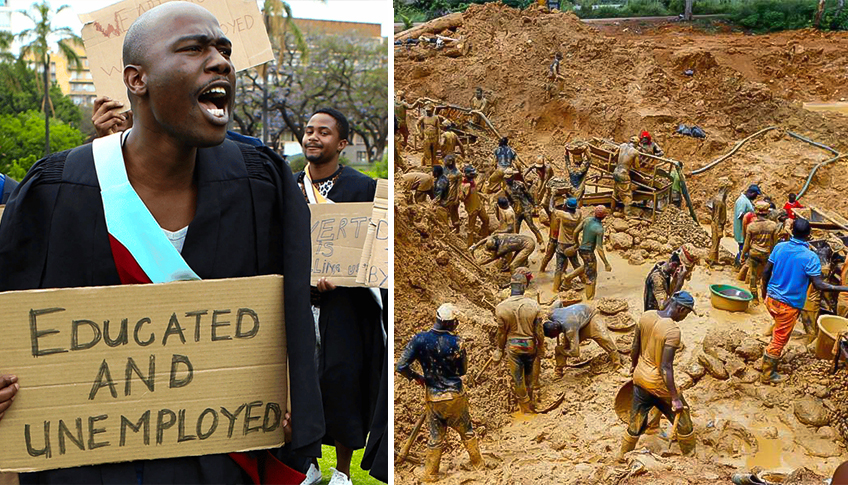
When respondents were asked to identify the most important issue facing the country today, unemployment dominated public opinion by a wide margin. Nearly half of those surveyed, representing about 46 percent, cited joblessness as the single most critical challenge confronting Ghana.
The prominence of unemployment reflects the central role that access to decent and stable work plays in how citizens assess national well-being. For many households, employment is closely tied to income security, access to basic needs, and long-term economic mobility.

The survey suggests that despite broader economic stabilisation efforts, job creation remains the benchmark against which many Ghanaians judge progress.
Analysts note that the strong emphasis on unemployment signals public demand for policies that generate sustainable jobs, particularly for young people entering the labour market. It also underscores concerns about underemployment and job quality, even among those who may be economically active.
Illegal Mining a Major Public Concern
Illegal mining, commonly referred to as galamsey, and considered as environmental ecocide, emerged as the second most cited national issue, mentioned by approximately 30 percent of respondents.
The prominence of galamsey in public discourse highlights widespread anxiety about environmental degradation, water pollution and the long term sustainability of Ghana’s natural resources.
https://googleads.g.doubleclick.net/pagead/ads?client=ca-pub-
Across several regions, illegal mining activities have been linked to the destruction of farmlands, contamination of rivers and streams, and health risks for nearby communities.
The IEA survey indicates that these impacts are not viewed as isolated or localised problems, but as national challenges with far-reaching consequences.
Read also:
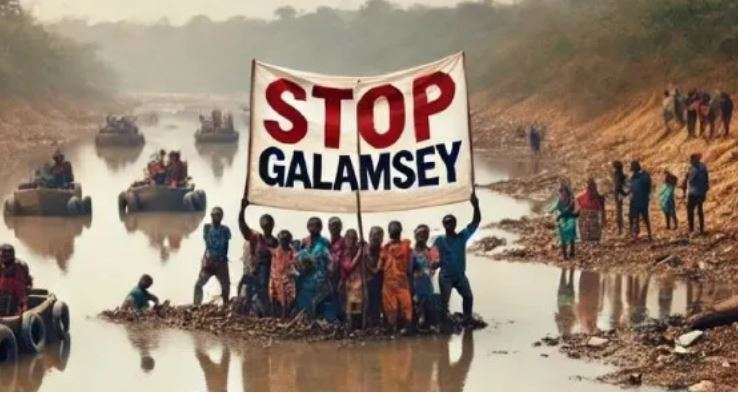
The strong concern over galamsey suggests that Ghanaians expect decisive and sustained action to regulate mining activities, protect water bodies and enforce environmental laws.
Public attention to the issue reflects growing awareness that environmental damage can undermine agriculture, public health and future economic opportunities.
Other Issues Rank Lower in Public Priorities
While unemployment and illegal mining dominate public concerns, the survey also shows that other longstanding governance and economic issues rank lower in relative importance. Corruption was cited by 9 percent of respondents as the most important issue facing the country, while 8 percent pointed to the general state of the economy.
Smaller proportions of respondents mentioned housing, transportation and other concerns. These results suggest that although corruption and macroeconomic management remain relevant to public debate, they are perceived as less immediate than the challenges of securing employment and safeguarding the environment.
The IEA notes that this hierarchy of concerns reflects a pragmatic public outlook, where day to day survival and long term resource protection take precedence over broader systemic issues, unless those issues directly translate into tangible hardship.
Public Expectations and Policy Direction
The Institute of Economic Affairs survey findings indicate that policy efforts focused on job creation and the regulation of illegal mining are likely to resonate strongly with the public.
Citizens appear particularly attentive to whether government interventions produce visible and measurable outcomes, such as new employment opportunities, cleaner water sources and restored lands.
Although the survey confirms that public support for President Mahama remains high, with 68 percent of respondents approving of his performance, it also highlights the expectations placed on the administration.
Many Ghanaians appear hopeful about leadership direction but remain acutely aware of unresolved economic and structural problems. The coexistence of strong presidential approval and deep concern over unemployment and galamsey reflects a cautious optimism.

Citizens may acknowledge progress or intent at the leadership level, while still demanding concrete improvements in areas that directly affect their lives. The IEA survey underscores the importance of aligning governance priorities with public concerns.
How the government addresses unemployment and illegal mining is likely to play a significant role in shaping future public perceptions of leadership and performance.
As Ghana continues efforts to stabilise the economy and strengthen institutions, the findings suggest that success will increasingly be measured by outcomes that citizens can see and feel. Job creation and environmental protection, in particular, stand out as defining tests of policy effectiveness in the period ahead.