Els: MBN360 News
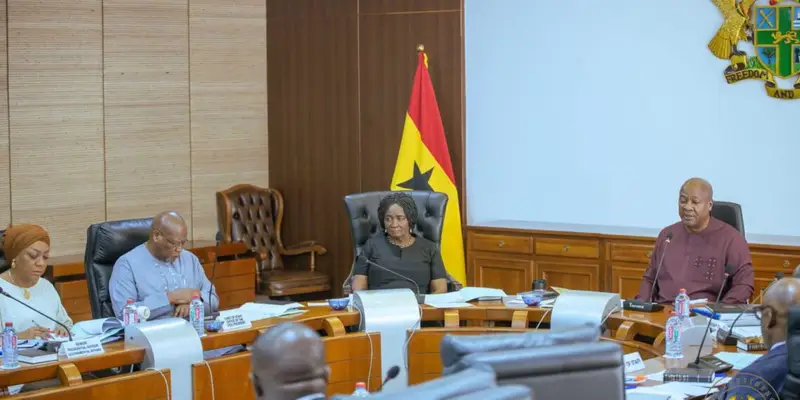
President John Dramani Mahama has summoned an emergency cabinet session scheduled for Wednesday, February 11, 2026, to confront mounting challenges in Ghana’s cocoa sector, following weeks of growing distress among farmers over delayed payments for cocoa beans delivered as far back as November 2025.
The decision, confirmed by Presidential Spokesperson and Minister of State in charge of Government Communications, Hon. Felix Kwakye Ofosu, underscores the urgency with which government is seeking to stabilise a sector that remains central to Ghana’s economy and rural livelihoods.
The cocoa industry, which supports millions of households and contributes significantly to export earnings, has been shaken by persistent non payment to farmers and licensed buying companies.
Recent reports indicate that many cocoa farmers have not been paid for deliveries made during the early months of the 2024 to 2025 crop season, plunging communities across cocoa-growing regions into severe financial difficulty.

According to industry sources, the payment delays are rooted in a combination of structural and financial challenges confronting the Ghana Cocoa Board. At the heart of the crisis is a major shift in COCOBOD’s financing model. For decades, the board relied on a syndicated loan arrangement to pre finance cocoa purchases.
However, for the 2024 to 2025 season, COCOBOD moved away from this system, opting instead for a trader based pre financing model under which international buyers were expected to provide upfront funds.
Global Price Drop
This transition has proven problematic. With global cocoa prices falling from earlier highs, many international traders have been unwilling to advance the sums demanded by COCOBOD.
The reluctance of buyers to commit funds at scale has severely constrained the board’s ability to pay licensed buying companies, who in turn have been unable to settle farmers for beans already delivered.
Compounding the situation is COCOBOD’s heavy debt burden. The board is estimated to be carrying liabilities of about GH¢32 billion, reflecting years of financial stress.
Its credibility with lenders suffered a major blow in 2022 when it failed to service cocoa bills issued to raise short-term financing. That episode weakened confidence among both domestic and international financiers, leaving the board with fewer viable funding options at a time of acute need.

Rollover Contracts Losses
Further strain has come from losses linked to rollover contracts from previous seasons, particularly the 2022/23 season. COCOBOD failed to deliver more than 330,000 tonnes of cocoa that had been sold forward at a price of 2,600 dollars per tonne.
As a result, the board was compelled to roll over the contracts and sell cocoa at older prices even as global market prices surged. Analysts estimate that this mismatch led to revenue losses of about 941 million dollars during the 2024 to 2025 season, significantly reducing the resources available to meet payment obligations.
Despite these pressures, COCOBOD has maintained a relatively high farmgate price of about 5,040 dollars per tonne in an effort to protect farmers from volatile international markets.
Read also:
- Minority urges President Mahama to remove COCOBOD CEO over cocoa price reduction
- Farmers to earn GH¢2,587 per bag as government resets cocoa pricing formula
- Fugu surge sparks international demand as Ghana plans Trade Fairs – Minister Ablakwa
- President Mahama Heads to Ethiopia for 39th AU Assembly
- Ramaphosa To Deploy Army To Combat Gang Violence
However, this policy has created a pricing mismatch, as international buyers are currently unwilling to absorb the higher shipping and associated costs, estimated at about 6,300 dollars per tonne, in a market facing a downturn. The gap between what farmers are paid and what buyers are prepared to offer has further tightened cash flows within the system.
The impact on farmers has been severe. The Ghana National Association of Cocoa Farmers has reported that many of its members are struggling to meet basic needs, including paying school fees, buying food, and accessing healthcare.
Growing Financial Distress
In several cocoa-producing districts, farmers say they are unable to maintain their farms through routine activities such as pruning and fertilising, raising fears about reduced yields in future seasons.
The financial distress has also heightened the risk of farmers turning to alternative and often destructive sources of income. In parts of the Ashanti Region and other cocoa belts, frustrated farmers have reportedly threatened to sell cocoa lands to illegal miners in exchange for immediate cash.

Such developments have raised alarms about the long term sustainability of cocoa production and environmental protection. Amid growing public concern, COCOBOD Chief Executive Officer Randy Abbey has issued a public apology to farmers and stakeholders.
He acknowledged the payment delays and confirmed that while payments had been made for about 530,000 tonnes of cocoa, roughly 50,000 tonnes taken from licensed buying companies remain unpaid. Mr Abbey assured farmers that efforts are underway to clear outstanding arrears and restore confidence in the sector.
He also disclosed that the Ministry of Finance is working on a new funding model for the 2026 to 2027 season. The proposed approach is expected to reduce reliance on raw cocoa bean exports and place greater emphasis on local value addition, with the aim of improving revenue stability and insulating farmers from external shocks.
Political pressure over the crisis has continued to mount. The Minority in Parliament has demanded the immediate release of more than GH¢10 billion to settle arrears owed to farmers and licensed buying companies.
Forging a Coordinated Response
Minority ranking leaders argue that delays in payment threaten social stability in cocoa-growing communities and undermine trust in state institutions. Against this backdrop, President Mahama’s decision to convene an emergency cabinet meeting is seen as a critical step toward forging a coordinated response.

According to Felix Kwakye Ofosu, the session will focus on identifying both immediate interventions to address payment arrears and longer term reforms to strengthen the financial and operational sustainability of the cocoa sector.
The cocoa industry has historically been a pillar of Ghana’s economy, and any prolonged disruption carries wide ranging implications for export earnings, rural employment, and national development.
As cabinet ministers gather to deliberate on the crisis, farmers and industry watchers alike will be looking for clear signals that government action will translate into timely payments, restored confidence, and meaningful reforms that safeguard the future of Ghana’s cocoa sector.