Read also:
- Starmer Apologises To Epstein Victims For Appointing Mandelson
- Famine Conditions Spread To More Areas in Sudan’s Darfur
- Ghana Breathes a Sigh of Relief: IMF Review Success Paves Way for Economic Recovery and Growth
- Africa faces “pandemic of unfulfilled potential” – Mahama
- TOR Stabilisation Reflects National Reset Agenda – Edmond Kombat
Els MBN360 Extractives/Energy
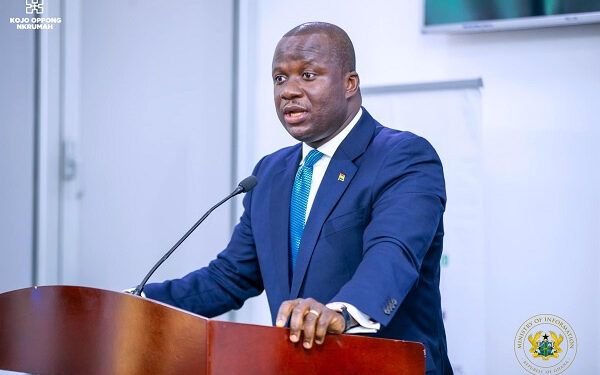
Hon. Samuel Abu Jinapor, former Minister for Lands and Natural Resources, has asserted that Africa’s extensive mineral reserves are the fundamental heartbeat of the global shift toward green energy and industrialization.
Speaking at the 2026 Africa Prosperity Dialogues (APD) Mining Breakfast Meeting in Accra, he explained that the continent’s wealth in gold, diamonds, and critical minerals positions it as an indispensable partner in the global energy transition.
According to the former lands minister, without Africa’s resources, the global pursuit of a net-zero future remains an impossibility, provided the continent can successfully “convert mineral endowment into economic participation.”
“The continent is richly endowed with minerals that are critical to global industrialisation and the green energy transition. Africa has the youngest population in the world, with over 60 percent of its population being under 25. Small and medium-scale enterprises constitute the largest source of employment across many African economies.”Hon. Samuel Abu Jinapor
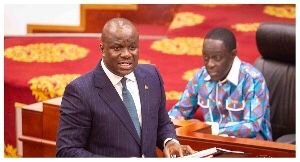
Hon. Jinapor highlighted that Africa is already demonstrating its industrial muscle, citing a record-breaking 2023 where the continent produced over 1,000 tonnes of gold, representing more than 27% of global output.
Ghana, under his recent oversight, solidified its status as the “leading gold producer in Africa” with a staggering 4.8 million ounces in 2024, a growth trajectory fueled by the harmonious integration of large-scale and small-scale mining operations.
This statistical dominance serves as a blueprint for how mineral-rich nations can leverage their primary commodities to anchor broader economic stability while eyeing the burgeoning market for green minerals like lithium and cobalt.
Strategic Value Addition and Technology Integration

To move beyond the historical “commodity trap,” Africa must prioritize domestic beneficiation the process of refining raw materials into high-value products before export.
Experts project that the continent can capture a significant slice of the $8.8 trillion global battery and electric vehicle (EV) market by establishing regional processing hubs.
By integrating “skills, technology, and intra-African trade opportunities,” as Hon. Jinapor noted, nations can ensure that the extraction of lithium or manganese leads directly to the manufacturing of battery precursors on African soil.
This shift requires a rigorous adoption of the African Green Minerals Strategy (AGMS), which focuses on technology transfer and building technical capacity among the youth to meet international environmental and social governance (ESG) standards.
Harnessing AfCFTA for Mineral Sovereignty
The African Continental Free Trade Area (AfCFTA) provides the necessary legal and commercial framework to keep mineral value within the continent’s borders. Instead of competing for external markets, African nations are encouraged to build “regional value chains” where raw materials from one country are refined using the energy and infrastructure of another.
This “intra-African trade opportunity” allows for economies of scale that make local manufacturing competitive.
Strategic partnerships, such as the DRC-Zambia battery initiative, serve as functional examples of how cross-border cooperation can transform the mining sector from an extractive industry into a catalyst for continental industrialization.
Inclusive Growth: Women, Youth, and SMEs
Ensuring that mineral wealth translates into “sustainable development” hinges on the deliberate inclusion of marginalized economic actors.
The 2026 Dialogues emphasized that SMEs are the “largest source of employment” and must be supported through favorable procurement policies and access to mining technology.
By formalizing artisanal and small-scale mining (ASM) which contributed significantly to Ghana’s 4.8-million-ounce record governments can de-risk the sector for women and young entrepreneurs.
This inclusive approach ensures that the green energy transition does not just power the world, but directly empowers the 60% of Africans under age 25 who are the rightful heirs to the continent’s mineral legacy.