Read also:
- Ghana Breathes a Sigh of Relief: IMF Review Success Paves Way for Economic Recovery and Growth
- Africa faces “pandemic of unfulfilled potential” – Mahama
- TOR Stabilisation Reflects National Reset Agenda – Edmond Kombat
- Mahama Seeks Deeper Ghana-Zambia Partnership During State Visit
- President Mahama Unveils Household Poultry Wealth Cycle in Zambia
Els MBN360 News
In an alert issued by the Integrated Food Security Phase Classification (IPC), global food security experts have warned that famine thresholds for acute malnutrition had been surpassed in North Darfur state’s contested areas of Um Baru and Kernoi.
The United Nations-backed experts warned that acute malnutrition has reached famine levels in these two more areas of western Sudan’s Darfur region, as a civil war between the paramilitary Rapid Support Forces (RSF) and the Sudanese army has caused widespread hunger.
The IPC alert is not a formal famine classification, but it highlights alarming levels of hunger based on the latest data.
The report said that in Um Baru, the rate of acutely malnourished children aged under five was nearly double the famine threshold, with 53 percent affected, adding that nearly a third of children in Kernoi suffered from acute malnutrition.
The report said, “These alarming rates suggest an increased risk of excess mortality and raise concern that nearby areas may be experiencing similar catastrophic conditions.”
The alert, based on data available up to February, comes nearly three months after the IPC confirmed famine conditions in el-Fasher, the capital of North Darfur, and Kadugli, the capital of South Kordofan, about 800km (500 miles) to the east.
The IPC said at the time that 20 more areas in Darfur and neighbouring Kordofan were at risk of famine.
El-Fasher, long the Sudanese army’s final stronghold in the Darfur region, fell to the RSF in October after 18 months of bombardment and starvation.
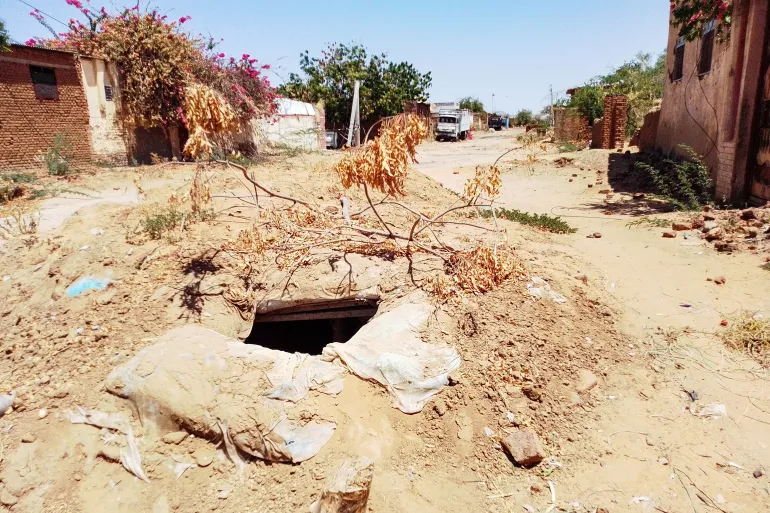
The fall of the city, amid reports of mass killings, rape and abductions, pushed at least 127,000 people to flee to nearby towns, according United Nations data.“The movement of tens of thousands of people facing hunger and malnutrition into already fragile areas of North Darfur is likely to sharply increase the number of people facing catastrophic food insecurity,” the IPC said.
Um Baru and Kernoi are near the border with Chad and have received some of the tens of thousands of displaced people who fled el-Fasher. Fighting subsequently has been reported in both locations.
Since April 2023, Sudan has been engulfed in a devastating war between the army and the RSF. The conflict has effectively split Sudan in two, with the army holding the north, east and centre and the RSF dominating Darfur and, alongside allies, parts of the south.
Fighting has recently concentrated in areas of Kordofan, with the Sudanese military starting to make progress in the region after breaking a siege in the key city of Kadugli and the neighbouring town of Dilling.
22 People Killed In South Kordofan Province
Also, today, at least 22 people were killed in an RSF attack on a military hospital in South Kordofan province, according to the Sudan Doctors Network, a group of medical professionals tracking the war.
The group said that the paramilitary’s bombing of the Al-Kuweik Hospital killed the facility’s medical director and three other members of the medical staff.
In a statement posted to social media, the doctors’ network said the targeting of health facilities and medical personnel was a war crime and flagrant violation of international humanitarian law.
It added that the bombing was just the latest attack targeting health facilities in South Kordofan, saying that several hospitals had been left inoperable in the attacks.
According to the statement, this has exacerbated the humanitarian crisis and threatens the remaining health services available to civilians.
The conflict, nearing the three-year mark, has killed tens of thousands of people, displaced nearly 11 million and driven multiple regions into famine and hunger, creating one of the world’s worst humanitarian crises.
According to the UN, more than 21 million Sudanese – nearly half of the population – are facing acute food insecurity, with two-thirds of the population in urgent need of assistance.