

Read also:
- GEPA Strengthens Ghana’s Strategic Footprint in Dubai
- Fuel Prices Begin Rising as OMCs Adjust Pumps
- Ablakwa Launches GHS107m Education Expansion in North Tongu
- Protocol recruitment into security services to be decentralised – Asiedu Nketiah
- Carlos Alcaraz wins first Australian Open title after epic battle with Djokovic complete Grand Slam
Els MBN360 Business
r. Bright Simons, the Honorary Vice President of IMANI-Africa and a veteran policy advocate, has issued a stinging rebuke to Ghana’s middle class and elite circles, accusing them of a “pretentious” and “extractive” silence regarding the nation’s most critical economic reforms.
Bright Simons argued that while the Ghanaian elite often project the image of global intellectual leaders, they consistently fail to invest the “time and effort” necessary to scrutinize complex frameworks from the lithium work on katanomics.org to the intricate redesign of the Cocobod syndicated loan logic effectively leaving the country’s natural resources vulnerable to bureaucratic negligence.
“That is my longstanding issue with many of you Ghanaian elites and middle class folks. You pretend as if you are like the elites elsewhere who actually pay attention to and make an effort to address serious issues in their countries. Yet, you invest nothing; not time, not effort.”Mr. Bright Simons

The critique centers on what Simons describes as “katanomics“—a state of high political theater paired with dangerously low policy accountability where the absence of “public scrutiny” allows the government to bypass rigorous fiscal modeling.
He pointed to the handling of the Gold-for-Reserves program and the new GoldBod aggregator model as prime examples of where elite passivity enables “deliberate monopolies” and “risk management failures.”
By neglecting to “amplify any of the serious policy issues” discussed on platforms like brightsimons.com, these influential groups are, in his view, complicit in the siphoning of national wealth through “inflated costs” and “opaque transparency.”
The ‘Katanomics’ of Lithium and Resource Capture

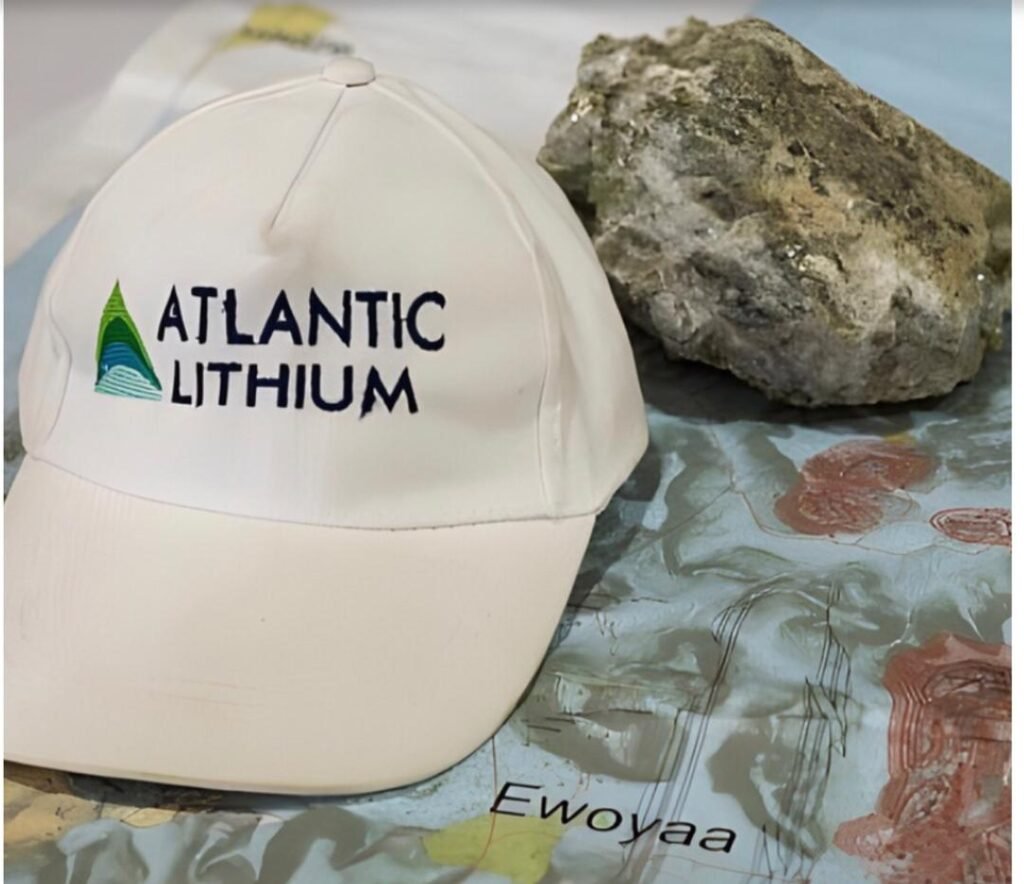
Bright Simons’ frustration is rooted in the government’s refusal to engage in “good faith” regarding a national fiscal model for lithium.
He notes that despite detailed analysis showing that a 10% baseline royalty rate would still leave investors with “substantial returns,” the government pushed for a lower rate, citing sustainability concerns that Simons dismisses as “mathematically flawed.”
This disconnect between “political rhetoric” and “data-driven reality” is what he defines as the core of the lithium crisis.
Without the “own small way” of the elite to push for transparency, he warns that Ghana is repeating the “classic case study” of sacrificing long-term value for short-term political wins.
Risks in the GoldBod and Gold-for-Reserves Framework
A major point of contention involves the Ghana Gold Board (GoldBod) and the $214 million trading loss reported under the Gold-for-Reserves program.
Bright Simons insists that these trading losses must be treated as commercial rather than “administrative,” slamming the elite for failing to demand a “forensic investigation” into the pricing mechanisms.
He highlighted the “structural rot” in the aggregator model, where the state-designated apex body, Bawa Rock Limited, allegedly receives “interest-free financing” from the Bank of Ghana.
This creates an “uneven playing field” where independent, self-financed aggregators are “suffocated” by a state-backed monopoly, a nuanced danger that Simons argues the middle class has largely ignored.
Scrutiny as a Pillar for Extractive Stability

The path forward, according to Bright Simons, requires the elite to shift from “sitting in judgement” to active “policy audience” formation.
He maintained that collective public scrutiny of the “Cocobod syndicated loan logic” and “GoldBod’s aggregator alliances” is the only way to ensure “national learning” and institutional efficiency.
In his view, the extractive industry’s stability depends on an “empowered policy community” that refuses to accept “glossy headlines” as a substitute for “structural truth.”
He ended that unless there is a genuine effort to “get the government to listen” through evidence-based pressure, the country’s mineral assets will remain “playgrounds for power” rather than engines of development.