
Read also:
- IShowSpeed politely declines libation schnapps during cultural visit to Ghana
- My First Term Empowered Ghanaian Road Contractors – Mahama
- Ghana’s Free Primary Healthcare Policy Gears Up for March Launch
- Ghana Dispatches 123 Nurses Under Labour Export Program
- Mahama Hails First Sky Philanthropy, Pushes Preventive Healthcare
Els MBN360 News
Ghana has entered a critical phase in its financial governance journey as the country undergoes an on-site Mutual Evaluation of its Anti-Money Laundering, Counter-Terrorist Financing, and Counter-Proliferation Financing framework.
The process, supported by International Monetary Fund-aligned standards and global assessors, is expected to test the strength, effectiveness, and credibility of Ghana’s financial systems. More than a routine compliance exercise, the evaluation is shaping up as a decisive moment for accountability, transparency, and reform across the financial sector.
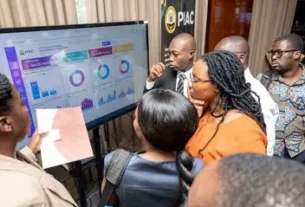
Speaking at the opening of the on-site assessment in Accra, Deputy Minister for Finance, Hon. Thomas Ampem Nyarko, described the exercise as a moment of truth for the country. He noted that Ghana was not seeking to project perfection but to demonstrate commitment, realism, and measurable results in safeguarding its financial system.
Why the Mutual Evaluation Matters
The Mutual Evaluation is conducted under internationally accepted benchmarks that assess how well a country prevents money laundering, terrorist financing, and the financing of weapons proliferation. For Ghana, the outcome has far-reaching implications.
A strong rating enhances investor confidence, strengthens correspondent banking relationships, and protects the economy from reputational risks. A weak assessment, however, could raise red flags for international partners and increase the cost of doing business.
Financial institutions, designated non-financial businesses, regulators, and law enforcement agencies are all under scrutiny. The evaluation looks beyond laws and regulations to examine how effectively policies are implemented and enforced. This focus on outcomes rather than intentions places pressure on institutions to show real-world impact.

IMF Influence and Global Expectations
Although the IMF does not conduct the evaluation directly, its influence is evident through alignment with global financial integrity standards and ongoing technical support to Ghana. IMF-backed reforms under recent economic programmes have emphasized fiscal discipline, transparency, and institutional strengthening. The AML and CFT assessment complements these efforts by ensuring that financial flows are clean, traceable, and resistant to abuse.
Global partners increasingly view financial integrity as inseparable from macroeconomic stability. For Ghana, meeting these expectations is essential as it seeks to consolidate economic recovery, stabilize the cedi, and attract long-term capital.
National Risk Assessment as a Reform Tool
A key highlight of Ghana’s preparation for the evaluation is its approach to the National Risk Assessment. According to Hon. Ampem Nyarko, the assessment was not treated as a box-ticking document but as a diagnostic tool. It compelled authorities to confront vulnerabilities across sectors, products, institutions, and borders.
This risk-based approach has informed policy adjustments, supervisory priorities, and inter-agency collaboration. Areas such as banking, fintech, real estate, extractive industries, and cross-border transactions have received heightened attention due to their exposure to illicit financial flows.
Financial Institutions Under the Spotlight
Banks, savings and loans companies, insurance firms, and capital market operators are central to the evaluation process. Assessors are examining customer due diligence practices, transaction monitoring systems, reporting of suspicious activities, and internal controls. The growing role of digital finance and mobile money has added complexity, requiring regulators and operators to balance innovation with risk management.
Compliance officers and senior management are expected to demonstrate not only awareness of AML and CFT obligations but also evidence of consistent application. This has pushed many institutions to strengthen governance structures, invest in compliance technology, and enhance staff training.
Government officials have repeatedly emphasized that the evaluation is about progress and effectiveness, not flawlessness. Ghana’s choice, according to the Deputy Finance Minister, is reform over rhetoric and implementation over theory. This messaging signals a willingness to acknowledge gaps while showing determination to address them.
Such an approach aligns with global best practices, where transparency and corrective action are valued over denial. It also reflects a maturing regulatory culture that recognizes financial integrity as a shared responsibility between the state and the private sector.
Implications for Ghana’s Economic Future
The outcome of the IMF-backed scrutiny will influence Ghana’s economic narrative in the coming years. A positive assessment could reinforce confidence among development partners, investors, and credit rating agencies. It would also strengthen Ghana’s position as a financial hub in West Africa.
Conversely, identified weaknesses will require swift and credible remediation. The government has signaled readiness to act on recommendations, viewing them as opportunities to deepen reforms rather than setbacks.
The country is prepared to be judged not by intentions alone, but by tangible action and impact. In an era where financial integrity shapes global trust, this scrutiny may prove to be one of the most consequential tests of Ghana’s reform agenda.