Read also:
- Don Quijote Africa opens African Festival with Ghanaian twist on classic tale
- Anthony Joshua injured in fatal Nigeria crash
- AFCON Day 7: Cameroon, Ivory Coast in stalemate as Algeria reach last 16
- Ghana records 13 new Mpox cases, total reaches 947
- Ghana’s Gold Losses: Minority Raises Concerns Over GoldBod’s Impact
Anationwide survey conducted by Global InfoAnalytics suggests that a majority of Ghanaian voters support several key proposals contained in the Constitutional Review Committee’s report submitted to President John Dramani Mahama earlier this month.
The findings point to a growing public appetite for constitutional reforms aimed at reshaping governance structures, strengthening accountability and modernising democratic practice.
According to the poll, extending the presidential term from four to five years enjoys majority backing among respondents. Fifty seven percent of voters surveyed said they support the proposal, while thirty six percent opposed it.
Seven percent indicated that they were undecided. Supporters of the proposal appear to share the view that a longer term would give elected leaders more time to implement policies effectively and reduce the frequency and cost of national elections.
The survey also shows strong public approval for separating parliamentary and ministerial roles. Fifty eight percent of respondents favoured a ban on members of parliament serving as ministers, compared with thirty two percent who opposed the idea. Ten percent of voters said they had no clear position.

This recommendation is one of the most significant structural changes proposed by the CRC, as it seeks to end the hybrid system that allows lawmakers to simultaneously serve in the executive branch. Advocates argue that such a separation would strengthen parliamentary oversight and reduce conflicts of interest.
Reduction of Presidential Age
Another proposal drawing majority support is the reduction of the minimum age required to contest the presidency. The poll found that fifty five percent of voters support lowering the age threshold, while thirty five percent are against it. Ten percent of respondents expressed no opinion.
Proponents of the change believe it would expand political participation and reflect the country’s youthful demographics, while critics caution against reducing experience requirements for the highest office.
Global InfoAnalytics conducted the survey between December 1 and 21, 2025. It used a mix of online questionnaires, telephone interviews and in person interviews to gather responses from thirteen thousand four hundred and ninety five registered voters across all regions of the country.
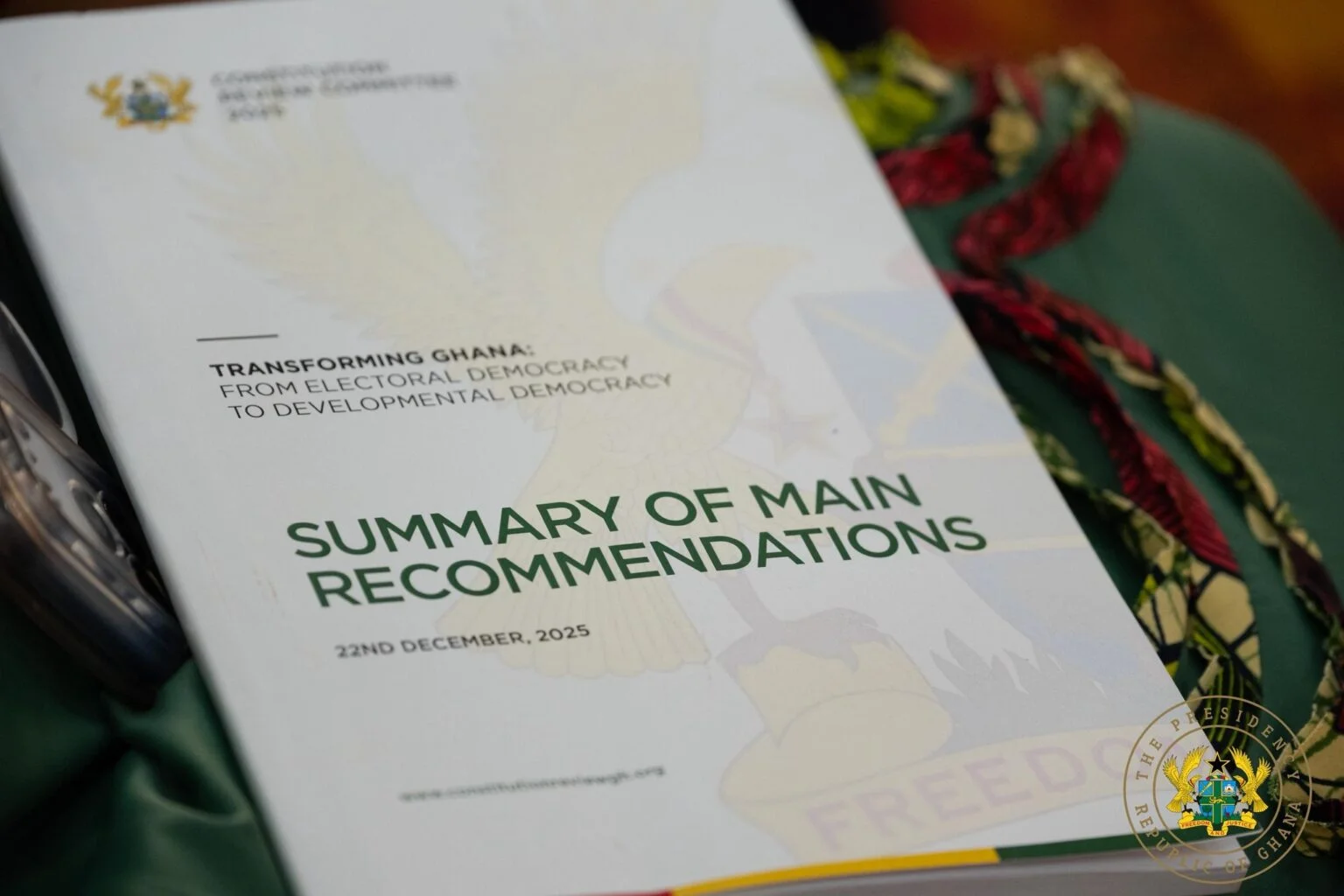
The firm said the sample size and methodology provide a broad snapshot of public opinion on the proposed constitutional changes. The survey follows the submission of the CRC’s final 127- page report to President Mahama on December 22, 2025.
The committee, chaired by a renowned constitutional scholar, Professor Henry Kwasi Prempeh, concluded nearly eleven months of nationwide consultations and technical analysis.

During this period, the CRC engaged political parties, traditional authorities, civil society organisations, public servants and ordinary citizens, many of whom called for reforms to strengthen democratic safeguards and improve governance outcomes.
Committee’s Broad Proposals
Beyond the proposals tested in the survey, the CRC report outlines a wide range of recommended amendments to Ghana’s constitutional framework. Among them is a cap on the number of ministers of state, including deputy ministers, limiting the total to fifty seven. The committee argues that this would promote efficiency, reduce public expenditure and improve coordination within government.
The report also proposes the establishment of an independent Ethics and Anti Corruption Commission with exclusive prosecutorial authority, separate from the office of the Attorney General.
This recommendation is aimed at strengthening the fight against corruption by insulating prosecutions from political influence and enhancing public confidence in accountability mechanisms.
Judicial reforms feature prominently in the CRC’s proposals. The committee recommends capping the number of Supreme Court justices at fifteen, made up of the Chief Justice and fourteen others. According to the report, this measure would help maintain efficiency and consistency in the administration of justice at the highest level.
On local governance, the CRC proposes that Metropolitan, Municipal and District Chief Executives should be elected directly by the electorate rather than appointed by the President. Supporters of this recommendation argue that it would deepen decentralisation, enhance accountability at the local level and give citizens a stronger voice in the management of their communities.
The report also addresses issues of citizenship and political participation. It recommends removing restrictions that prevent Ghanaians with dual citizenship from contesting parliamentary elections, a change that could widen the pool of potential candidates and reflect the realities of a globalised society.
Strengthening asset declaration requirements is another key proposal. The CRC recommends that public officers should be required to declare their assets within fifteen days of assuming office and every two years thereafter. This, the committee argues, would enhance transparency and deter the abuse of public office for private gain.
In the area of human rights, the CRC calls for the complete removal of the death penalty from the Constitution. The recommendation aligns with Ghana’s longstanding de facto moratorium on executions and reflects broader international trends toward abolition.
Presidential Commitment
Upon receiving the report, President Mahama described the recommendations as radical but necessary. He pledged firm and decisive steps to ensure their implementation as part of a broader effort to strengthen democratic governance and restore public confidence in the constitutional order.
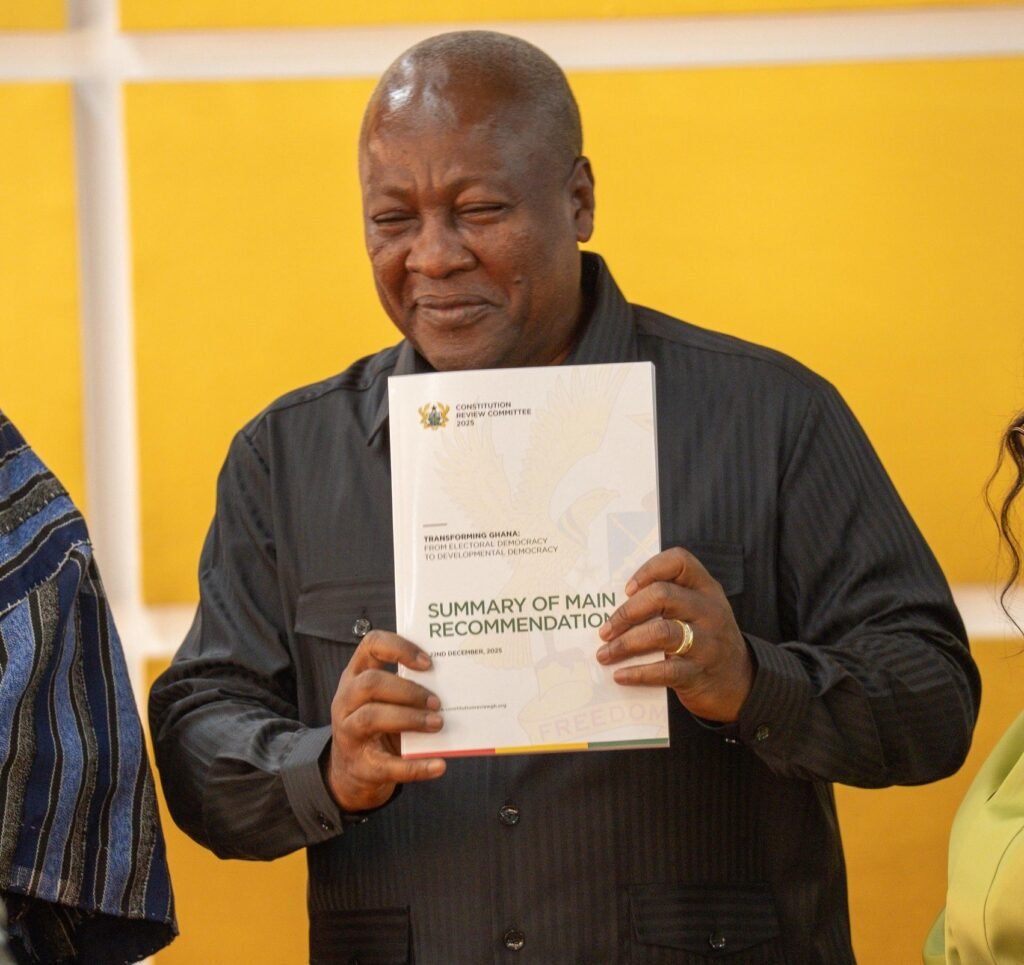
He also announced that a dedicated Implementation Committee would be established in early twenty twenty six to guide the process of converting the CRC’s proposals into formal constitutional amendments.
The implementation process is expected to involve extensive parliamentary debate and, where required by the Constitution, approval through a national referendum.
As discussions begin, the Global InfoAnalytics survey suggests that several of the most consequential proposals already enjoy substantial public support, setting the stage for an important national conversation on the future of Ghana’s constitutional democracy.