Read also:
- Term Extension Risks Ghana’s Weak Institutions – Victoria Bright
- 30-Something Presidents Lack Experience’ – Prof Agyeman-Duah
- Hearts of Oak Move to Second Place with Win over Samartex
- Legal Aid Commission to Get a Boost Under Govt Plans
- Mosque Shooting: 5 More Arrested in Ho Central Investigation
El Samuels MBN360 News
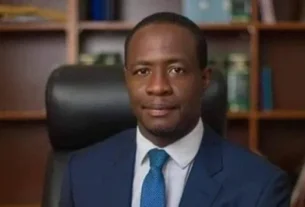
Ghana’s Deputy Attorney-General and Minister for Justice, Dr Justice Srem-Sai, has unveiled plans to tackle prison overcrowding and improve inmate conditions. The government will expand prison infrastructure and implement policy reforms to reduce custody numbers, ensuring inmates’ fundamental human rights are respected.
Conviction shouldn’t mean a loss of dignity, Dr Srem-Sai emphasized, highlighting the need for rehabilitation. The reforms aim to strike a balance between justice and compassion.
Speaking on justice sector priorities for the coming year, he said the government will pursue both expansion of prison infrastructure and policy reforms designed to reduce the number of people held in custody.
According to Dr Srem-Sai, prison decongestion has become an urgent concern, requiring a combination of sentencing reform, faster case resolution, and improved facilities. “Next year, I will look into the expansion of the prison service,” he said, adding that equal attention is being given to reducing the population of inmates currently behind bars.
One of the major policy shifts underway is the introduction and expansion of non-custodial sentences. Under this approach, courts will increasingly rely on community service and similar sanctions instead of custodial sentences for certain offences.
Dr Srem-Sai explained that such measures are designed to ensure punishment remains effective while avoiding unnecessary incarceration. “Instead of sentencing the person to be in custody in the prisons, the person will be ordered to perform community service,” he said, noting that this approach will directly reduce congestion in correctional facilities.
The Deputy Justice Minister emphasised that non-custodial sentencing is not about being lenient on crime but about aligning punishment with rehabilitation and public interest.
He argued that overcrowded prisons undermine rehabilitation efforts and strain limited state resources, ultimately weakening the justice system. By reserving custodial sentences for serious offences, the government hopes to make the prison system more manageable and humane.
Another key driver of congestion, according to Dr Srem-Sai, is the large number of remand prisoners who have not been fully tried or convicted. Many of these individuals, he explained, are transferred from police cells to prisons simply because law enforcement lacks the capacity to hold them for extended periods.
“Some of the people who find themselves in prison have not actually been properly convicted,” he said, describing a situation where prolonged remand becomes a default outcome rather than a legal necessity.
To address this challenge, the Justice Ministry is implementing programmes aimed at speeding up the adjudication of remand cases. One such initiative falls under the broader Access to Justice programme, which allows judges to hear cases directly within prison facilities.
Under this arrangement, courts are effectively brought to inmates, reducing delays caused by transportation challenges and congested court dockets. “Judges will now move to the prison so that work can be done,” Dr Srem-Sai said, describing it as another practical way of decongesting prisons.
Legal analysts note that prolonged remand has long been a structural weakness in Ghana’s criminal justice system, often affecting indigent suspects who lack legal representation. The new approach, they argue, could significantly reduce pre-trial detention times if properly resourced and consistently applied across the country.

Infrastructure Expansion
Beyond sentencing reform and expedited trials, the government is also pursuing physical expansion and rehabilitation of prison facilities. Dr Srem-Sai confirmed that the Ghana Prisons Service has developed plans to construct new prisons and renovate existing ones.
These infrastructure projects, he said, are critical to improving living conditions for inmates and ensuring that facilities meet basic standards of safety and dignity.
He stressed that improving prison conditions is not a concession to criminality but a constitutional obligation. “The fact that you have committed a crime and have been convicted doesn’t mean that you are not entitled to some basic fundamental human rights,” he said. In his view, incarceration should not amount to an indirect death sentence imposed through inhumane conditions or neglect.
The Deputy Justice Minister underscored that minimum standards of comfort, sanitation, healthcare, and safety must be maintained, regardless of the nature of an inmate’s offence.
He argued that respecting inmates’ rights ultimately strengthens the justice system by reinforcing the principle that punishment is administered within the rule of law, not outside it.
Civil society groups and government officials have repeatedly raised concerns about overcrowding, poor sanitation, and inadequate healthcare in Ghana’s prisons, warning that such conditions pose risks not only to inmates but also to prison officers and public health.

Dr Srem-Sai’s comments suggest that the government is seeking to respond to these concerns through a mix of policy reform and investment. While acknowledging that the reforms will require sustained funding and coordination across institutions, Dr Srem-Sai expressed confidence that the combined measures would yield measurable improvements.
He indicated that the Justice Ministry is working closely with the judiciary, the Ghana Prisons Service, and other stakeholders to ensure that reforms are implemented in a way that balances public safety, accountability, and human dignity.
As the government looks ahead to the next year, the proposed reforms signal a shift toward a more rehabilitative and rights-conscious correctional system for the country.
If successfully implemented, the strategy could ease chronic congestion, speed up justice delivery, and reaffirm Ghana’s constitutional commitment to humane treatment for all persons, including those deprived of their liberty.